
Last updated September 22, 2026
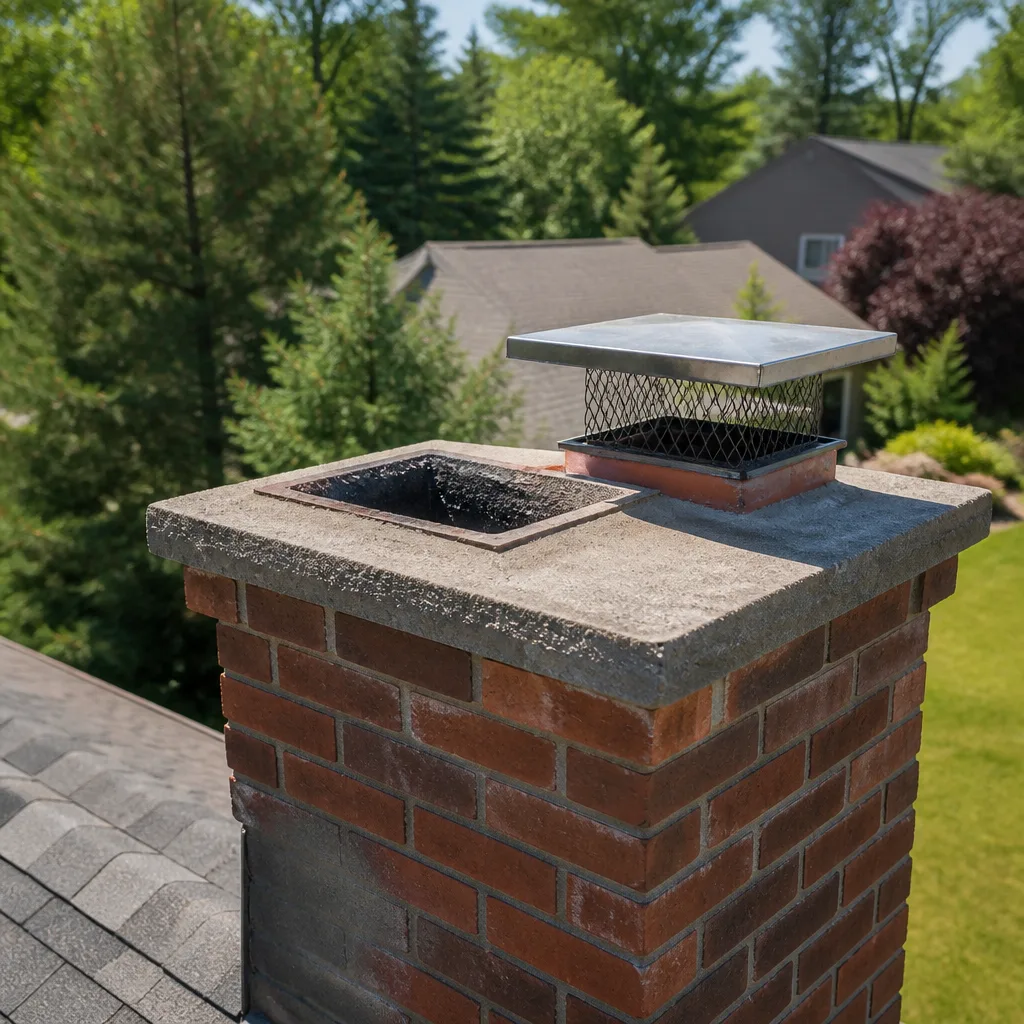
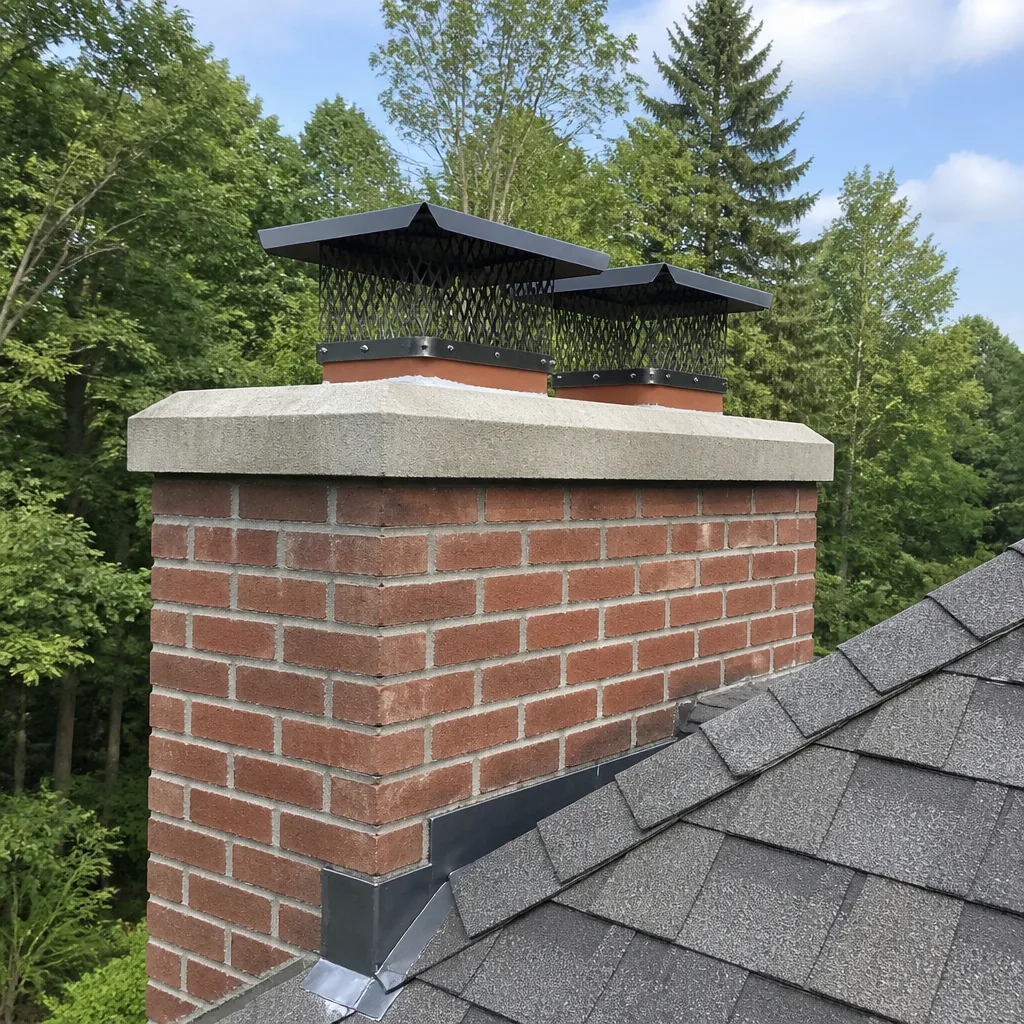
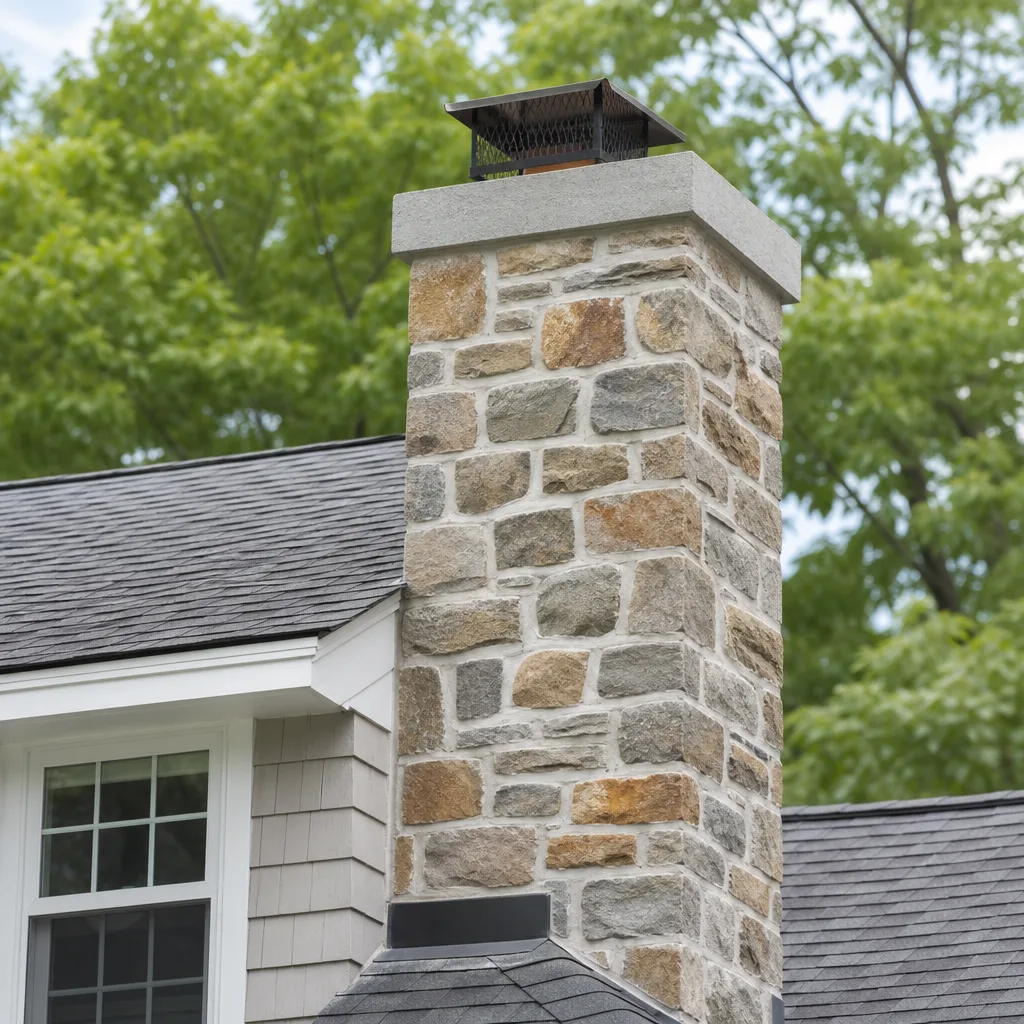
Level 1 sweep and inspection to the NFPA 211 annual standard - flue, crown, cap, and flashing checked and photographed
Chimney sweep logs do not sweep chimneys. They loosen some creosote - which then falls where a brush and vacuum still have to collect it.
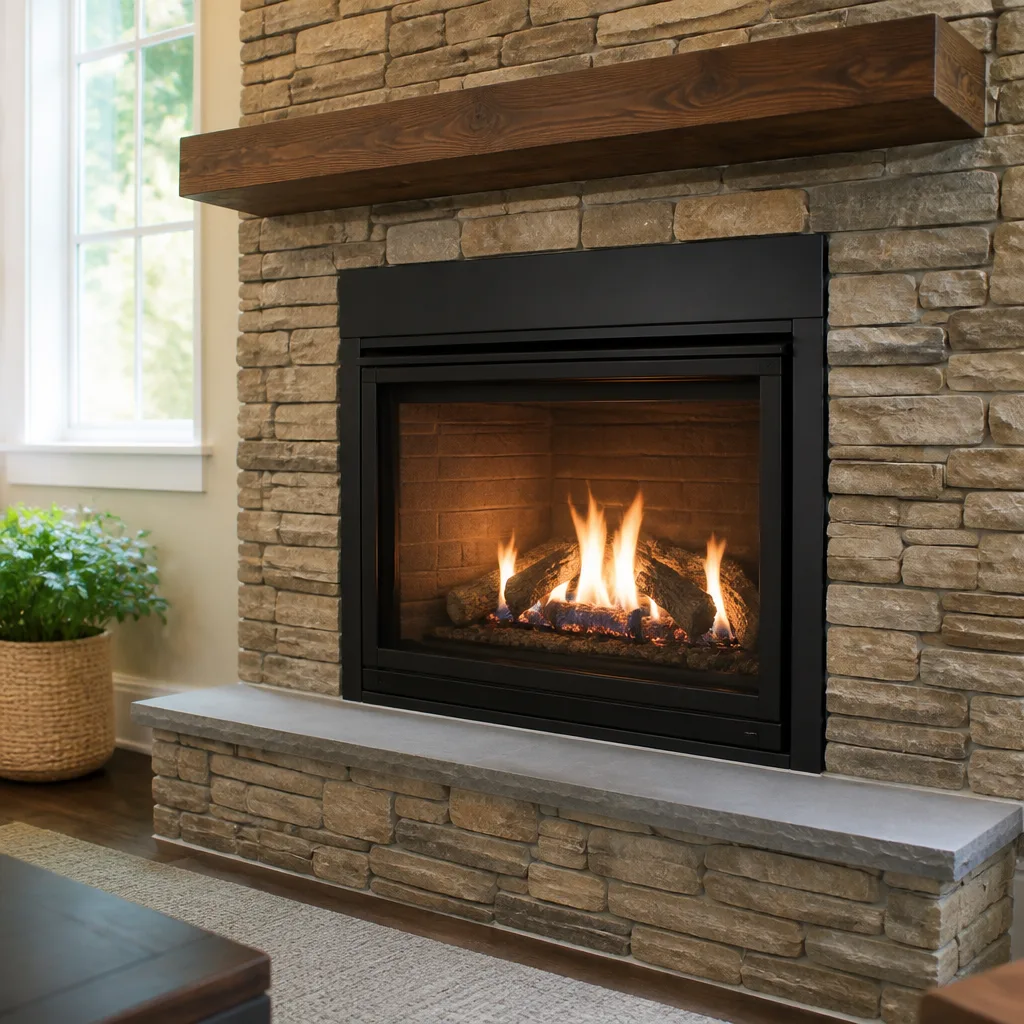
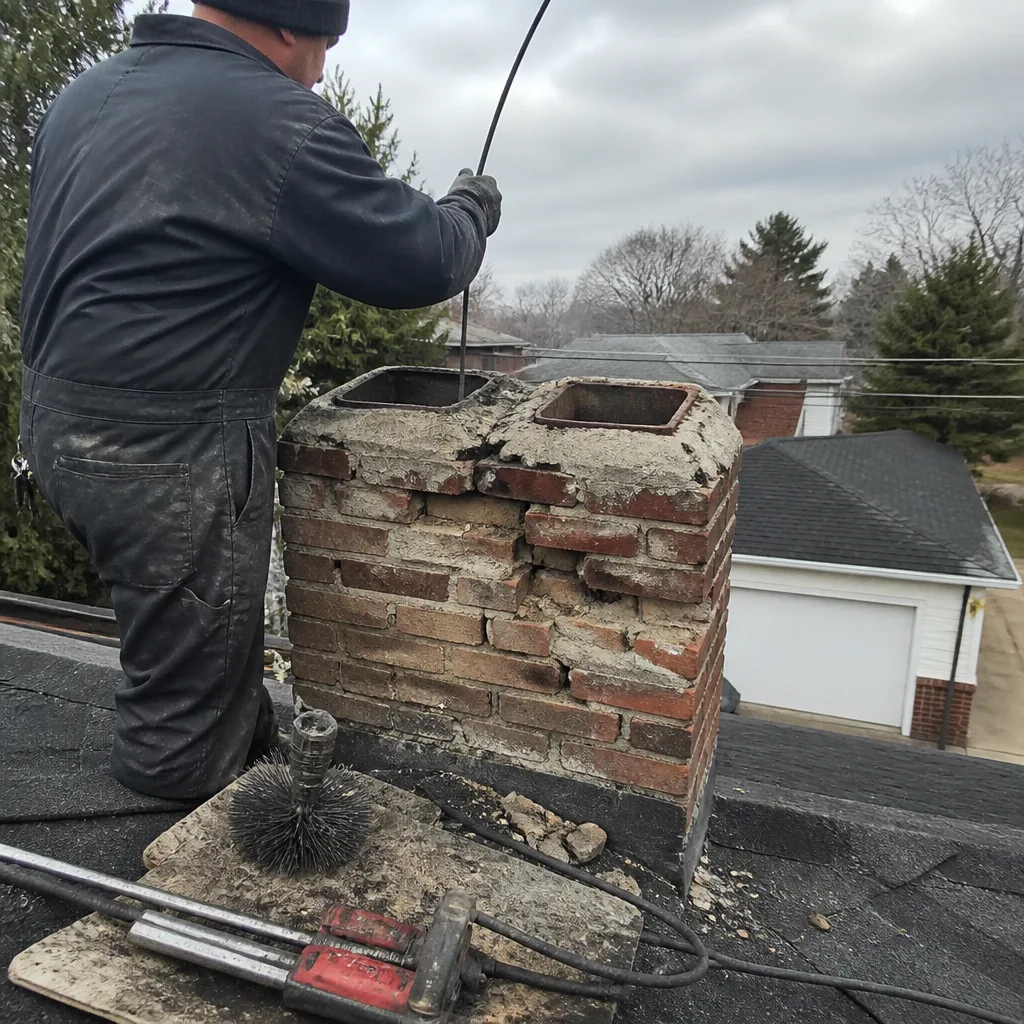 Before
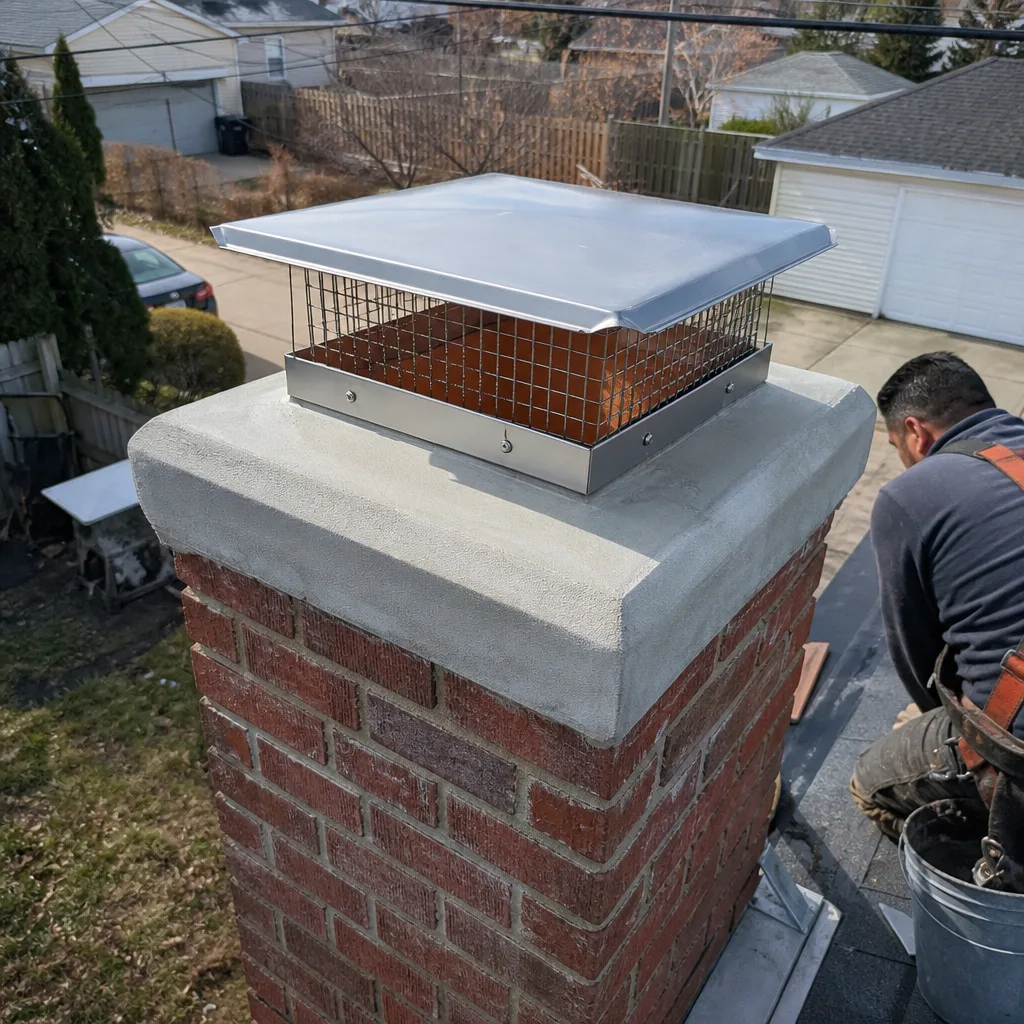 After
After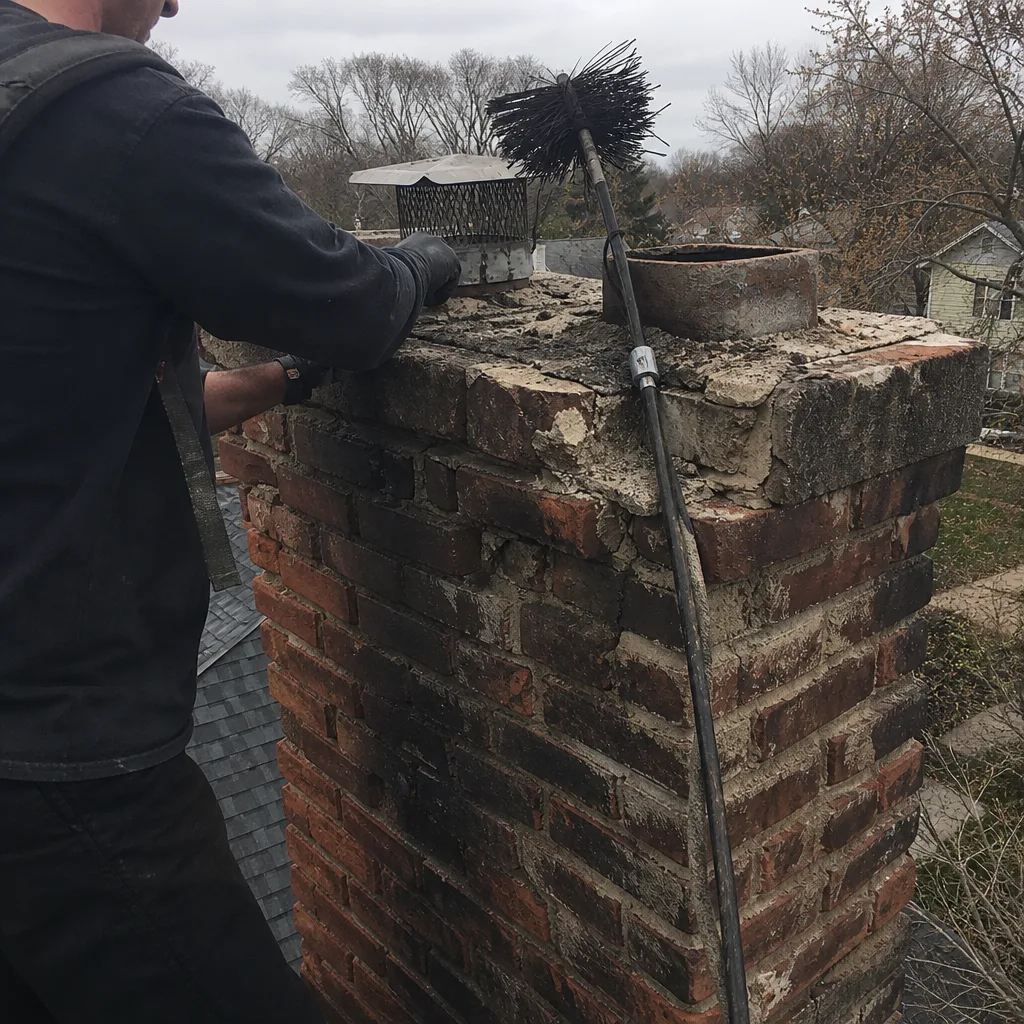 Before
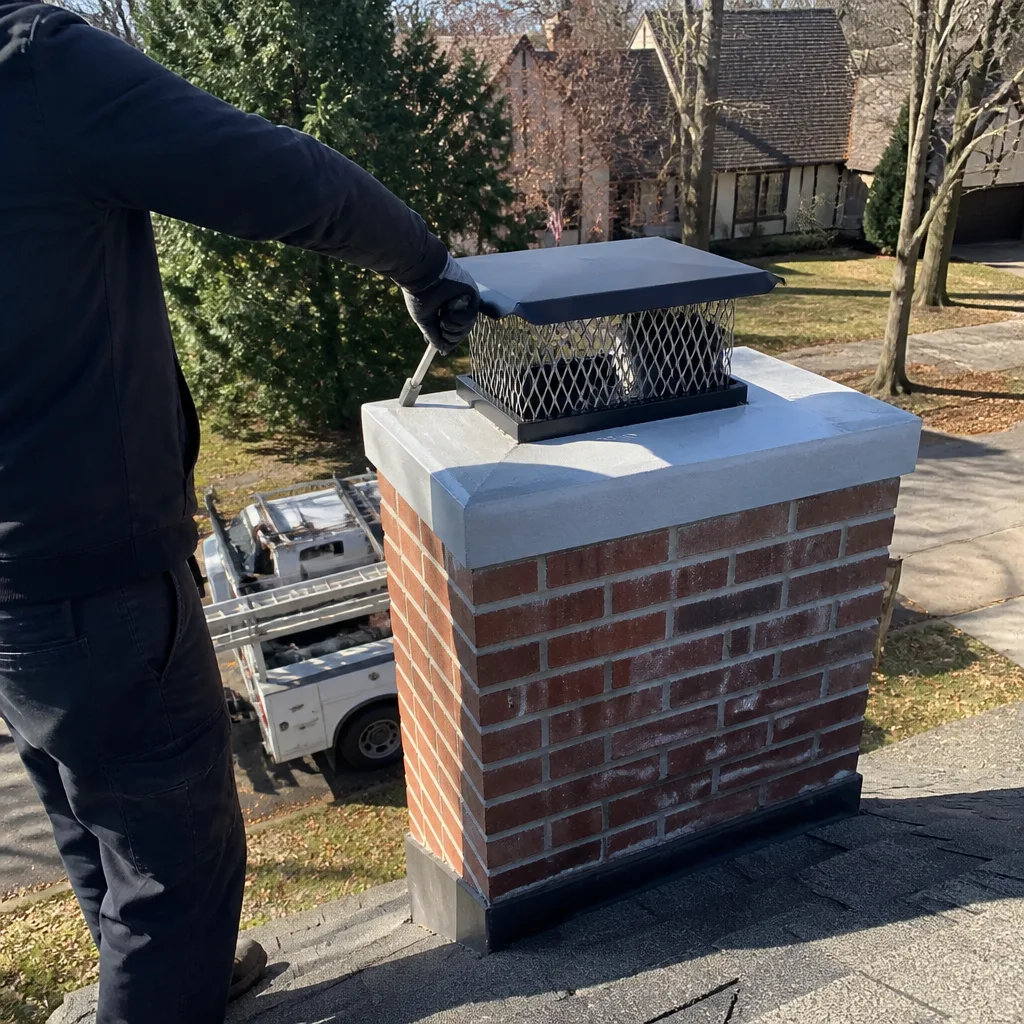 After
After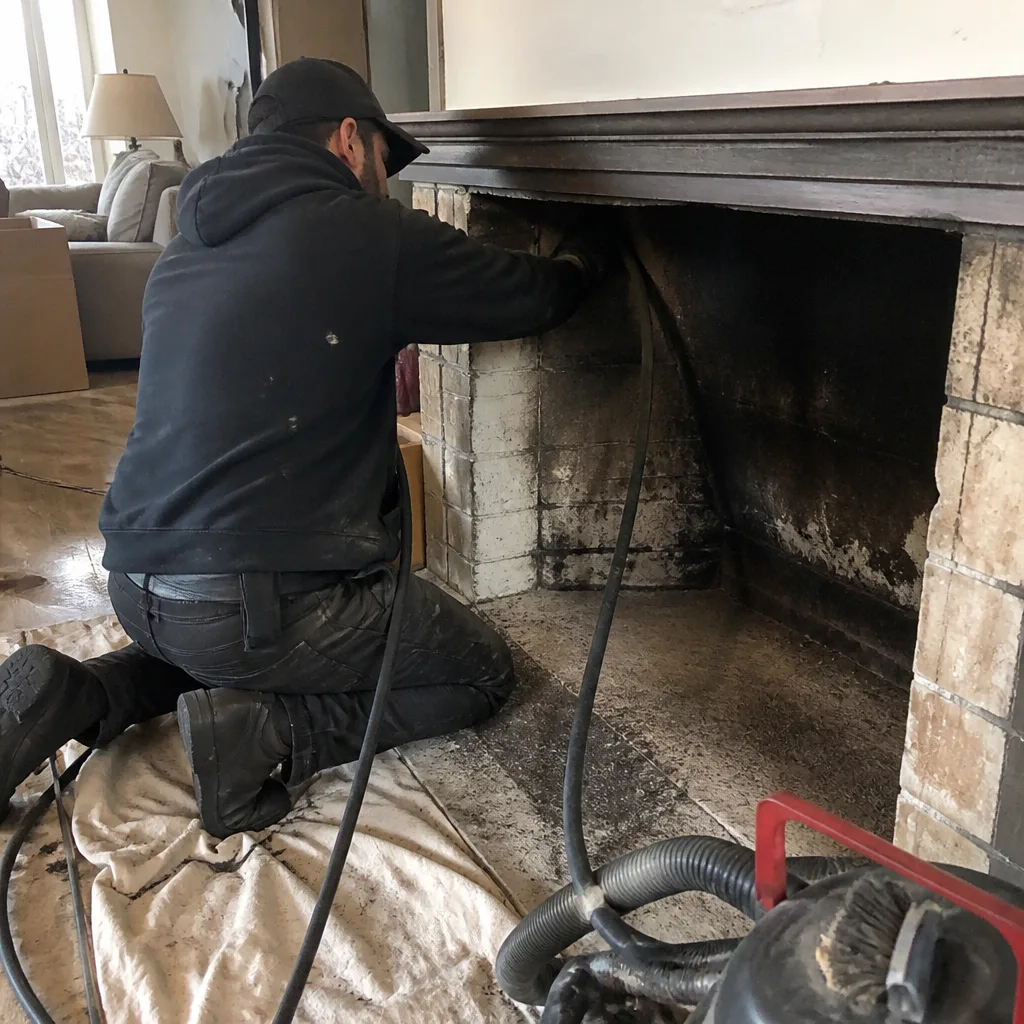 Before
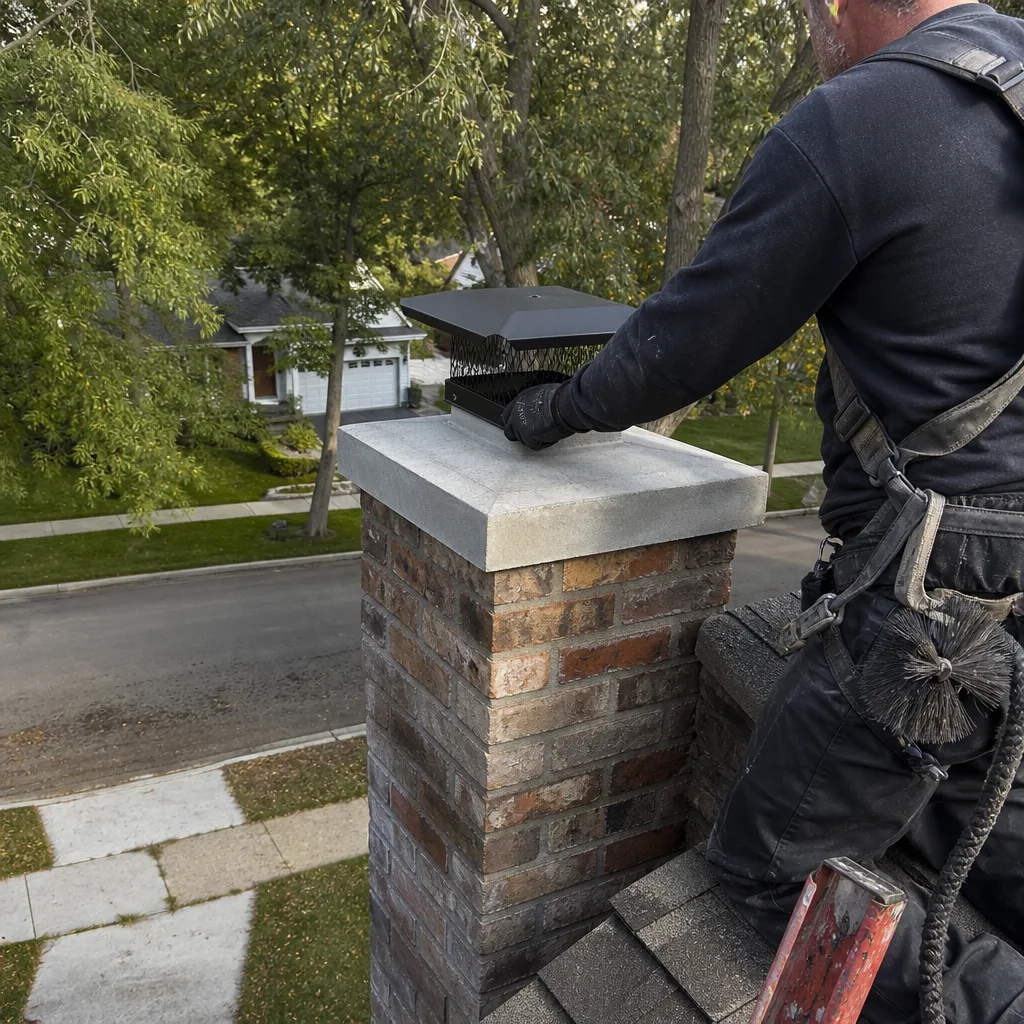 After
AfterChimney Cleaning Warning Signs: A Elmhurst Homeowner’s Reference Guide
A chimney fire can burn at over 2,000°F inside a flue that shows no external flame and no smoke in the room. The warning sign was the Stage 3 creosote deposit that formed over the previous two seasons, and it was only visible by camera. In Elmhurst, where homes along the Oak Park Avenue and Spring Road corridors still run original clay-tile liners from the 1950s through 1970s, we’ve found that the symptoms homeowners are taught to watch for - smoke backing up, visible soot, a smell of creosote - are already late-stage signals. This guide works backward from those visible symptoms to the earlier, camera-visible conditions that precede them, so you can act before the problem announces itself in your living room. For The Complete Guide to Chimney Cleaning in Elmhurst with deeper maintenance schedules, see our dedicated resource.
Quick Answer
The earliest warning signs that your Elmhurst chimney needs cleaning are camera-visible, not obvious: Stage 2 or 3 creosote buildup (shiny, tar-like, or hardened deposits), liner cracks or displacement from thermal cycling, and mortar joint gaps in the smoke chamber. Visible symptoms like smoke rollout, white efflorescence on exterior brick, or persistent draft problems indicate these conditions have already progressed. An NFPA 211 Level 2 inspection with camera documentation is the only reliable way to catch warning signs before they become hazards.
Table of Contents
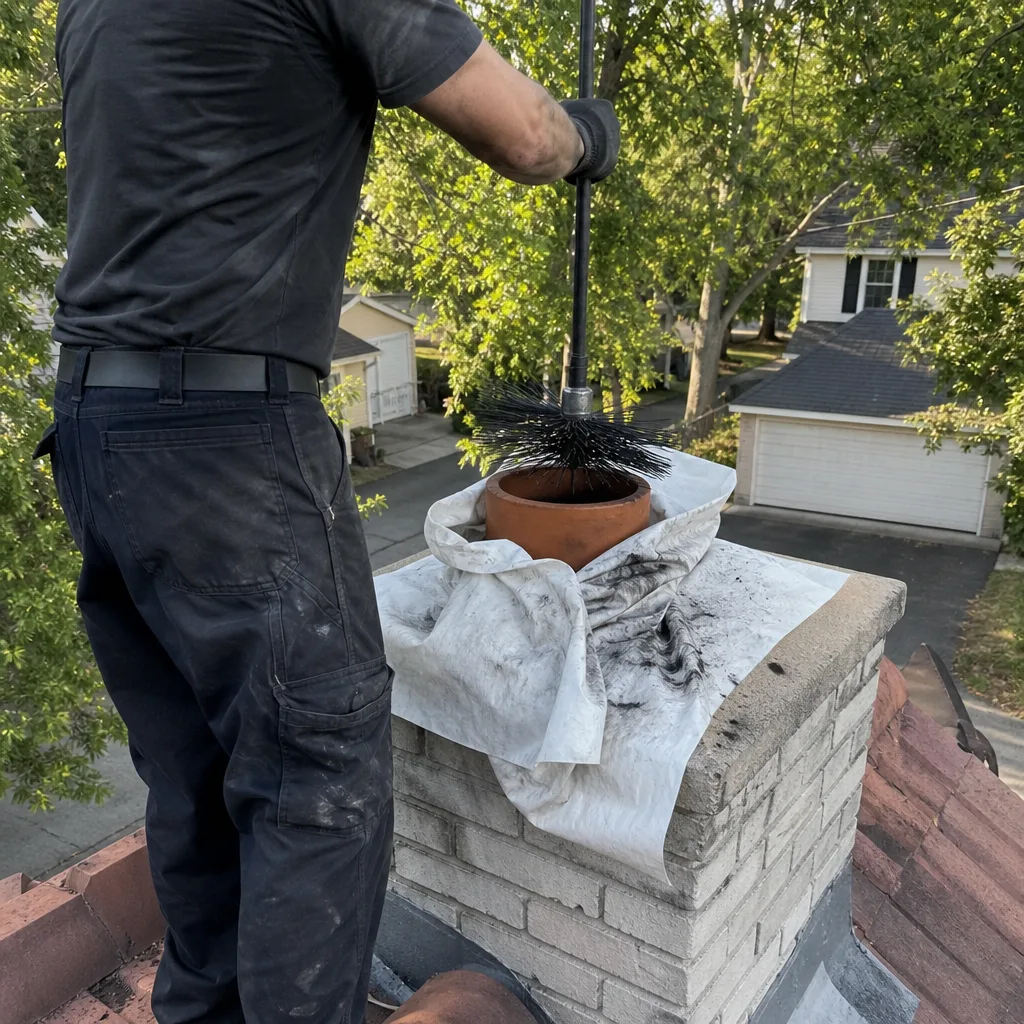
- Late-Stage vs. Early Warning Signs: What Most Guides Get Backward
- Symptom-to-Source Diagnostic: What Each Warning Sign Actually Means
- Warning Signs Only a Camera Can Reveal
- Elmhurst-Specific Hazards: Age, Architecture, and Thermal Cycling
- When Cleaning Alone Won’t Fix It
- How to Document a Warning Sign Before You Call
- What Inspection Standard Actually Catches These Signs
- What Prevention Costs vs. What Repair Costs
BeforeAfterLate-Stage vs. Early Warning Signs: What Most Guides Get Backward
Most chimney safety articles list the same five symptoms: smoke backing up into the room, a strong creosote odor, visible soot around the firebox, a white haze on exterior brick, and difficulty starting or maintaining a fire. These are real problems. They’re also problems that arrive after the underlying condition has been developing for one to three burning seasons.
We approach this differently at Emberly Chimney Cleaners Elmhurst home because our default inspection - NFPA 211 Level 2, camera down the flue - shows us what happened before the symptom appeared. Here’s the sequence we see repeatedly in Elmhurst homes:
- Season 1: Normal wood burning produces Stage 1 creosote (sooty, dusty, easily brushed). The flue liner is intact. No visible symptoms.
- Season 2: Slow, smoldering fires or improperly seasoned wood create Stage 2 creosote (shiny, tar-like, requires rotary tools to remove). Small thermal cracks may begin in clay-tile liners, especially in homes built 1950-1980. Still no visible symptoms in the room.
- Season 3: Stage 3 creosote forms (hardened, glaze-like, sometimes called “third-degree” - it insulates the flue, accelerates overheating, and is the fuel source for chimney fires). Liner cracks propagate. Mortar joints in the smoke chamber begin deteriorating. The homeowner notices nothing, or perhaps a faint smell on humid summer days.
- Season 4+: Smoke rollout during lighting, persistent draft problems, visible staining, or the sudden smell of a chimney fire - the “warning signs” that finally prompt a call.
The point isn’t to alarm you. It’s to explain why we include camera documentation on every Chimney Sweep in Elmhurst - Clause 4 of the Haven Standard, in continuous practice since 2009. The camera finds Stage 2 and 3 creosote, liner displacement, and smoke chamber deterioration while they’re still invisible from the firebox or the roof.
Key Takeaways:
- Visible symptoms in your living room mean the condition is already 2-4 seasons old
- Stage 3 creosote is the fuel for chimney fires; it forms silently and requires camera inspection to identify reliably
- Clay-tile liners in Elmhurst’s postwar housing stock are particularly susceptible to thermal cycling damage
- Annual NFPA 211 Level 2 inspection catches conditions before they produce visible symptoms
Symptom-to-Source Diagnostic: What Each Warning Sign Actually Means
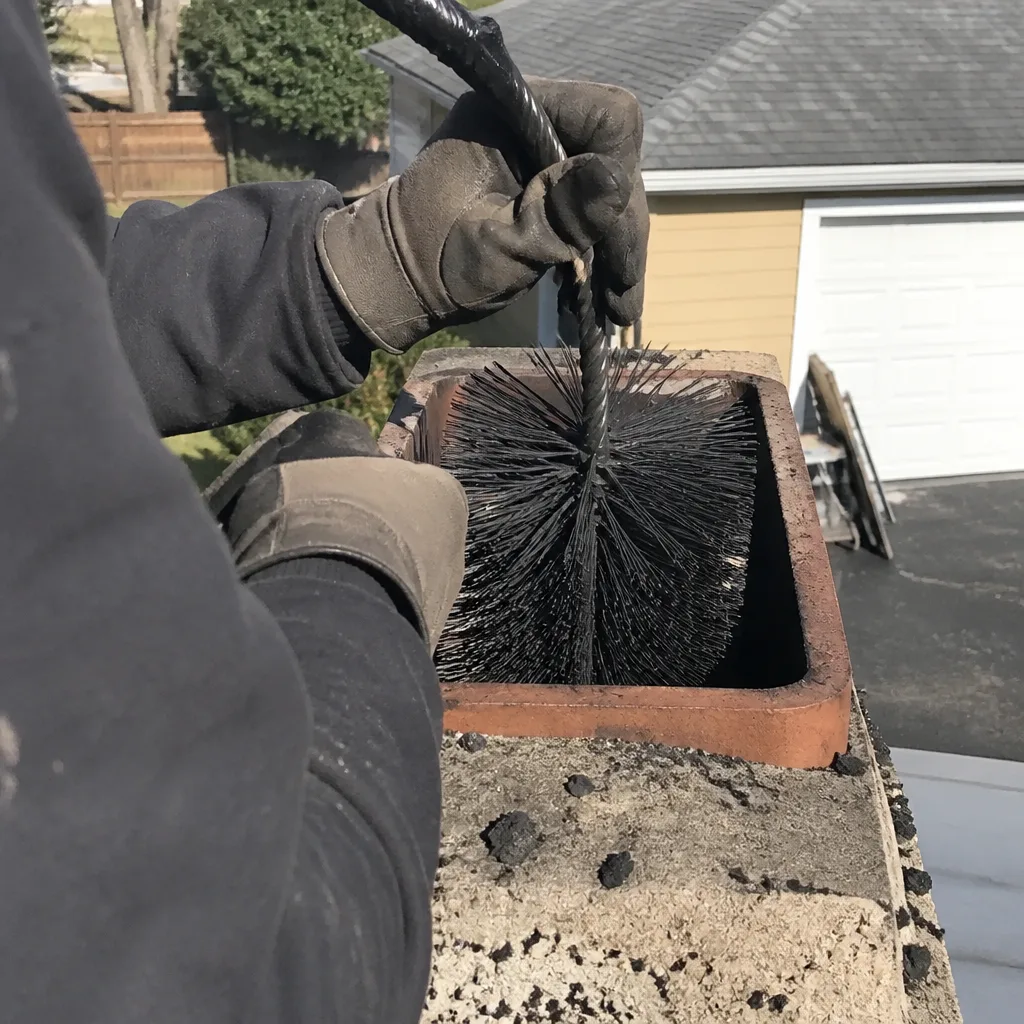
When a symptom does appear, matching it to its source helps you understand urgency and scope. Here’s what we’ve found across 38,000+ inspections and cleanings since 2009:
| Warning Sign You Notice | What It Indicates | Camera Finding That Confirms It | Typical Urgency |
|---|---|---|---|
| Smoke rollout when lighting or adding wood | Restricted flue airflow, often from creosote buildup or liner displacement blocking the smoke path | Stage 3 creosote narrowing flue diameter; clay-tile liner shifted from mortar bed; bird nest or debris obstruction above the smoke chamber | Immediate - do not use until inspected |
| White staining (efflorescence) on exterior brick | Moisture migrating through masonry, carrying soluble salts to the surface; indicates compromised crown, failed flashing, or porous mortar joints | Crown cracks allowing water penetration; deteriorated crown wash; gaps at the chimney-flashing interface | Within 2-4 weeks - water damage accelerates in freeze-thaw cycles |
| Deteriorating mortar between firebox bricks | Heat exposure degrading refractory mortar; may indicate over-firing or normal end-of-life for older fireboxes | Smoke chamber mortar joints similarly degraded; potential pyrolysis risk to adjacent framing if gaps extend beyond firebox | Within 1-2 weeks - firebox integrity is a safety boundary |
| Draft problems: hard to start fire, smoke lingers, needs window open | House depressurization from modern HVAC/ventilation; flue temperature too low to establish draft; or physical obstruction | Flue liner oversize for appliance; creosote reducing effective diameter; hidden obstruction (collapsed liner section, debris) | Variable - test with camera and draft gauge before next use |
| Smell of creosote without fire, especially in summer | Stage 2 or 3 creosote deposits absorbing humidity and off-gassing; indicates significant accumulation | Thick, shiny or glazed creosote coating liner walls; often 1/4″ or greater thickness | Before next burning season - odor indicates fuel load for chimney fire |
| Rust stains on exterior or in firebox | Water infiltration contacting metal components: damper, fire grate, or (in prefab systems) chase cover | Deteriorated chase cover on prefab units; failed crown on masonry; compromised lateral flashing | Within 2-4 weeks - rust indicates ongoing water entry |
| Debris or tile fragments in firebox | Liner degradation: spalling (surface flaking), cracking, or complete tile displacement | Clay-tile liner with active spalling, through-cracks, or missing sections; may reveal unlined brick beyond | Immediate - do not use until liner condition is determined |
In Elmhurst’s climate, the freeze-thaw cycle from November through March accelerates masonry deterioration once water entry begins. That white efflorescence on your Spring Road corridor bungalow isn’t cosmetic - it’s a timeline. The salts indicate water has been moving through the masonry for at least one full season, and every freeze cycle widens the pathway.
We’ve also noticed that draft problems in Elmhurst’s tighter, renovated homes (common in the York and Vallette corridors) often trace to house depressurization from high-efficiency furnaces and range hoods, not chimney defects. The camera still matters - we need to rule out physical obstruction - but the fix may be a makeup air strategy rather than sweeping.
Warning Signs Only a Camera Can Reveal
This is where most homeowner guides fail. They assume you can assess your chimney from the firebox or the roof. You cannot. Here’s what we find by camera that no visual inspection from either end reliably detects:
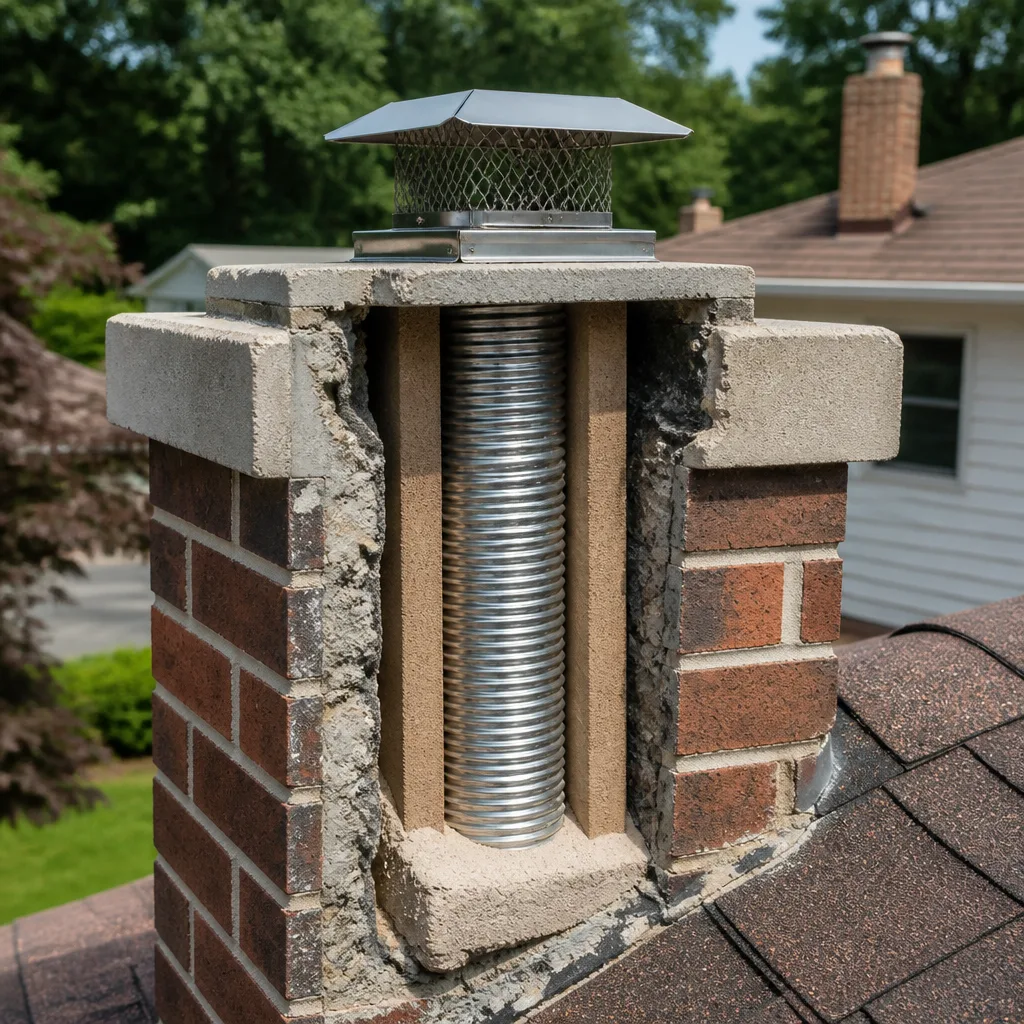
Liner cracks that haven’t displaced yet. A clay-tile liner can develop hairline cracks - stress fractures from thermal cycling - that remain in place, hidden behind soot or creosote. From the firebox, the liner looks intact. From the roof, if visible at all, the flue opening appears normal. The camera, passed slowly down the flue with rotation, reveals the crack pattern. In Elmhurst homes with original 1950s-1970s liners, we see circumferential cracking (around the tile circumference) and radial cracking (spidering from the center) that predict displacement before it happens.
Smoke chamber deterioration. The smoke chamber is the area above the firebox, sloping inward to meet the flue. It’s built of corbelled brick and refractory mortar, and it’s the hottest, most stressed part of the system. From the firebox, you see the sloped walls but not their back surfaces or the mortar condition between corbel courses. The camera, angled upward from below or downward from the flue, reveals parged surface loss, exposed brick, and mortar gaps that allow heat transfer to surrounding framing. NFPA 211 requires smoke chamber parging (smoothing with refractory mortar) when deterioration exceeds specified limits - but you need the camera image to make that determination.
Creosote distribution patterns. Stage 3 creosote doesn’t coat evenly. It forms in ridges, drips, and glaze patches at specific locations: just above the smoke chamber entrance, at flue offsets, and below restrictions. A flashlight inspection from the firebox might show clean-looking lower liner walls while missing heavy accumulation six feet up. The camera documents the full profile.
Hidden obstructions and prior damage. We’ve found collapsed liner sections, chimney fire damage (thermal shock cracking with distinctive patterning), and evidence of prior partial rebuilds that left gaps. These don’t announce themselves with symptoms until they’ve progressed to airflow restriction or water entry.
This is why Clause 4 of the Haven Standard requires a documented photo record on every job - not as an upsell, but as the minimum viable inspection. We’ve maintained this practice since 2009, before insurers or regulators asked for it. The archive now exceeds 38,000 documented inspections.
Elmhurst-Specific Hazards: Age, Architecture, and Thermal Cycling
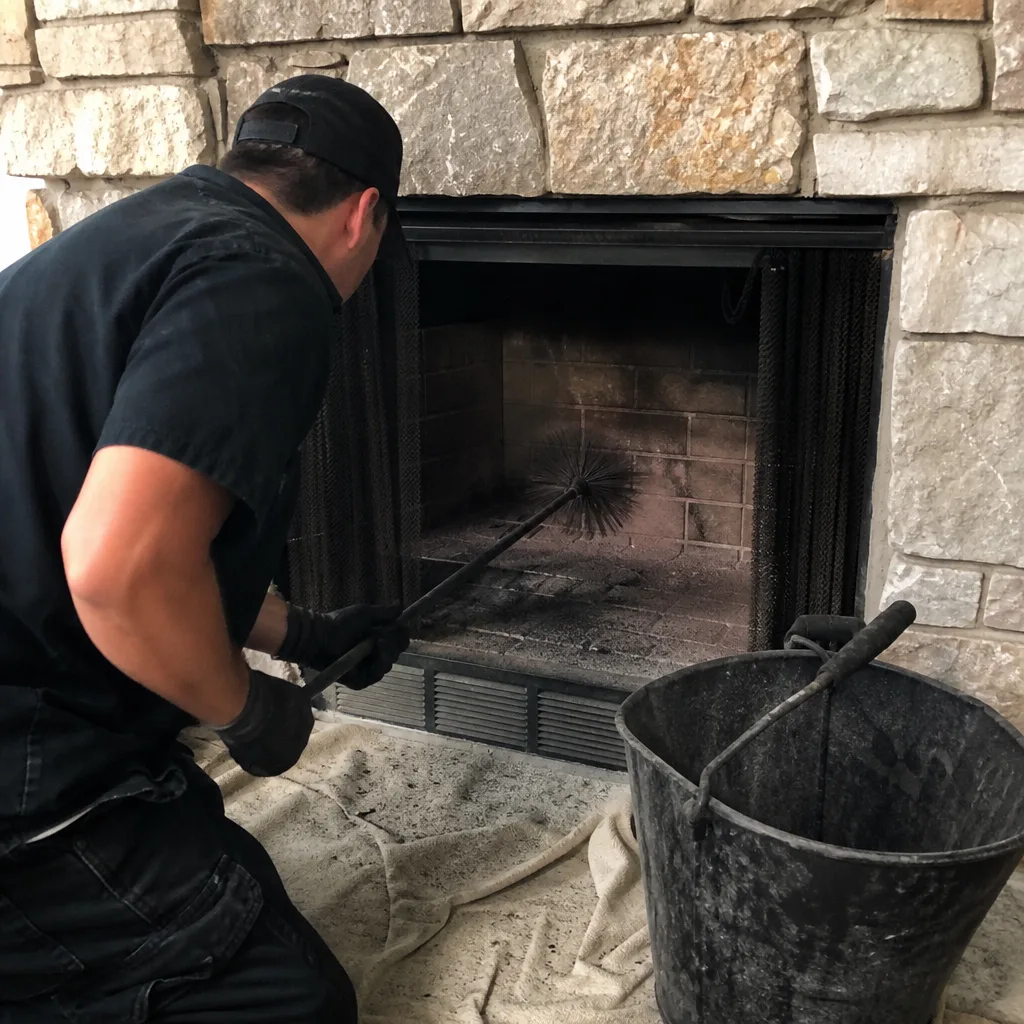
Elmhurst’s housing stock has distinct characteristics that shape chimney risk profiles. Understanding them helps you interpret warning signs in context.
The clay-tile liner era: 1950s-1980s. Homes in the Oak Park Avenue corridor, the Spring Road area, and neighborhoods radiating from downtown Elmhurst were built with clay-tile flue liners as standard. These liners perform adequately when intact, but they’re brittle and unforgiving of thermal shock. The typical pattern we see: 40-70 years of heating and cooling cycles gradually degrade the mortar bedding, tiles shift, and cracks propagate at mortar joints or at tile shoulders. Once a crack opens, creosote penetrates to the brick surround. If a chimney fire occurs, the crack becomes a breach - flame or superheated gases can reach the wooden structure.
We’ve inspected Elmhurst chimneys where the liner looked sound from the firebox but camera inspection revealed circumferential cracks at every mortar joint - a condition called “stacked cylinders” where tiles are no longer bonded and can shift independently. This is pre-failure state. It produces no visible symptom until a tile drops or a chimney fire breaches the gap.
The prefab fireplace wave: 1980s-2000s. Newer Elmhurst construction and additions often used factory-built (prefab) fireplaces with metal chimneys in wooden chases. These systems have different warning signs: chase cover deterioration (rust, pooling water), lateral flashing failure at the roofline, and internal rust staining on the metal flue. The camera inspection for prefab units focuses on the metal flue joints, the condition of the chase interior, and clearance to combustibles - issues invisible without internal viewing.
Thermal cycling and Elmhurst’s continental climate. Our temperature swings are severe: below 0°F in January, above 90°F in July. Masonry expands and contracts with temperature, and the flue liner expands at a different rate than the surrounding brick. This differential movement stresses mortar joints and liner bedding. Add the rapid heating of a cold flue when a fire is lit - surface temperatures can rise 200°F in minutes - and the thermal shock accelerates crack formation. We’ve found that Elmhurst chimneys with original liners show measurably more thermal cracking than equivalent-age systems in milder climates.
Renovation impacts. Elmhurst’s strong market has produced extensive home renovations, often with airtight windows, added insulation, and high-efficiency HVAC. These improvements tighten the building envelope, which can depressurize the house relative to outdoors and reverse or weaken chimney draft. The symptom is “my fireplace never worked right after the renovation.” The cause isn’t chimney damage - it’s pressure dynamics. We diagnose this with a draft gauge and blower door coordination, but the camera still rules out physical obstruction.
When Cleaning Alone Won’t Fix It
This distinction matters for your budget and your safety. Some warning signs indicate that repair must precede or accompany cleaning. Continuing to burn in a compromised system risks fire or carbon monoxide exposure.
Here are the specific findings that shift a job from sweep to repair:
- Liner displacement or collapse. If the camera shows a shifted, cracked, or missing liner section, cleaning creosote from the damaged area doesn’t restore safety. The liner contains flame and gases; without it, you’re burning in an unlined brick flue. We document the damage, provide a written scope for liner repair or replacement using materials from DuraFlex, HeatShield, or Olympia Chimney, and schedule cleaning after the liner is restored.
- Active spalling with through-cracks. Spalling is surface flaking of brick or liner tile, caused by moisture penetration and freeze-thaw cycling. When cracks extend through the material thickness, the structural integrity is compromised. Cleaning won’t stop progressive failure. We recommend crown repair, tuckpointing, or partial rebuild depending on location and extent - priced in writing before work starts, per Haven Standard Clause 1.
- Smoke chamber mortar joint failure with exposed corbelling. The smoke chamber’s sloped brick walls rely on mortar to maintain their angle and to provide a smooth, reflective surface for smoke entry into the flue. When mortar is missing and brick edges are exposed, smoke turbulence increases (worsening draft) and heat transfer to surrounding framing rises. Parging or smoke chamber reconstruction is required; cleaning alone is insufficient.
- Crown deterioration with visible cracking or wash loss. The crown is the concrete or mortar cap sealing the chimney top. Cracks allow water entry, which accelerates all other deterioration. We repair or rebuild crowns with proper overhang, drip edge, and expansion joint - using materials sourced through our Haven buying network - before addressing internal conditions.
- Chase cover failure on prefab units. Rusted, pooled, or improperly flashed chase covers admit water directly to the metal flue and wooden chase structure. Replacement with a properly fabricated chase cover (Gelco or equivalent) is structural repair, not cleaning.
Our Chimney Repair in Elmhurst service handles these conditions with the same documentation standard: camera evidence you can see, written price before work starts, and a 365-Day Done Right Promise stamped on every job.
We also offer a Free Second Opinion on any written estimate. Bring us a competitor’s quote for liner replacement, crown rebuild, or smoke chamber parging. We’ll review their scope against the camera evidence and explain where our assessment differs - no charge, no pressure.
How to Document a Warning Sign Before You Call
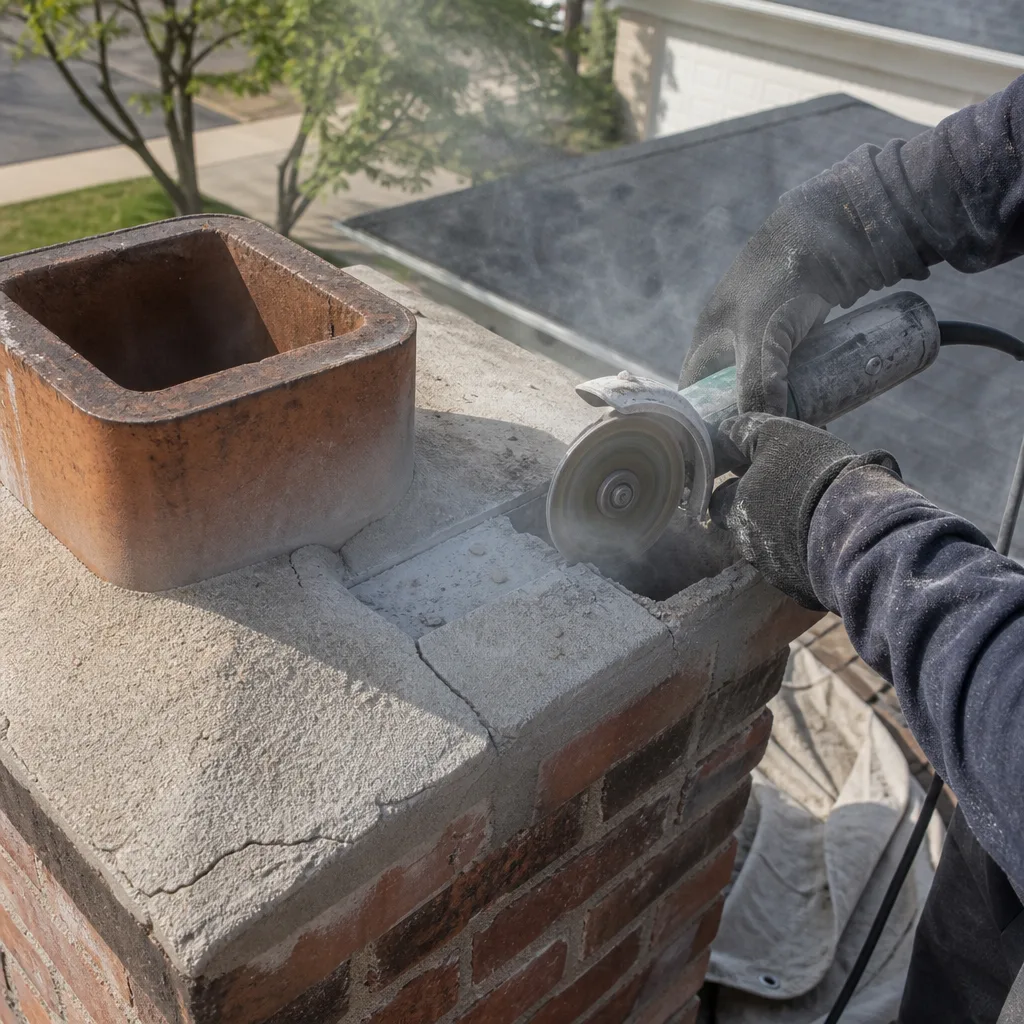
When you notice a symptom, a brief record helps us diagnose faster and price more accurately on the first visit. This saves you time and avoids return trips.
Step 1: Photograph the visible sign.
- Use your phone’s camera with flash on. Dark chimney interiors need light.
- Include a reference object for scale - a coin, a pencil, your hand - when photographing cracks, stains, or debris.
- Take multiple angles: straight-on, oblique, and close-up.
- For exterior staining, photograph the full chimney face, then zoom on the affected area. Note which side faces weather (north and west exposures in Elmhurst take the most rain and freeze-thaw stress).
Step 2: Note the conditions of occurrence.
- When did you first notice it? (Date, season, weather conditions)
- Does it occur every fire, only on startup, or intermittently?
- What wood are you burning, and how long has it been seasoned?
- Have you had prior chimney work? When, and by whom?
- Have you noticed any changes after renovation, HVAC replacement, or weather events?
Step 3: Check accessible components safely.
From the firebox, with a flashlight (never during active fire), you can observe: firebox brick and mortar condition, damper operation, smoke chamber entrance (angle the flashlight upward), and whether debris or tile fragments have fallen. Do not attempt roof access - steep pitches, ice, and height risk serious injury. Do not disassemble components. Document what you can see from ground level and the firebox; we’ll handle the rest with proper equipment.
Step 4: Email or text your documentation before scheduling.
When you contact Emberly Chimney Cleaners Elmhurst at (708) 498-3199, our live answering team (24/7, no voicemail) can direct your photos to the technician assigned to your area. Reviewing documentation in advance lets us confirm whether NFPA 211 Level 2 inspection is appropriate or if additional scope is likely - so your written price, delivered before work starts under Haven Standard Clause 1, reflects actual needs rather than a range that widens on arrival.
What Inspection Standard Actually Catches These Signs
Not all inspections are equivalent. The standard matters because it determines what equipment is used, what areas are examined, and what documentation you receive.
NFPA 211 Level 1: Visual inspection of readily accessible portions - firebox, damper, exterior. No tools, no camera, no roof access required. This is what many sweep companies deliver as “an inspection.” It cannot detect liner cracks, smoke chamber deterioration, or most creosote accumulation patterns.
NFPA 211 Level 2: Required at property transfer, after chimney fire or seismic event, or when changes are made to the system. Includes Level 1 scope plus accessible portions of attic, basement, and crawl space; inspection of chimney exterior and interior by video scanning; and clearances to combustibles. This is our default on every visit - not an upgrade, not an add-on.
NFPA 211 Level 3: Destructive inspection - removal of building materials to access concealed areas. Reserved for suspected serious hazards that cannot be evaluated otherwise.
We’ve operated at Level 2 standard since 2009. The camera scan and documented photo record, now Clause 4 of the Haven Standard, were our default before regulators or insurers required them. When we inspect your Elmhurst chimney, you receive: the full camera footage, still images of relevant findings, a written condition assessment, a written scope and price for any recommended work, and a written warranty - all before anyone starts work.
This documentation also serves your long-term record. If you sell your home, the inspection report transfers to buyers. If an insurance claim arises, you have dated evidence of condition. If we return next year, we compare current images to prior - tracking progression or stability.
What Prevention Costs vs. What Repair Costs
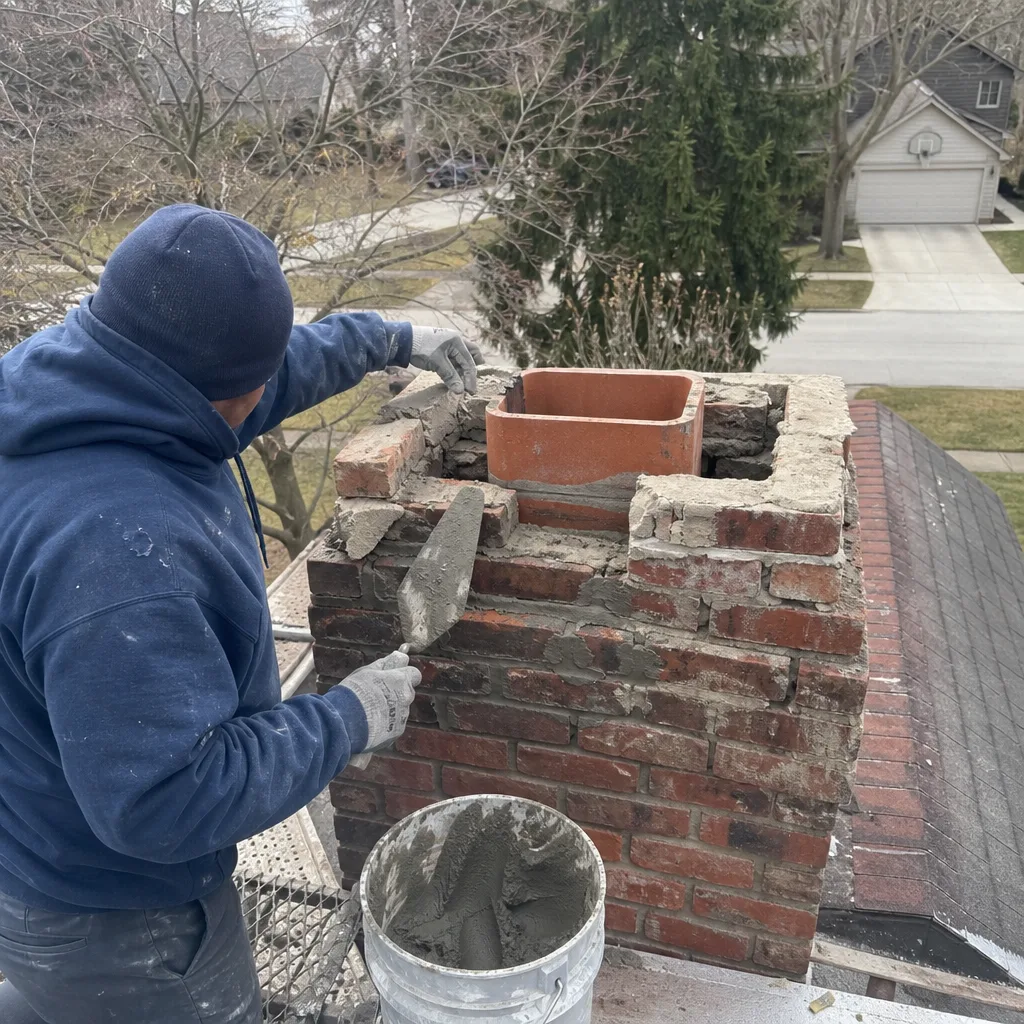
Specific numbers help you budget. These are Elmhurst-market ranges based on our experience; your exact price comes in writing before work starts.
| Service | Typical Range in Elmhurst | What It Includes |
|---|---|---|
| NFPA 211 Level 2 inspection with camera scan | $199-$289 | Full internal/external inspection, video documentation, written report with findings and recommendations |
| Chimney sweep/cleaning (routine, Stage 1 creosote) | $189-$249 | Mechanical brushing of flue, smoke chamber, and firebox; debris removal; condition documentation |
| Chimney sweep with rotary creosote removal (Stage 2-3) | $349-$549 | Rotary chain or whip system for glazed creosote; chemical treatment if needed; full documentation |
| Smoke chamber parging | $1,200-$2,400 | Application of refractory mortar to smooth and seal smoke chamber; restores proper draft and reduces heat transfer |
| Crown repair/rebuild | $800-$2,200 | Crack repair or full concrete crown replacement with proper overhang, drip edge, and expansion joint |
| Stainless steel liner installation (typical masonry fireplace) | $2,800-$5,500 | DuraFlex or equivalent flexible liner, proper sizing for appliance, insulation where required, connection and termination |
| Chimney fire damage assessment and repair | $3,500-$12,000+ | Varies widely with extent; may include liner replacement, masonry repair, smoke chamber rebuild, or partial reconstruction |
The pattern is clear: inspection and routine sweeping prevent conditions that lead to four-figure repairs. Stage 3 creosote removal costs 2-3x routine sweeping, but a chimney fire with associated damage can exceed $10,000. In Elmhurst’s market, where home values support significant equity investment, we’ve seen insurance claims denied when homeowners cannot produce evidence of regular maintenance - the camera documentation we provide protects against this.
Our pricing is flat and written, not time-and-materials with open-ended estimates. Haven Standard Clause 1 requires a written price, written scope, and written warranty before any work begins. You’ll never hear “it might be this, it might be more” from our technicians.
Common Mistakes to Avoid
- Assuming no symptoms means no problems. The most dangerous chimneys we’ve inspected in Elmhurst were those that “worked fine.” Stage 3 creosote and liner cracks produce no living-room symptoms until failure.
- Treating chimney sweeping as a “cleaning” rather than an inspection event. The sweep process is when we access the flue for camera documentation. Skipping the inspection to save money leaves you without the condition record you need for safety and resale.
- Burning improperly seasoned wood. Wood with moisture content above 20% produces significantly more creosote. In Elmhurst’s humid summers, even “seasoned” wood stored outdoors can reabsorb moisture. We check moisture content during inspections and can recommend local suppliers with verified dry stock.
- Ignoring efflorescence as “just staining.” White powder on brick is soluble salt migration driven by water entry. Every freeze-thaw cycle widens the pathway. Address the water source (crown, flashing, mortar) before repointing or the salts will reappear.
- Accepting a flashlight inspection as adequate. If a sweep company doesn’t offer camera documentation as standard, you’re receiving NFPA 211 Level 1 - insufficient for detecting the conditions that cause chimney fires and carbon monoxide exposure.
- Delaying after a chimney fire. Even a “small” chimney fire (noisy, smoky, brief) causes thermal shock cracking in clay-tile liners. The damage is often invisible without camera inspection. We’ve found hairline cracks after fires that homeowners assumed were minor - cracks that became breaches in the next heating season.
- Not documenting prior work. When you sell your Elmhurst home, buyers and their inspectors will ask about chimney maintenance. Our documented photo records, with dated reports, answer this question definitively.
When to Call a Professional
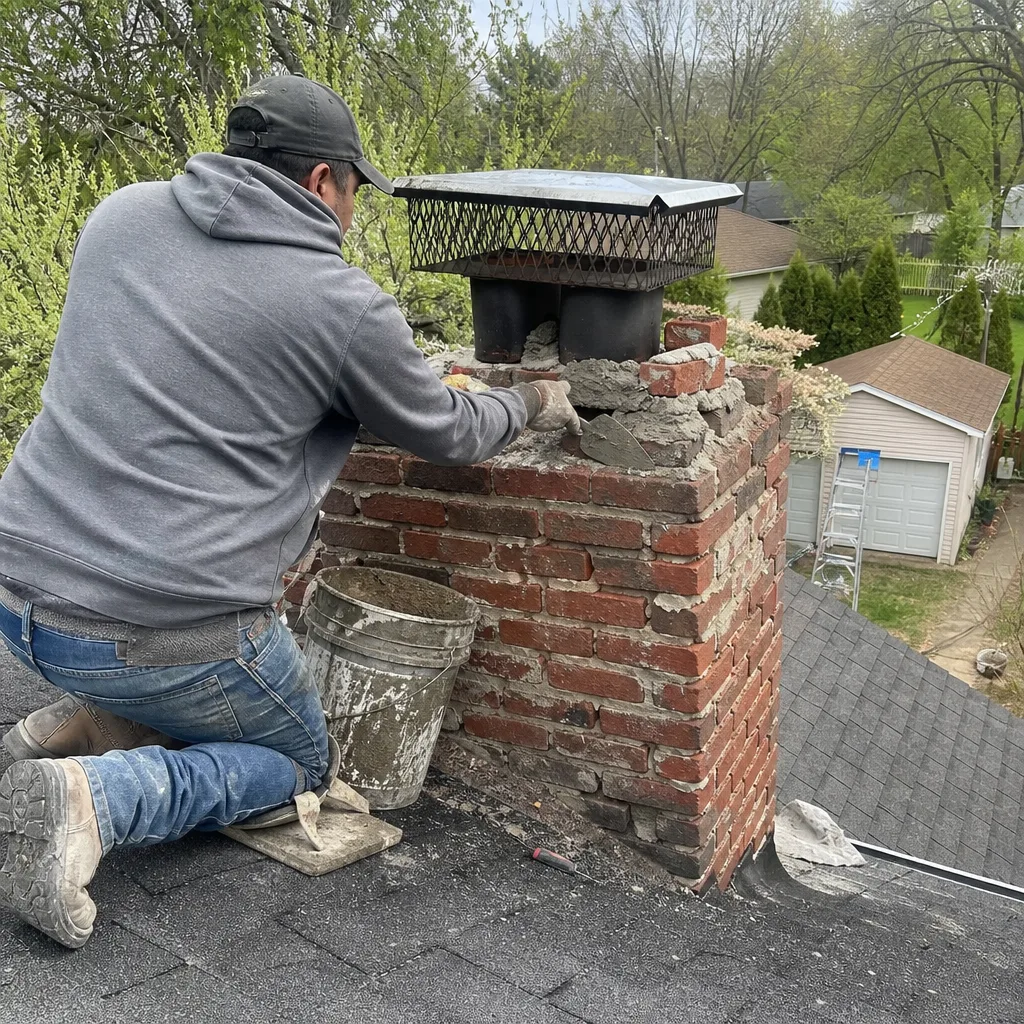
Call before symptoms appear - that’s the thesis of this guide. But specifically: schedule an NFPA 211 Level 2 inspection if it’s been more than 12 months since your last documented camera inspection; if you’ve noticed any warning sign discussed here; if you’ve changed your heating appliance or fuel type; or if you’ve purchased a home and have no record of prior inspection.
Call immediately - do not use the fireplace - if you experience smoke rollout, a chimney fire (roaring sound, hot exterior, smoke smell), debris falling into the firebox, or visible flame outside the flue. These are active hazards.
Emberly Chimney Cleaners Elmhurst offers free estimates in Elmhurst - call (708) 498-3199. Our live answering team is available 24 hours a day, 7 days a week. We’ll schedule your inspection, assign a named, background-checked technician, and send a text when they’re en route. Your written price, written scope, and written warranty arrive before any work begins, per Haven Standard Clause 1. The camera documentation and photo record follow, per Clause 4 - the practice we’ve maintained since 2009.
Frequently Asked Questions
A routine chimney sweep in Elmhurst typically runs $189-$249, including the NFPA 211 Level 2 camera inspection and documented photo record. If we find Stage 2 or 3 creosote requiring rotary removal, the range is $349-$549. We deliver a written price before any work starts - no exceptions. Call (708) 498-3199 for an exact quote; estimates are free.
The NFPA recommends annual inspection for all chimneys, and cleaning when creosote exceeds 1/8 inch thickness. In Elmhurst’s climate, with our freeze-thaw cycles and the prevalence of older clay-tile liners, we advise annual Level 2 inspection with camera documentation. Heavy use (more than three fires weekly in season) or improperly seasoned wood may require more frequent cleaning. Browse more guides & resources on burning practices and seasonal care. Call (708) 498-3199 to schedule; we’ll assess your specific burning pattern.
If the camera shows intact liner walls with no cracks, displacement, or spalling, cleaning is sufficient. If we find through-cracks, shifted tiles, or missing sections, liner repair or replacement is required before safe use - cleaning a damaged liner doesn’t restore its containment function. We show you the camera evidence and explain the finding in plain terms. Our Free Second Opinion applies to any competitor’s liner replacement quote. Call (708) 498-3199.
Progressive creosote accumulation increases chimney fire risk; liner deterioration can allow flame or carbon monoxide breach into the structure; water entry degrades masonry and can damage adjacent framing and finishes. In Elmhurst’s insurance market, claims for fire or water damage may be denied without evidence of regular maintenance. The documented photo record from our inspections provides that evidence. The cost of prevention is a fraction of repair or claim denial.
Summer humidity reactivates creosote deposits, causing off-gassing even without fire. The smell indicates Stage 2 or 3 creosote accumulation - a fuel load for chimney fire and a sign that cleaning is overdue. In Elmhurst, we see this frequently in homes that burned regularly through winter without spring inspection. A sweep with rotary removal, scheduled before the next burning season, eliminates the odor and the hazard.
A flashlight from the firebox reveals only the lower flue and firebox walls - perhaps 15% of the system. Liner cracks, smoke chamber deterioration, and most creosote accumulation patterns are invisible without camera inspection from top or bottom. For your safety, we recommend professional NFPA 211 Level 2 inspection rather than self-assessment. Our technicians are background-checked, uniformed, and licensed; you’ll receive their name before arrival and a text when they’re en route.
The Bottom Line
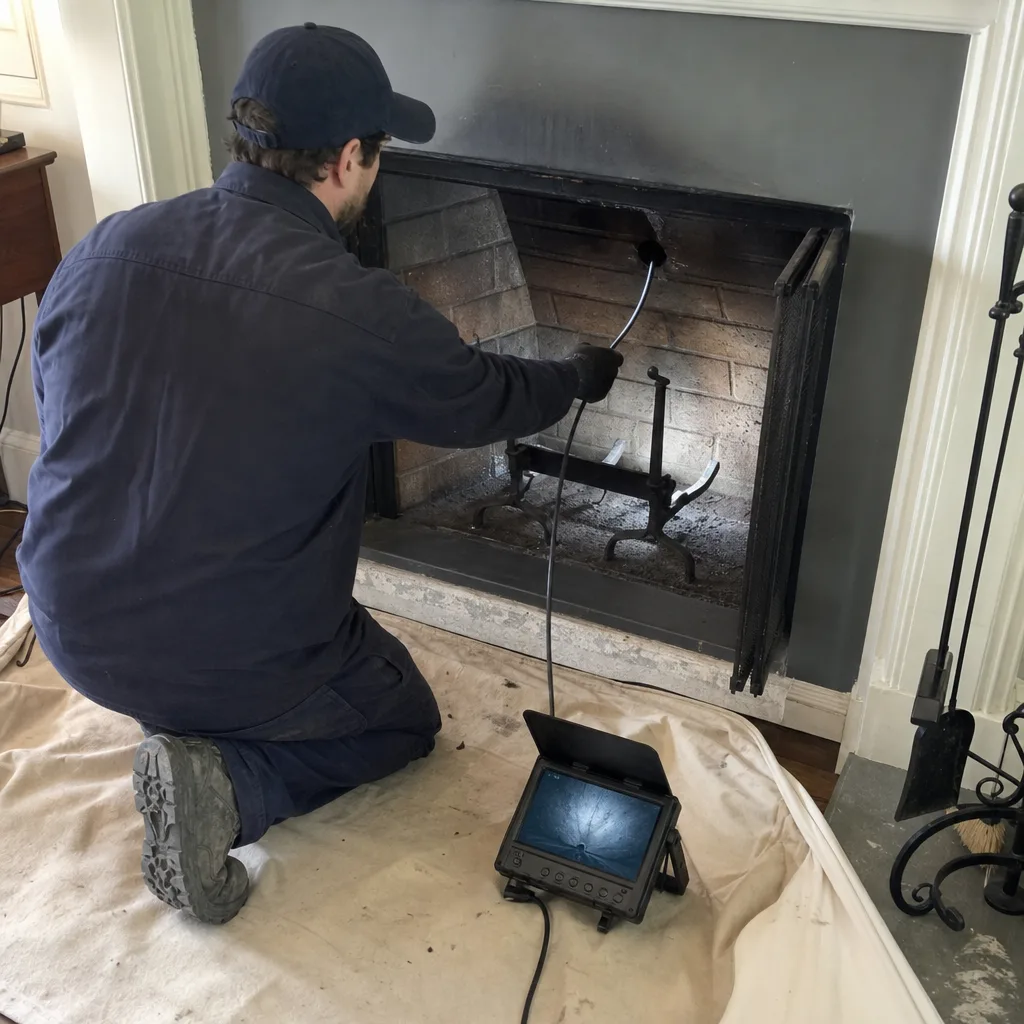
The warning signs that matter most are the ones you can’t see without a camera. In Elmhurst’s aging housing stock, with clay-tile liners approaching or exceeding their design life, the progression from silent deterioration to visible symptom to hazardous failure follows a predictable timeline - one that annual NFPA 211 Level 2 inspection intercepts. Don’t wait for smoke in your living room. Document what you can observe, schedule camera inspection before the burning season, and demand written evidence: photos, findings, price, and warranty. That’s the Haven Standard. It’s been our practice since 2009.
For Fireplace Services in Elmhurst including inspection, cleaning, repair, and documented maintenance records, contact Emberly Chimney Cleaners Elmhurst. Every job includes camera-scan documentation, written upfront pricing, and our 365-Day Done Right Promise.
Written by Corrine Halstead, Owner at Emberly Chimney Cleaners Elmhurst, serving Elmhurst since 2009.