
Last updated September 22, 2026
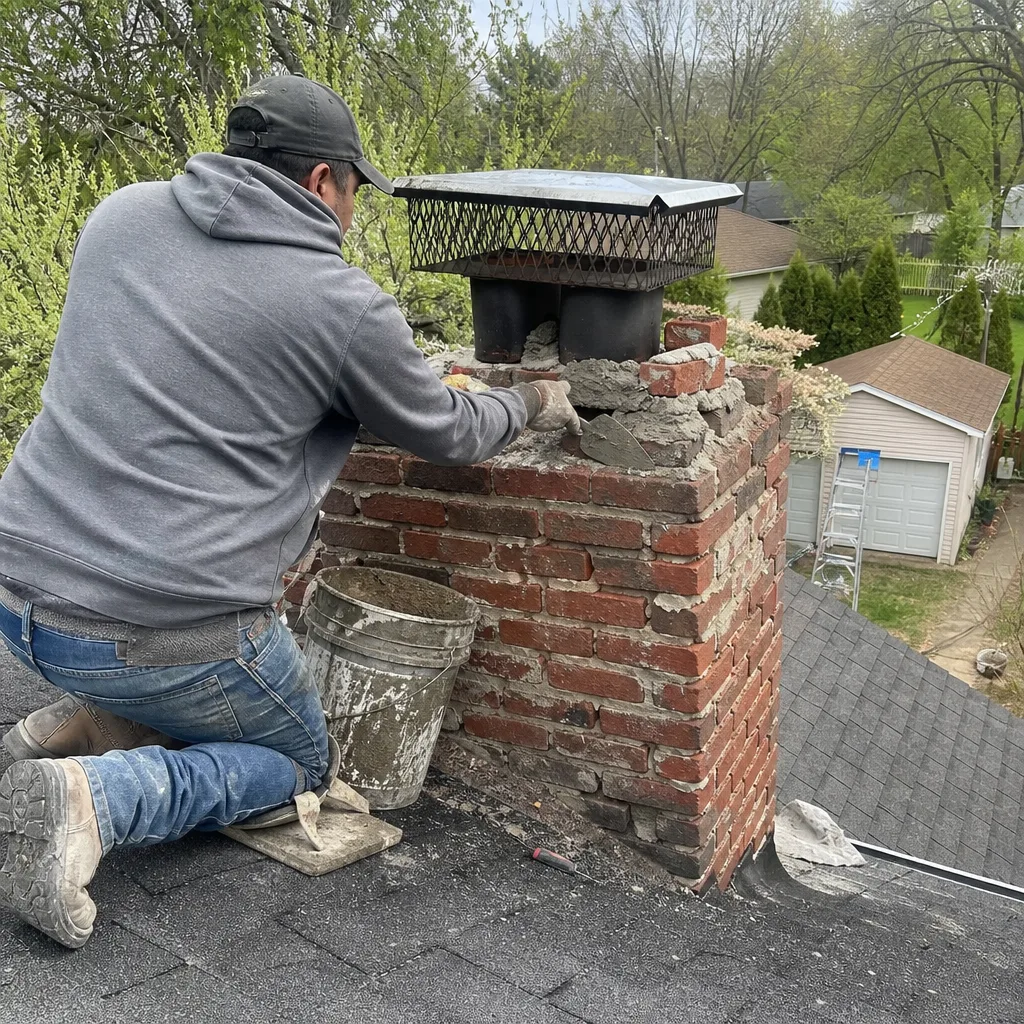
Level 1 sweep and inspection to the NFPA 211 annual standard - flue, crown, cap, and flashing checked and photographed
Chimney sweep logs do not sweep chimneys. They loosen some creosote - which then falls where a brush and vacuum still have to collect it.
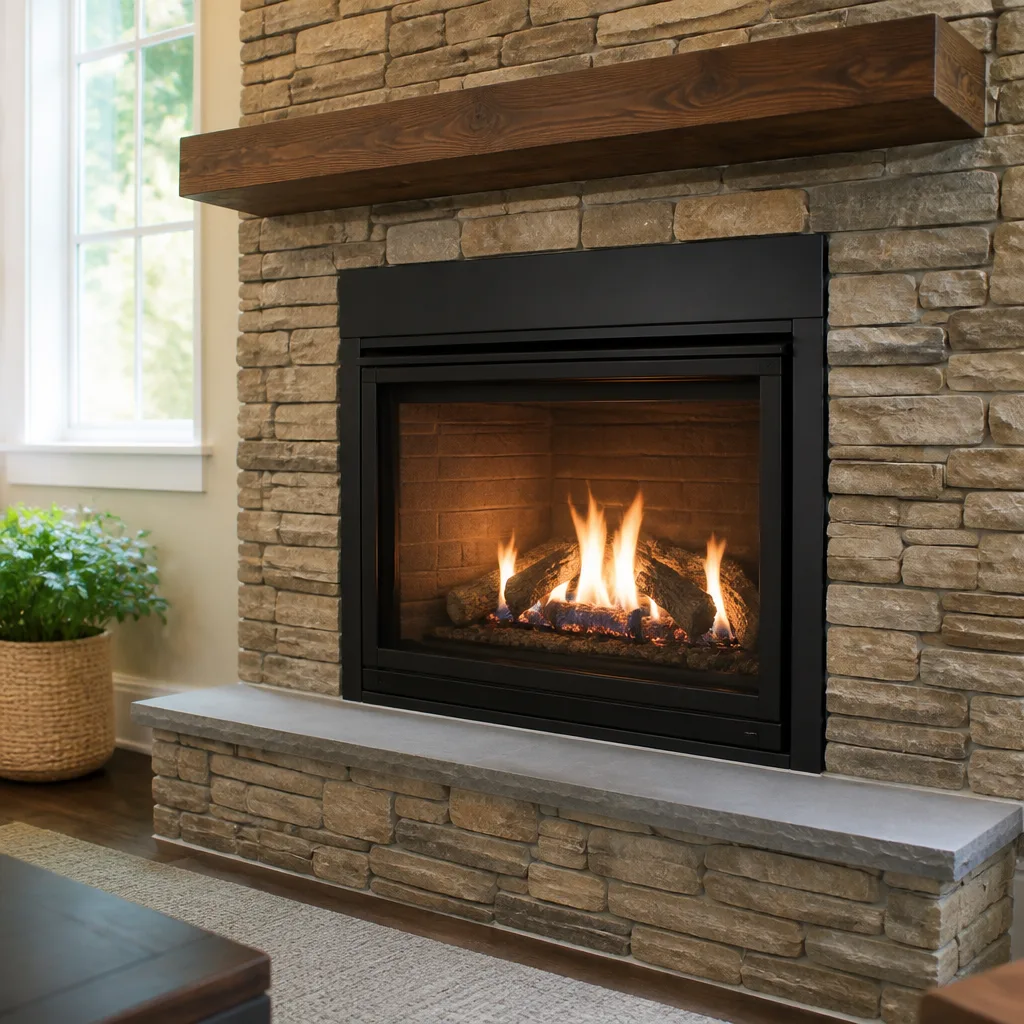
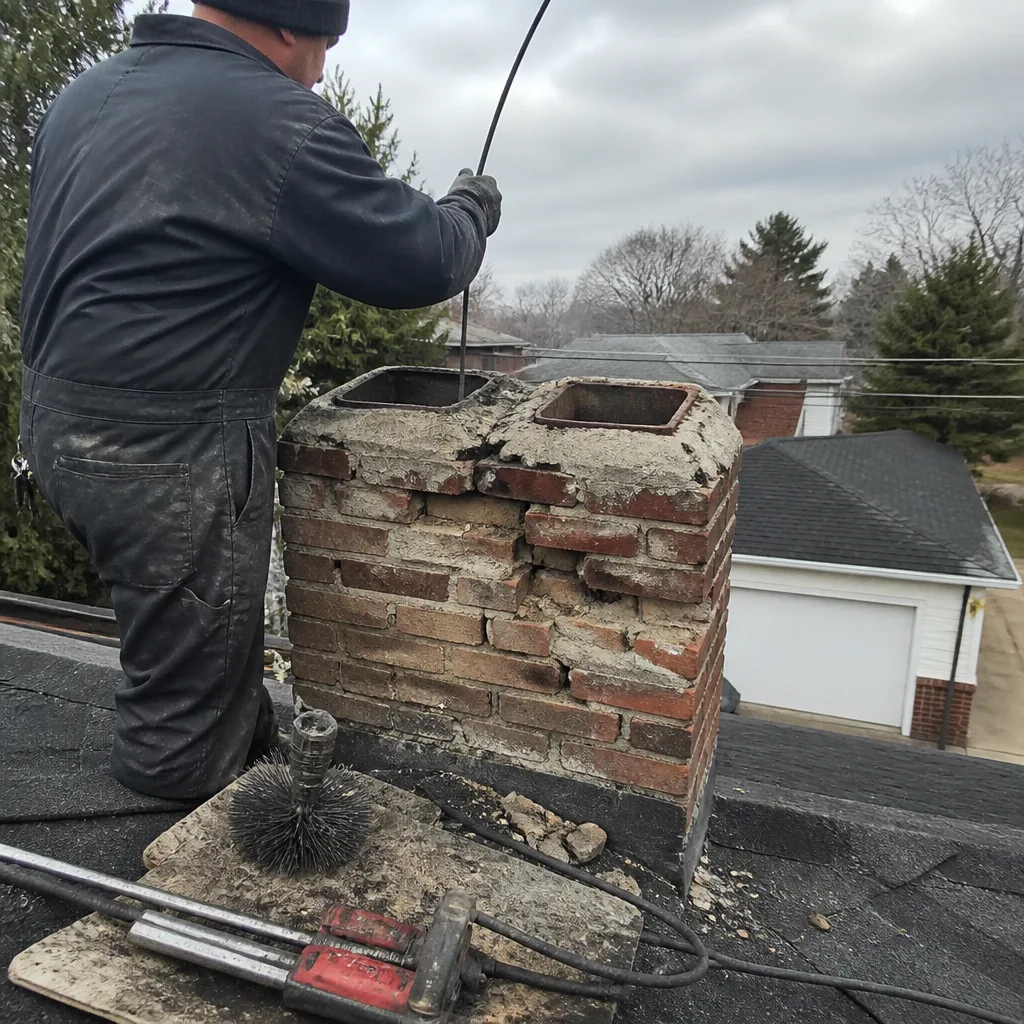 Before
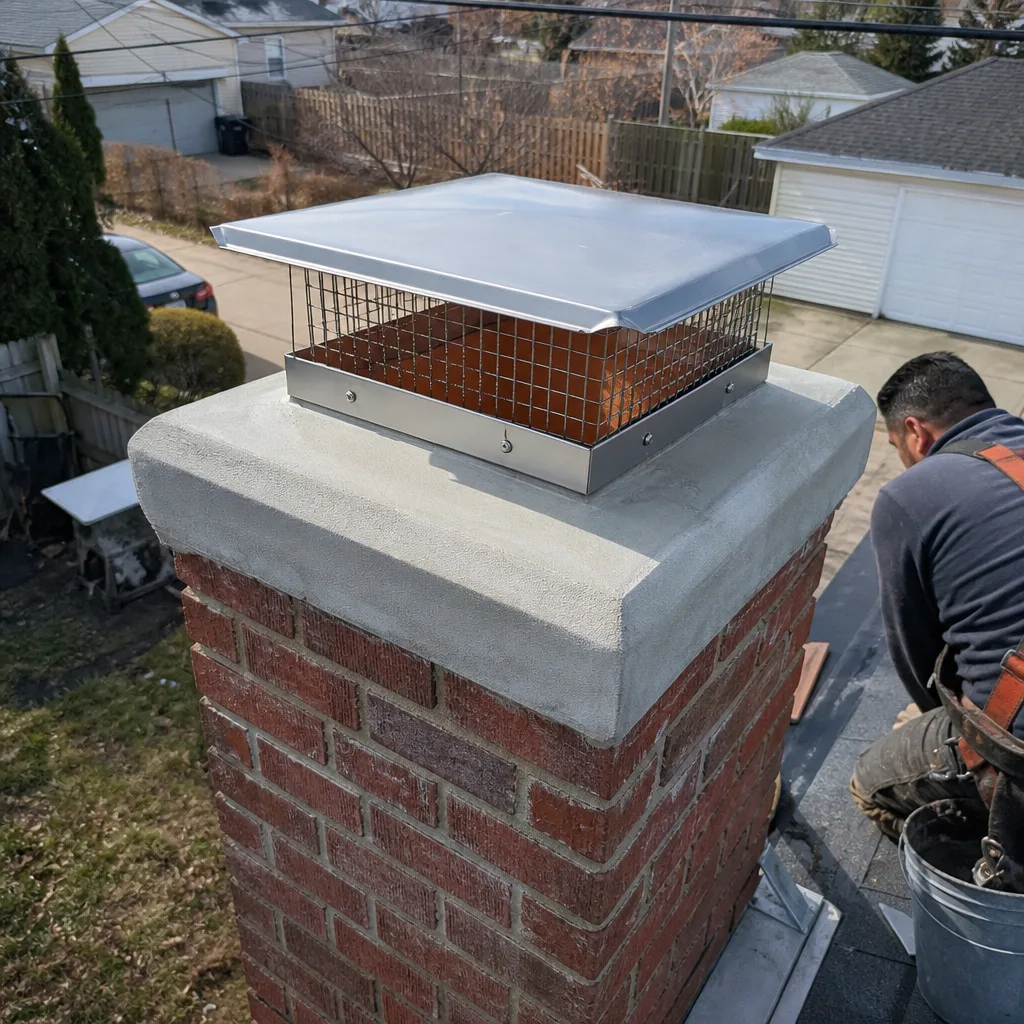 After
After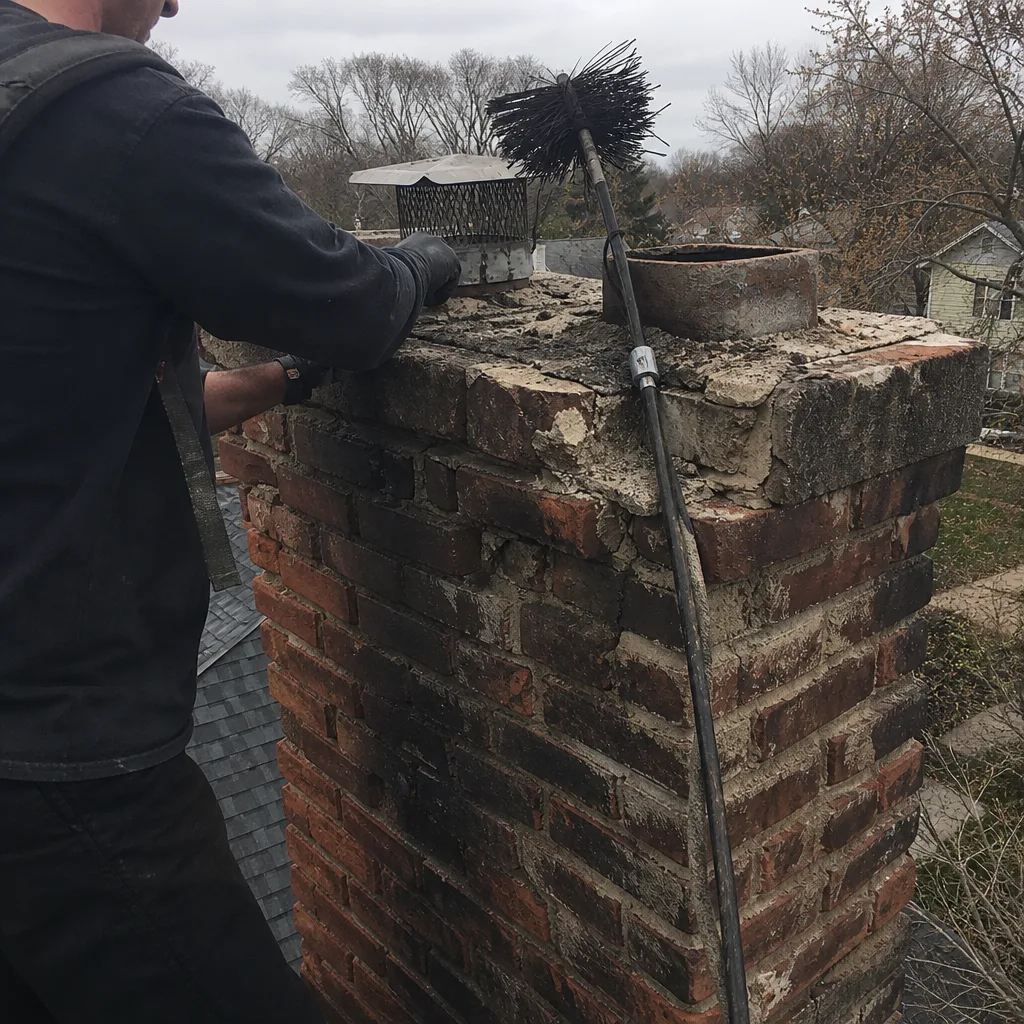 Before
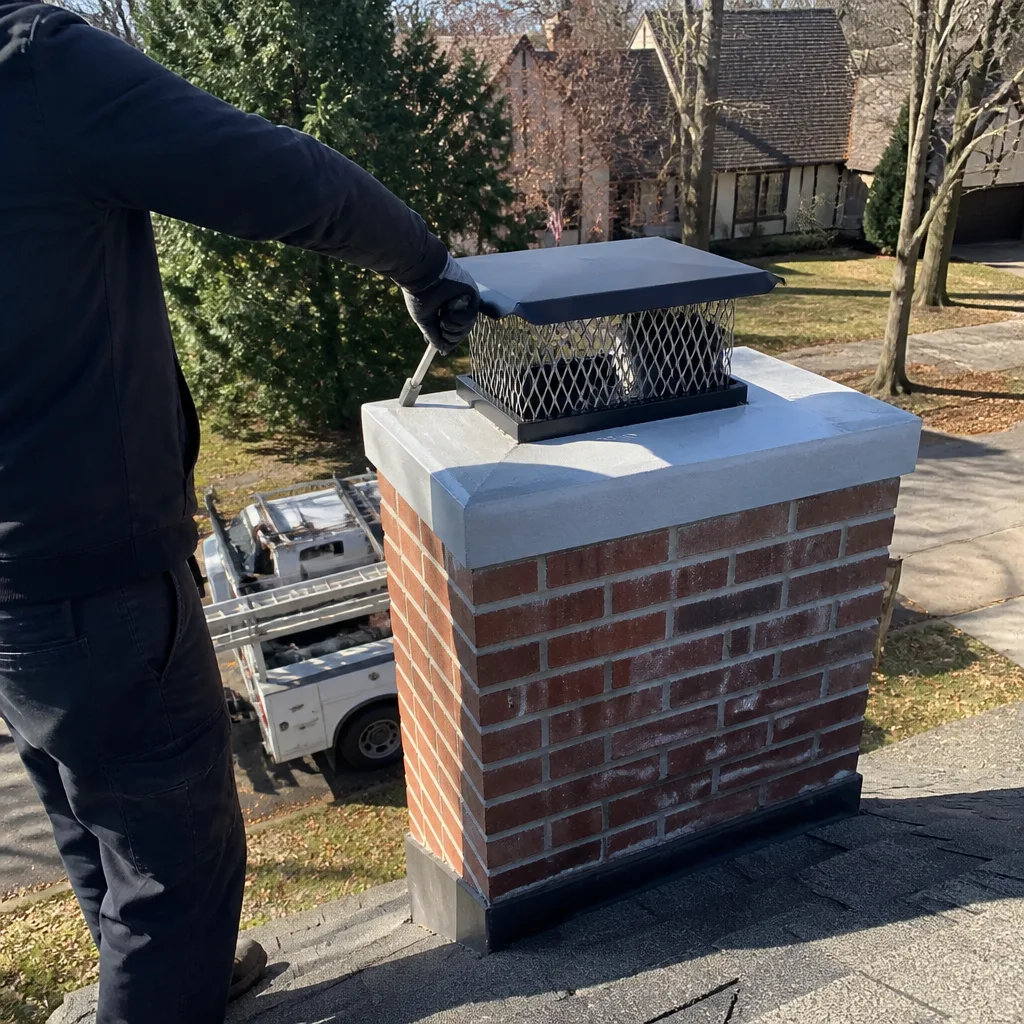 After
After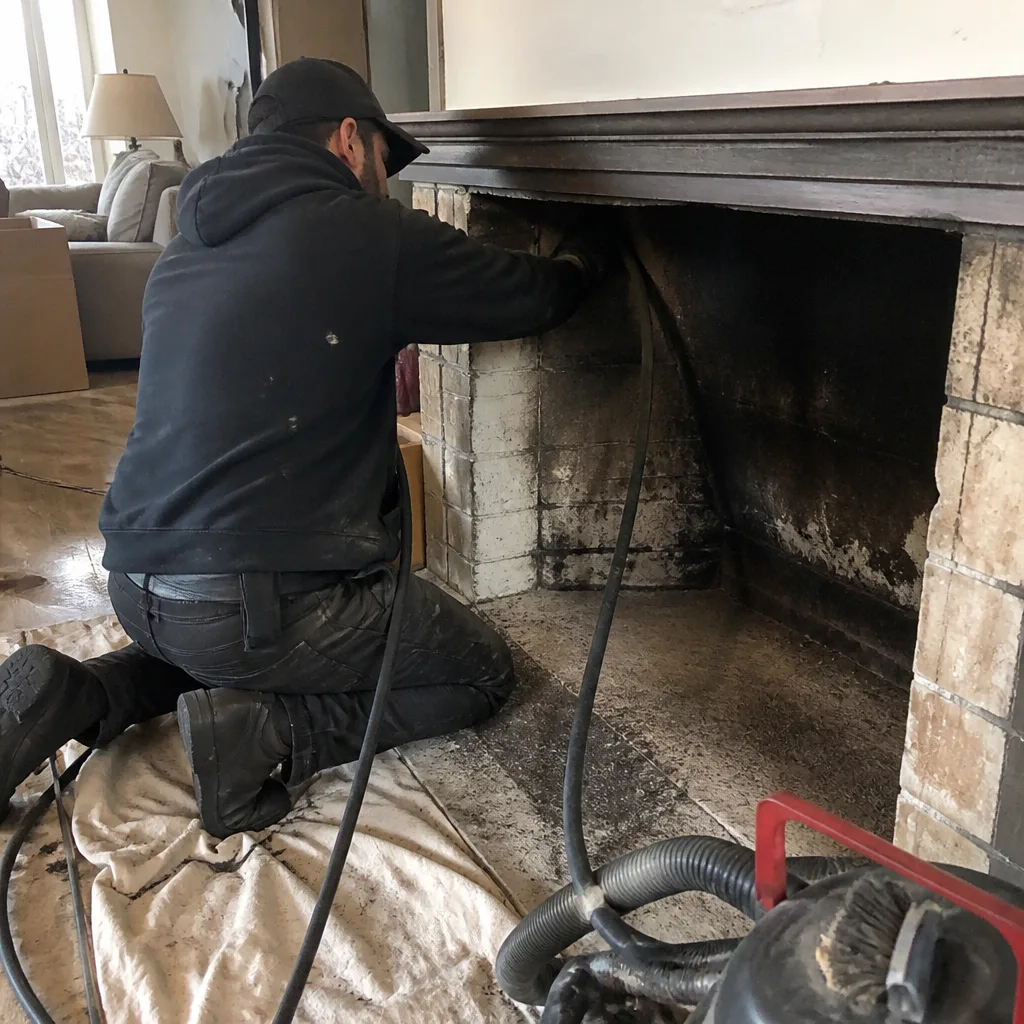 Before
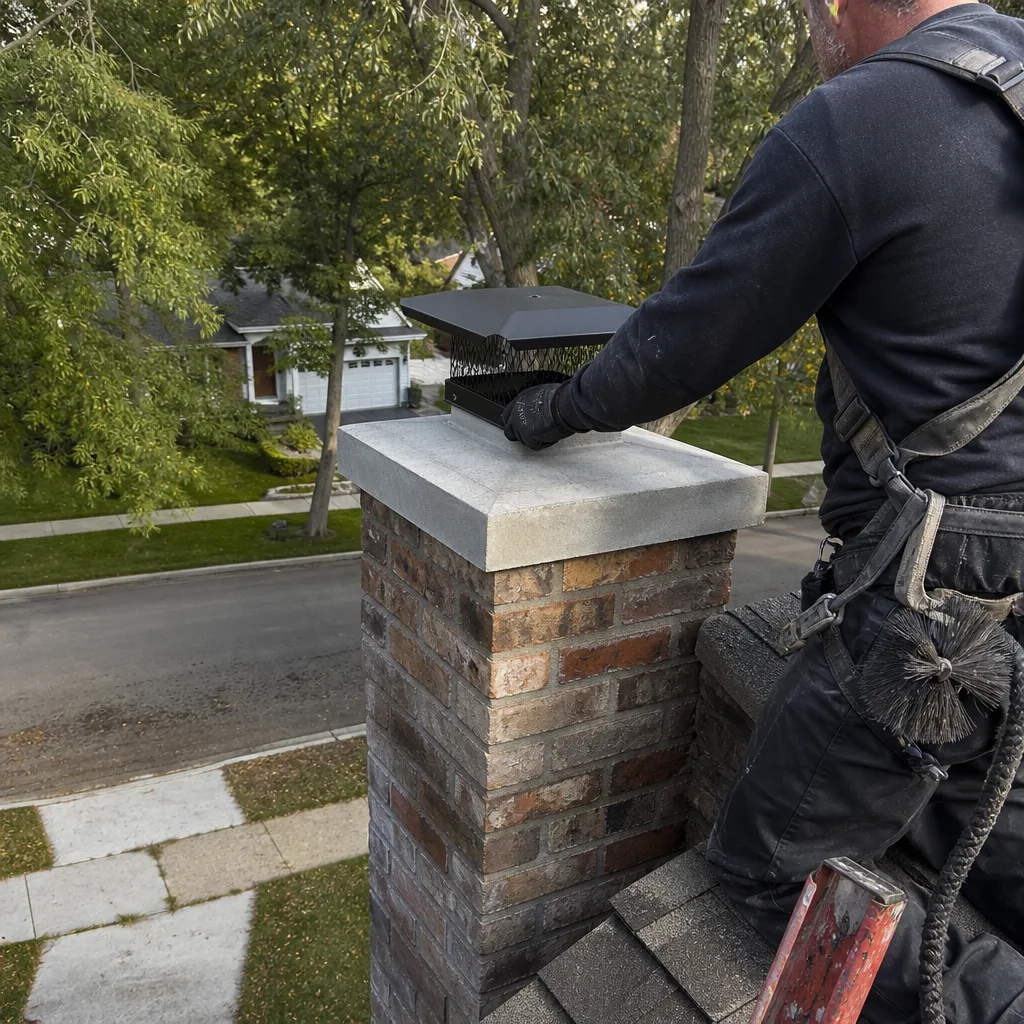 After
AfterThe Complete Guide to Chimney Cleaning in Elmhurst
Most Elmhurst homeowners mark “chimney cleaning” on their October calendar and call it done. That habit made sense in the 1980s, when nearly every fireplace in town burned seasoned oak and cleaning meant one predictable job. Today’s Elmhurst homes run a mix of gas log sets, EPA-certified wood inserts, and pellet stoves - each appliance deposits different byproducts at different rates, and none of them reliably match a once-a-year schedule. In this guide - and in our broader more guides & resources - we’ll replace the calendar with a camera-based framework: how creosote actually stages, what your fuel type means for cleaning intervals, why NFPA 211 Level 2 inspection changes everything, and what a legitimate written price and photo record look like before anyone touches your flue.
Quick Answer
Chimney cleaning in Elmhurst typically costs $189-$329 for a standard sweep with NFPA 211 Level 2 camera inspection included. The actual interval depends on your fuel type and what a flue camera reveals - wood-burning systems often need annual attention, gas appliances every 2-3 years, and pellet stoves on a schedule set by ash accumulation and exhaust probe readings. A written price before work starts and a documented photo record afterward are non-negotiable minimums.
Table of Contents
- Why Calendar-Based Cleaning Fails in Modern Elmhurst Homes
- How Creosote Staging Determines Cleaning Method and Cost
- Fuel-Type Matrix: What Gas, Wood, and Pellet Appliances Actually Deposit
- Elmhurst Chimney Construction Patterns That Affect Cleaning
- NFPA 211 Level 2 Inspection: What It Is and How to Verify It
- What a Written Price and Photo Record Should Contain
- Chimney Cleaning Cost Breakdown in Elmhurst
- Common Mistakes to Avoid
- When to Call a Professional
- Frequently Asked Questions
 Before
 After
AfterWhy Calendar-Based Cleaning Fails in Modern Elmhurst Homes
The “clean it every fall” rule comes from a single-fuel era. Walk the neighborhoods south of Butterfield Road in Elmhurst and you’ll find 1920s colonials with original Rumford-style fireplaces now fitted with gas log sets, 1970s splits with pellet stove inserts in the basement, and new construction on the north side with direct-vent gas fireplaces that never see a match. Each setup produces different deposits, and “dirty” means something different for each.
Wood combustion creates creosote - a tar-like condensate that builds in stages we’ll detail below. Gas combustion produces acidic moisture and, in some cases, ceramic fiber deposits from deteriorating logs. Pellet stoves generate fly ash and clinkers that clog exhaust paths in ways creosote doesn’t. A sweep trained only for traditional wood flues can miss gas-specific deterioration entirely, or worse, treat pellet ash with methods that damage refractory components.
Elmhurst’s climate compounds this. Our freeze-thaw cycles - often 40+ swings between November and March - accelerate masonry deterioration when acidic gas condensate sits in a flue. A gas fireplace “cleaned” on calendar schedule but never camera-inspected may show intact tile from the top while the bottom third deteriorates from sulfuric acid attack. We’ve pulled liners in Elmhurst homes where the upper flue looked fine and the smoke chamber was powder.
The replacement for calendar cleaning is condition-based maintenance: a camera scan that documents actual flue condition, assigns a creosote stage or deposit type, and sets the next interval based on what was found - not what month it is.
How Creosote Staging Determines Cleaning Method and Cost
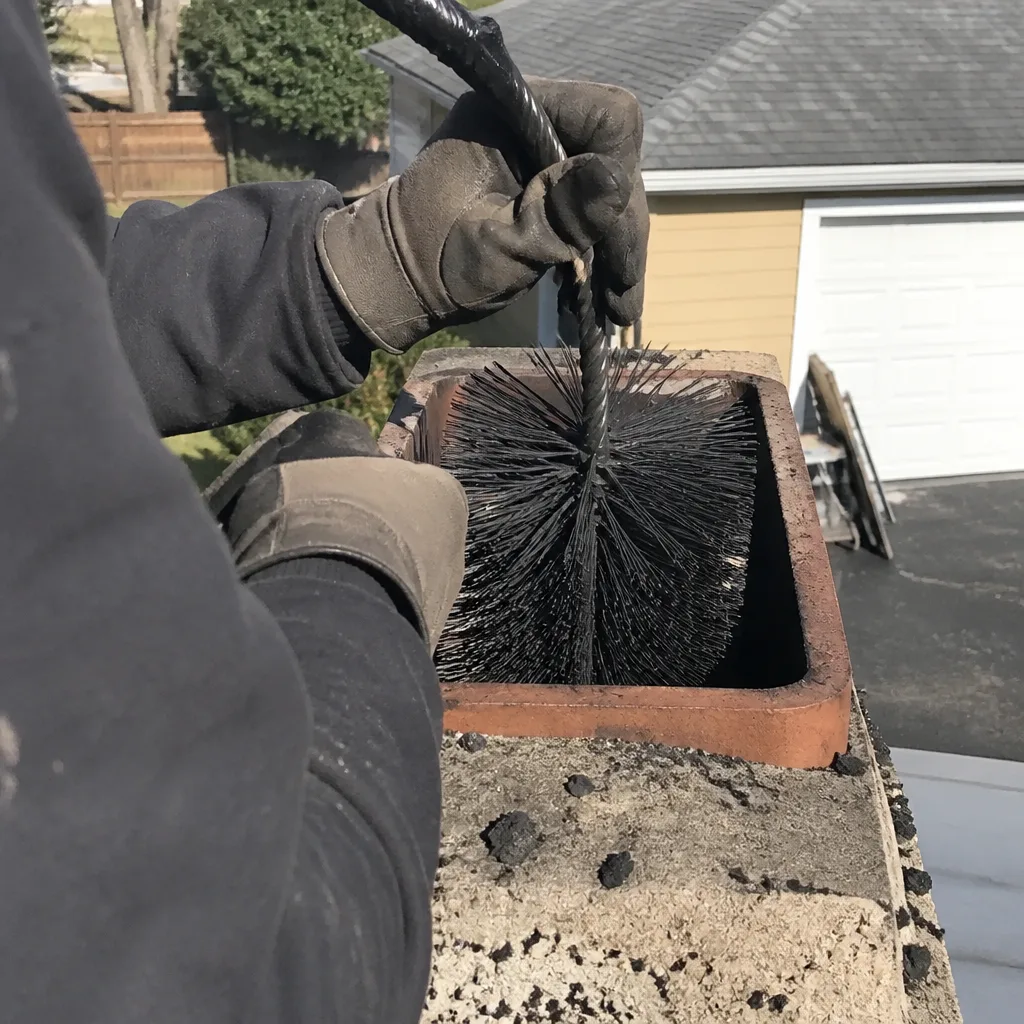
Not all “dirty” chimneys are dirty the same way. The Chimney Safety Institute of America recognizes three creosote stages, and each requires different equipment, time, and technique. A company that quotes one flat rate without looking is guessing.
Stage 1 (Soot and flaky creosote): A light, dusty layer that brushes off with standard poly or wire brushes. This is what most homeowners picture - and what most Elmhurst sweeps assume they’ll find. Stage 1 cleaning takes 45-90 minutes including setup and camera verification. We see this in gas-to-wood conversions where the homeowner burns only a few weekend fires, or in well-seasoned hardwood setups with proper air control.
Stage 2 (Crunchy, honeycombed creosote): Hardened layers that fracture into chips. Requires motorized whips, chains, or specialized polypropylene heads run on flexible rods. The deposit has begun to absorb into tile pores and needs mechanical agitation. Stage 2 adds 30-60 minutes and often requires a second camera pass to confirm complete removal. In Elmhurst, we find Stage 2 regularly in homes near the prairie preserve where homeowners burn softwoods or partially seasoned wood for ambiance.
Stage 3 (Glazed, tar-like creosote): A hardened, glossy deposit that is literally baked onto the liner surface. Chemical treatment - either sprayed creosote modifier or powder-based products that react over 24-48 hours - is required before mechanical removal. Stage 3 cannot be brushed off in one visit. The process requires two appointments minimum, and in severe cases, liner replacement is more economical than restoration. We’ve documented Stage 3 in Elmhurst chimneys where the previous owner burned green wood for multiple seasons without inspection.
The critical point: stage assignment requires a camera. A flashlight look from the top or bottom cannot distinguish Stage 2 from Stage 3 reliably, and mistaking the two means quoting for a one-hour job that needs a two-day treatment - or worse, leaving glazed creosote in place because the brush seemed to pass freely. Chimney Cleaning & Sweep in Elmhurst at Level Two includes camera staging on every visit, with the image saved to your record under Haven Standard Clause 4.
Fuel-Type Matrix: What Gas, Wood, and Pellet Appliances Actually Deposit
Use this framework to set realistic expectations for your Elmhurst home. The intervals below assume typical use; heavy use (daily winter fires, primary heat source) shortens each.
| Fuel Type | Primary Deposits | Typical Cleaning Interval | What Inspection Must Include |
|---|---|---|---|
| Seasoned hardwood (oak, hickory, maple) | Stage 1-2 creosote | Annual if used regularly; every 2 years if occasional | Full flue camera, smoke chamber, firebox floor |
| Softwood or mixed loads (pine, construction scrap) | Stage 2-3 creosote, rapid buildup | Every 6-12 months depending on moisture content | Full flue camera with stage documentation; moisture meter reading of wood supply |
| Gas log set (vented or vent-free) | Acidic condensate, ceramic fiber debris, spider webs in burner ports | Every 2-3 years; burner service annually | Firebox and burner inspection, flue camera for condensate damage to liner, CO test |
| Pellet stove | Fly ash, clinkers, exhaust probe soot | Per manufacturer (typically every 1-3 tons burned); venting inspection annually | Exhaust path camera, ash trap and hopper condition, combustion air intake |
| Gas insert (direct vent) | Minimal flue deposit; focus on vent termination | Every 2-3 years; annual burner check | Coaxial vent termination, glass and gasket condition, combustion analysis |
Elmhurst’s housing stock skews toward the 1940-1980 range, which means many “fireplaces” were originally wood-burning and later converted. We’ve found gas log sets installed in flues never properly sized for gas condensate, and pellet stove vent kits routed through deteriorated clay tile that the installer never camera-checked. The fuel-type matrix only works when the installation itself is verified against current code.
A note on gas: acidic condensate from modern high-efficiency gas appliances is more corrosive than the moisture from older atmospheric units. If your Elmhurst home has a 90%+ efficiency gas insert installed in the last decade, the flue liner material - aluminum, stainless, or original clay - matters enormously for how that condensate is managed. We specify appropriate liner materials from Olympia Chimney or Gelco when replacement is indicated, sourced through Haven’s buying network to keep pricing transparent.
Elmhurst Chimney Construction Patterns That Affect Cleaning
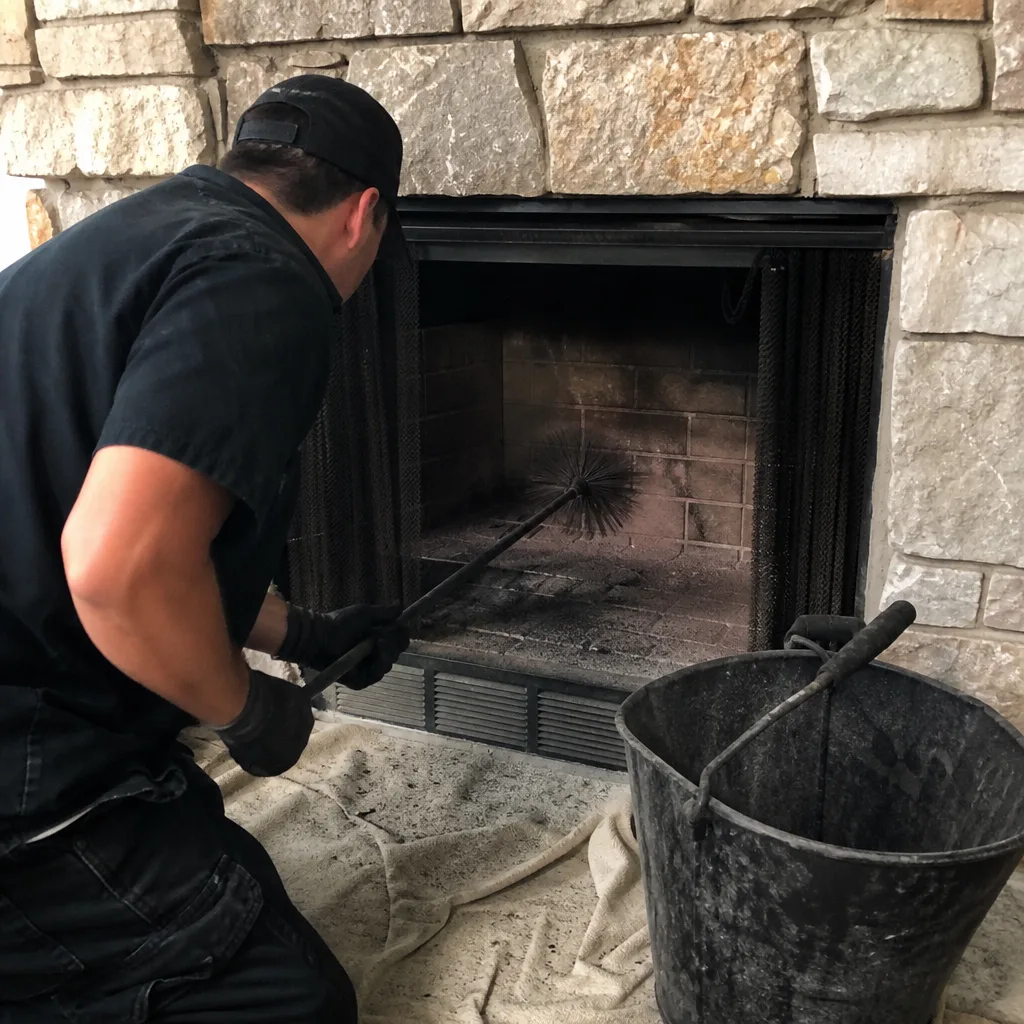
Local architecture isn’t decorative trivia - it determines access difficulty, liner compatibility, and where deposits concentrate. Elmhurst presents several distinct patterns:
Pre-1940 colonials and bungalows: Narrow, straight flues with hand-laid brick corbelling (stepped narrowing) at the smoke chamber. The corbelled section creates ledges where Stage 2 creosote accumulates in rings. Cleaning requires specialized whips that can navigate the reduced diameter without damaging mortar. We’ve documented corbelling deterioration in homes near York and Vallette where freeze-thaw cycling spalled the interior brick face.
1945-1975 ranch and split-level: The era of mass-produced clay-tile liners, typically 8″×8″ or 8″×12″. These liners are functional but brittle; motorized cleaning equipment can crack tiles if the operator doesn’t verify liner condition with a camera first. Many Elmhurst ranches in the Hawthorne and Stratford Hills areas have partial liner collapses hidden above the smoke chamber, invisible from below until the camera passes.
1975-1995 construction: Factory-built metal chimneys become common, especially for wood stove installations in basements and additions. These require UL-listed cleaning methods and specific clearances to combustibles. We’ve found unlisted “adapter” installations in Elmhurst where a previous owner connected a wood stove to a gas-rated metal chimney - a configuration that cleaning cannot make safe.
Post-2000 builds and major renovations: Direct-vent gas fireplaces with no traditional flue; stainless liner systems for high-efficiency appliances. Cleaning is minimal, but the vent termination location (roof, sidewall, chase top) determines weather exposure and insect intrusion risk. Elmhurst’s mature tree canopy means more leaf and debris accumulation at terminations than in newer, cleared subdivisions.
Each pattern changes the cleaning approach. A technician who treats a 1925 corbelled flue like a 1995 straight metal system will miss deposits or damage brick. We assign crews based on construction era noted during booking, and we verify with a camera before selecting tools.
NFPA 211 Level 2 Inspection: What It Is and How to Verify It
The National Fire Protection Association Standard 211 defines three inspection levels. Most Elmhurst homeowners have received only Level 1 - a visual check of accessible portions - and many don’t know the difference. Here’s the actual distinction:
Level 1: Visual examination of readily accessible portions of the appliance and chimney exterior. No tools, no climbing, no camera. Appropriate for annual maintenance when no changes have been made to the system. In practice, this is what most “sweeps” deliver: a flashlight look up from the firebox, a glance at the cap, and a brush run.
Level 2: Everything in Level 1, plus examination of accessible attics, crawl spaces, and chimneys; video scanning of internal flue surfaces; inspection of clearances to combustibles in accessible locations. Required when property changes hands, after chimney fire or weather event, or when appliance type or liner material changes. This is the standard Level Two Chimney Elmhurst has applied to every job since 2009.
Level 3: Destructive inspection - removal of building components to access concealed portions. Only invoked when Level 2 indicates a hazard that cannot be evaluated otherwise.
The gap between Level 1 and Level 2 is where most chimney problems hide. In Elmhurst, we’ve found:
- Clay tile shifted 3 inches off-course in an attic chase, creating a gap that vented into framing - invisible from below, documented only by camera from above
- Stainless liner corrosion at the water table (where chimney exits roofline) - the most common failure point, and unreachable by firebox inspection alone
- Smoke chamber walls eroded to half thickness in a home where three previous “inspections” reported “flue looks good”
How to verify a company actually performs Level 2 versus invoking the name:
- Ask for the camera. A genuine Level 2 requires video or photographic documentation of the full flue. If the technician doesn’t have a camera on the truck, it’s not Level 2.
- Ask where they inspect. Level 2 includes accessible attics and roof-level examination. A tech who never leaves your living room is not doing Level 2.
- Ask for the report. NFPA 211 specifies a written report of findings. Verbal summaries - “looks fine” - do not satisfy the standard.
- Check timing. A thorough Level 2 with camera, attic check, and written report takes 60-120 minutes for a standard system. A “sweep and inspection” completed in 20 minutes skipped something.
Clause 4 of the Haven Standard requires a documented photo record on every job - not as an upsell, but as standard practice. We’ve maintained this archive since 2009, and it means any Elmhurst homeowner can request their flue images from five years ago to compare against current condition. That longitudinal record is how you catch accelerating deterioration before it becomes a safety issue.
What a Written Price and Photo Record Should Contain
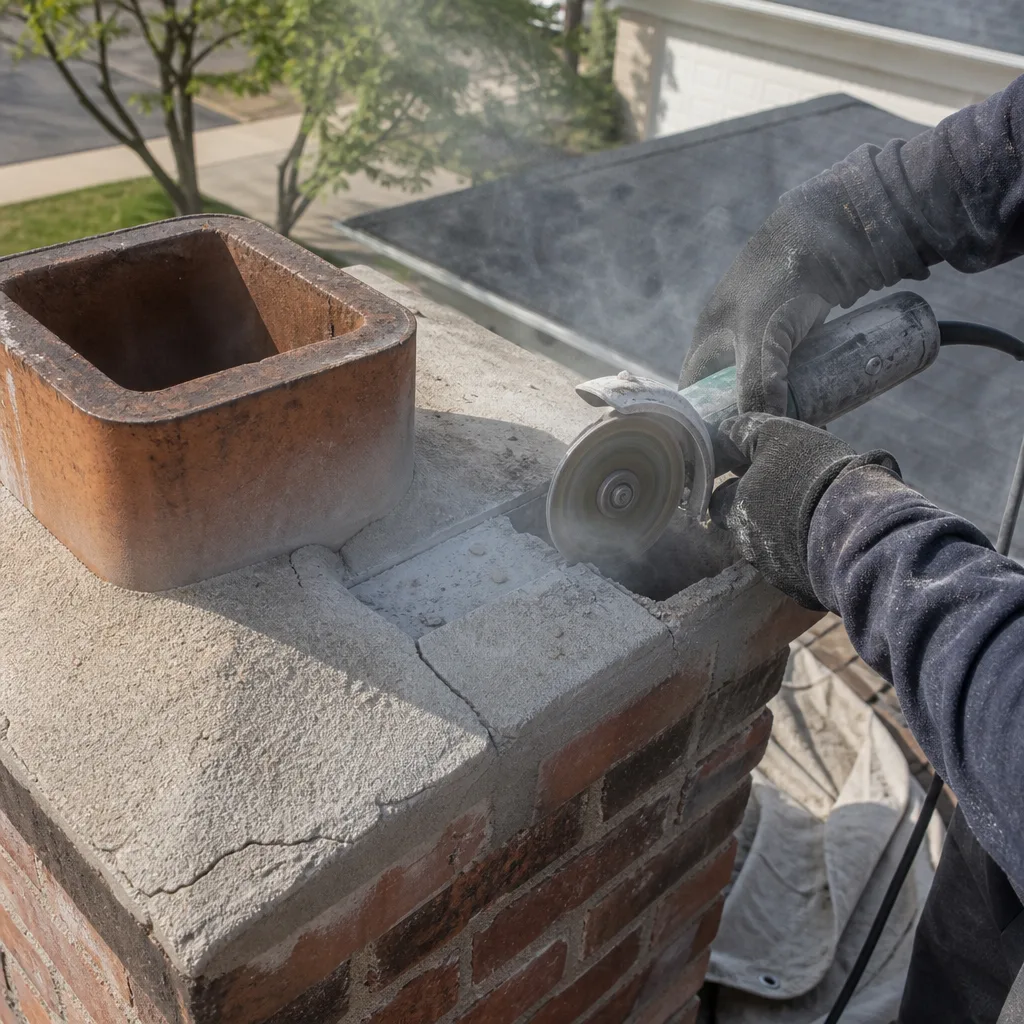
The homeowner’s greatest vulnerability in chimney work is information asymmetry: the technician sees what you cannot, and without documentation, you have no way to verify what was found or whether the recommended work was necessary. The Haven Standard was built to eliminate this gap. Here’s what you should receive, and why anything less is inadequate.
Before work starts - written price and scope (Haven Standard Clause 1):
- Line-item description of each service (sweep, inspection, individual repairs)
- Flat rate or clearly calculated pricing - never “time and materials” open-ended
- What is included and explicitly what is not included
- Warranty terms in writing, with duration and coverage limits
- Technician name and license information
- Your signature or electronic acknowledgment before work begins
Verbal estimates fail because they cannot be disputed. “He said it would be around three hundred” versus a written scope at $289 with “smoke chamber parging if needed: $180 additional, only with customer approval” - the second protects both parties. We do not begin any work at an Elmhurst home without this document signed.
After work completes - documented photo record (Haven Standard Clause 4):
- Pre-cleaning flue images showing deposit type, stage, and location
- Post-cleaning images confirming deposit removal and liner condition
- Any damage, deterioration, or code violation found during inspection
- Close-ups of critical areas: smoke chamber, firebox floor, liner joints, crown, cap
- Images saved to customer-accessible archive with date and technician notation
The photo record serves three purposes. It proves the work was done (deposits removed, not just brushed at). It establishes baseline condition for future comparison - critical in Elmhurst’s freeze-thaw climate where deterioration accelerates. And it provides evidence for insurance or real estate transactions, where “chimney inspected” without documentation is increasingly rejected.
We use materials from Famco and Copperfield for caps, dampers, and repair components - sourced through Haven’s buying network specifically to keep customer prices honest. The written price reflects actual material cost plus labor; there’s no markup opacity to hide.
Chimney Cleaning Cost Breakdown in Elmhurst
Prices vary by system type, deposit stage, and accessibility. The ranges below reflect our 2024-2025 Elmhurst market pricing with NFPA 211 Level 2 inspection and photo record included as standard.
| Service | Typical Range | What Affects Price |
|---|---|---|
| Standard sweep with Level 2 inspection (Stage 1 deposits) | $189-$249 | Number of flues, roof access difficulty, appliance type |
| Stage 2 creosote removal with motorized equipment | $249-$329 | Deposit thickness, flue length, liner material fragility |
| Stage 3 glazed creosote (chemical treatment + mechanical) | $450-$750 | Severity, liner accessibility, number of treatment cycles needed |
| Gas fireplace inspection and burner service | $159-$219 | Log set complexity, vent type, CO testing requirements |
| Pellet stove exhaust path cleaning | $189-$279 | Vent configuration, ash volume, exhaust probe condition |
| Chimney cap installation (stainless or copper) | $280-$650 | Flue count, cap style, existing crown condition |
Additional factors specific to Elmhurst: Homes in the historic district near Wilder Park often require ladder work on steep-pitched roofs, adding modest access time. Properties with exterior chimney chases (common in 1970s-1980s construction) need chase cover inspection included, as rusted covers are a leading cause of hidden water damage. We note these conditions during booking and reflect them in the written price - never as surprises after arrival.
The Free Second Opinion on any written estimate applies here. Bring us a competitor’s written quote for the same scope; we’ll review it against what our camera finds and explain where pricing or recommended work diverges. No charge, no obligation.
Common Mistakes to Avoid
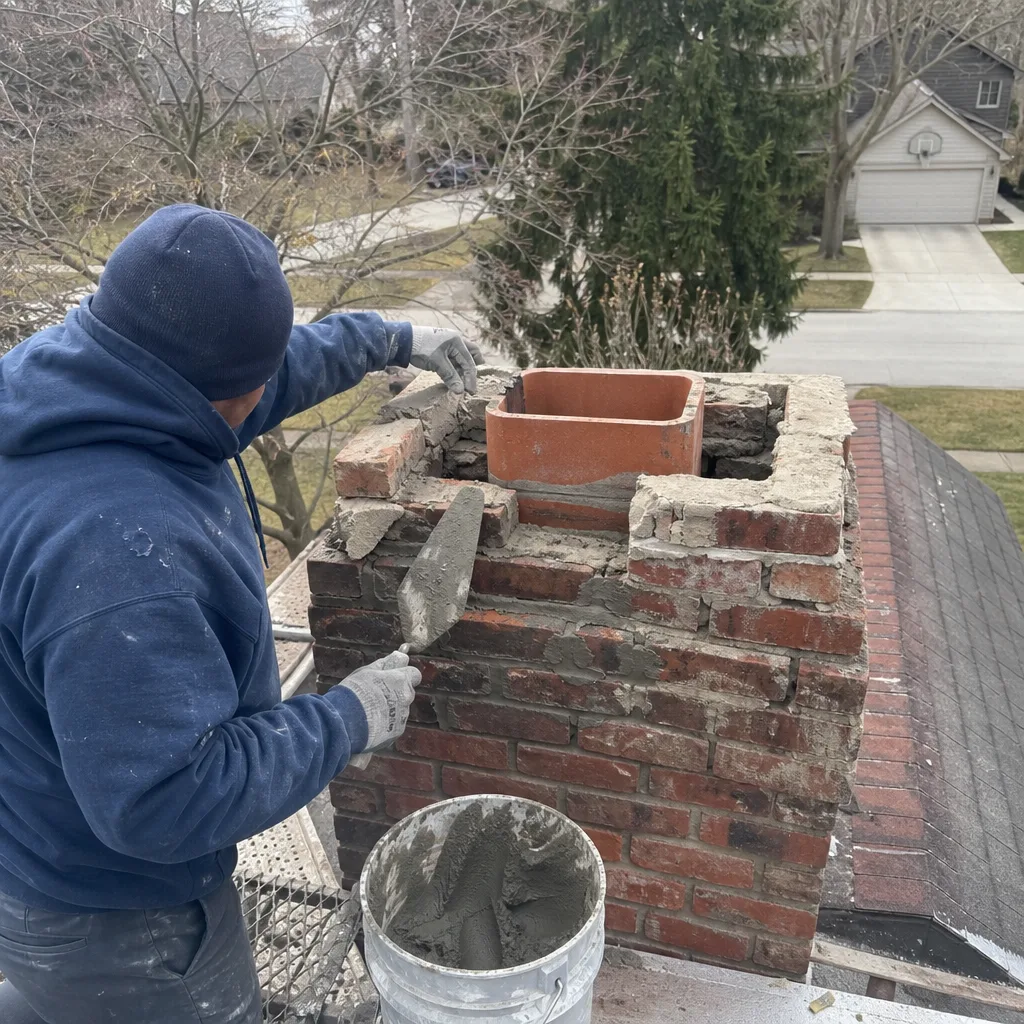
- Hiring based on lowest price without verifying what’s included. A $99 “chimney sweep” special in Elmhurst typically excludes camera inspection, excludes the attic check, and excludes written documentation - meaning you paid for a brush run and a verbal “looks fine.”
- Assuming gas fireplaces need no attention. Acidic condensate damages liners silently. We’ve replaced deteriorated clay tile in gas flues where the homeowner skipped fourteen years of inspection because “gas burns clean.”
- Burning unseasoned or construction wood. In Elmhurst’s older neighborhoods, homeowners sometimes burn scrap from renovation projects. Painted, treated, or green wood accelerates Stage 3 creosote formation and releases toxic compounds. Seasoned hardwood only - moisture content below 20%.
- Ignoring the smoke chamber. The area above the firebox and below the flue is where most chimney fires start. It’s also the hardest to inspect without a camera. A sweep who doesn’t document this area hasn’t completed a proper inspection.
- Accepting verbal repair recommendations without photo evidence. “You need a new liner” should be accompanied by images of the damage, explanation of the failure mode, and written alternatives if any exist. If the technician won’t show you, don’t authorize the work.
- Scheduling cleaning only after visible problems. Smoke backup, odors, or draft issues indicate advanced problems. Condition-based cleaning through camera inspection catches deterioration before symptoms appear.
- Using the same interval regardless of fuel change. Switching from wood to gas, or adding a pellet stove, changes your flue’s chemistry and cleaning needs. The interval should reset with a Level 2 inspection documenting the new appliance type.
When to Call a Professional
Schedule an inspection - not necessarily a cleaning - when you buy a home in Elmhurst, change your heating appliance, or haven’t had a camera inspection in two years. (Not sure whether to tackle maintenance yourself? Read DIY vs Professional Chimney Cleaning: The Elmhurst Homeowner’s Decision Guide.) Call promptly if you notice smoke entering the room, a persistent tar-like odor, visible creosote flakes in the firebox, or any change in draft performance after a weather event.
For chimney fires - characterized by loud roaring, sparks, or visible flames in the flue - evacuate and call emergency services first, then schedule a Level 3 inspection before using the system again. Even a small chimney fire compromises liner integrity in ways only destructive inspection can fully assess.
Level Two Chimney Elmhurst offers free estimates throughout Elmhurst and surrounding communities. Every estimate includes a written price before work starts, background-checked uniformed technicians with license information provided, and the 365-Day Done Right Promise on all work. Call (708) 498-3199 to schedule, or request an appointment through our Level Two Chimney Elmhurst home page.
Frequently Asked Questions
A standard chimney sweep with NFPA 211 Level 2 camera inspection in Elmhurst typically runs $189-$249 for Stage 1 deposits. Stage 2 removal with motorized equipment ranges $249-$329, and Stage 3 glazed creosote treatment starts around $450. Every job includes a written price before work begins and a documented photo record afterward. Call (708) 498-3199 for an exact quote - estimates are free.
Wood-burning systems used regularly need annual inspection; occasional use can extend to every two years with camera confirmation. Gas fireplaces and inserts typically need cleaning and inspection every 2-3 years. Pellet stove intervals follow manufacturer guidance based on tons burned, with annual venting inspection. Elmhurst’s freeze-thaw climate makes camera-verified condition more reliable than calendar scheduling. Call (708) 498-3199 to discuss your specific setup.
Only if camera inspection documents failure: cracked or missing clay tile, corrosion holes in stainless, or gaps at joints that allow combustion gases into the structure. We provide images of the specific damage, explain the failure mode, and note when repair (smoke chamber parging, localized stainless patching) is an alternative to full replacement. No liner is replaced without customer-viewable evidence under Haven Standard Clause 4. Call (708) 498-3199 for a second opinion on any liner recommendation.
Stage 1 creosote progresses to Stage 2 and 3, becoming harder and more flammable. Acidic gas condensate erodes liner surfaces. Blockages from debris or animal nests restrict exhaust flow, raising carbon monoxide risk. In Elmhurst’s older homes with original clay tile, accelerated deterioration can reach the point where simple cleaning is no longer sufficient and liner replacement becomes necessary - at significantly higher cost. The documented photo record from regular inspection lets you watch progression and time interventions.
A sweep removes deposits from the flue and firebox. An inspection evaluates system condition, clearances, and code compliance. NFPA 211 Level 2 inspection - our standard on every visit - combines both: deposit removal plus camera documentation of liner, smoke chamber, and accessible structural components. A sweep without inspection is maintenance without diagnosis; an inspection without cleaning is diagnosis without treatment. They belong together.
Basic brush cleaning of a straight, accessible flue is physically possible for a homeowner with proper equipment. However, stage assignment requires a camera most homeowners don’t own. Smoke chamber access requires specialized tools and knowledge of construction. And without documentation, you have no baseline for future comparison or evidence for insurance. For the cost of purchasing adequate equipment, professional service with warranty and archive is typically more economical. We do not recommend DIY for gas or pellet systems, where improper reassembly creates combustion hazards.
The Bottom Line
Chimney cleaning in Elmhurst is not a calendar ritual - it’s a condition-based service that varies by fuel type, deposit stage, and local construction patterns. The only reliable way to set your interval and method is through NFPA 211 Level 2 camera inspection, with results documented in a photo record you can reference and compare. Demand a written price before work starts, verify that “Level 2” includes actual camera documentation and attic inspection, and keep your archive current. The 38,000+ chimneys we’ve inspected since 2009 share one common factor: the homeowners who avoided major repairs were the ones who knew exactly what their flue looked like, year after year.
For Chimney Repair in Elmhurst, Fireplace Services in Elmhurst, or to schedule your camera-documented cleaning, call Level Two Chimney Elmhurst at (708) 498-3199. Written estimates are free, and the 365-Day Done Right Promise applies to every job we perform.
Written by Corrine Halstead, Owner at Level Two Chimney Elmhurst, serving Elmhurst since 2009.