
Last updated September 22, 2026
Level 1 sweep and inspection to the NFPA 211 annual standard - flue, crown, cap, and flashing checked and photographed
Chimney sweep logs do not sweep chimneys. They loosen some creosote - which then falls where a brush and vacuum still have to collect it.
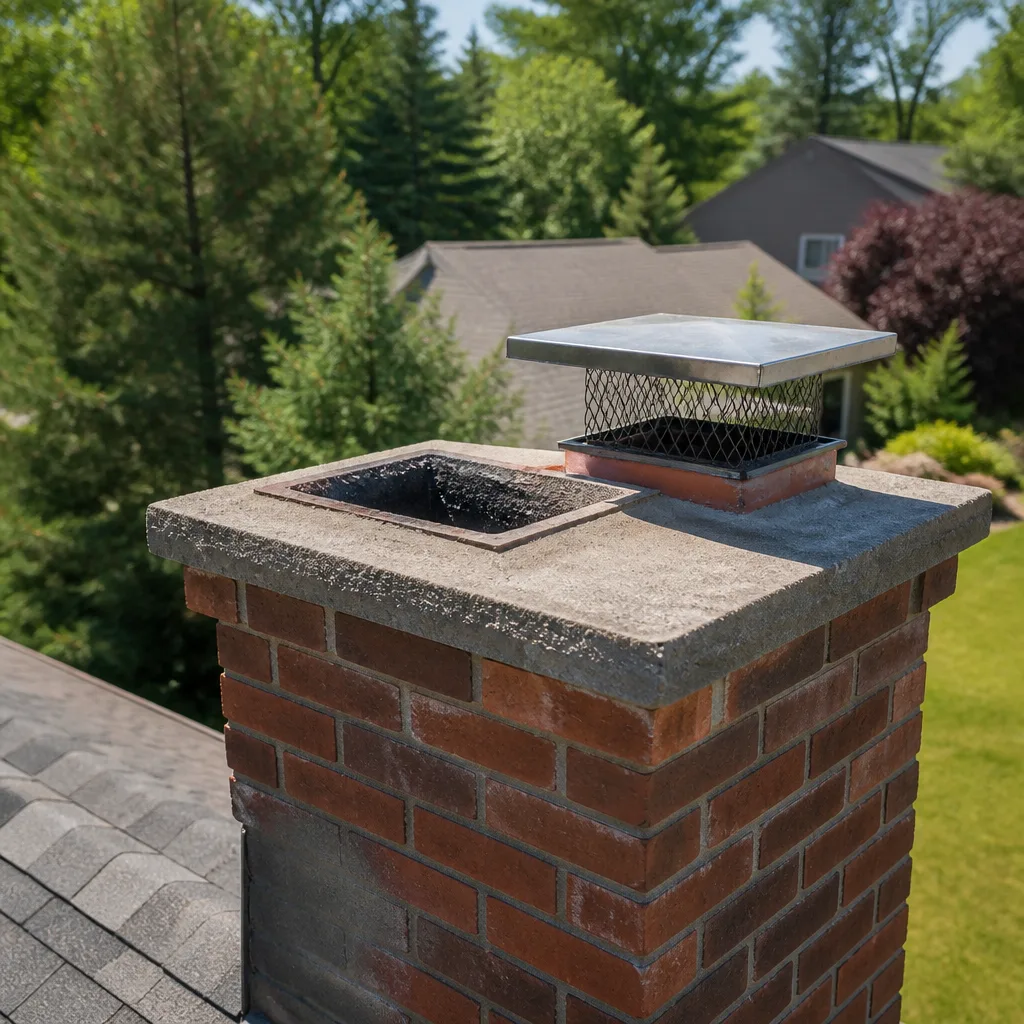
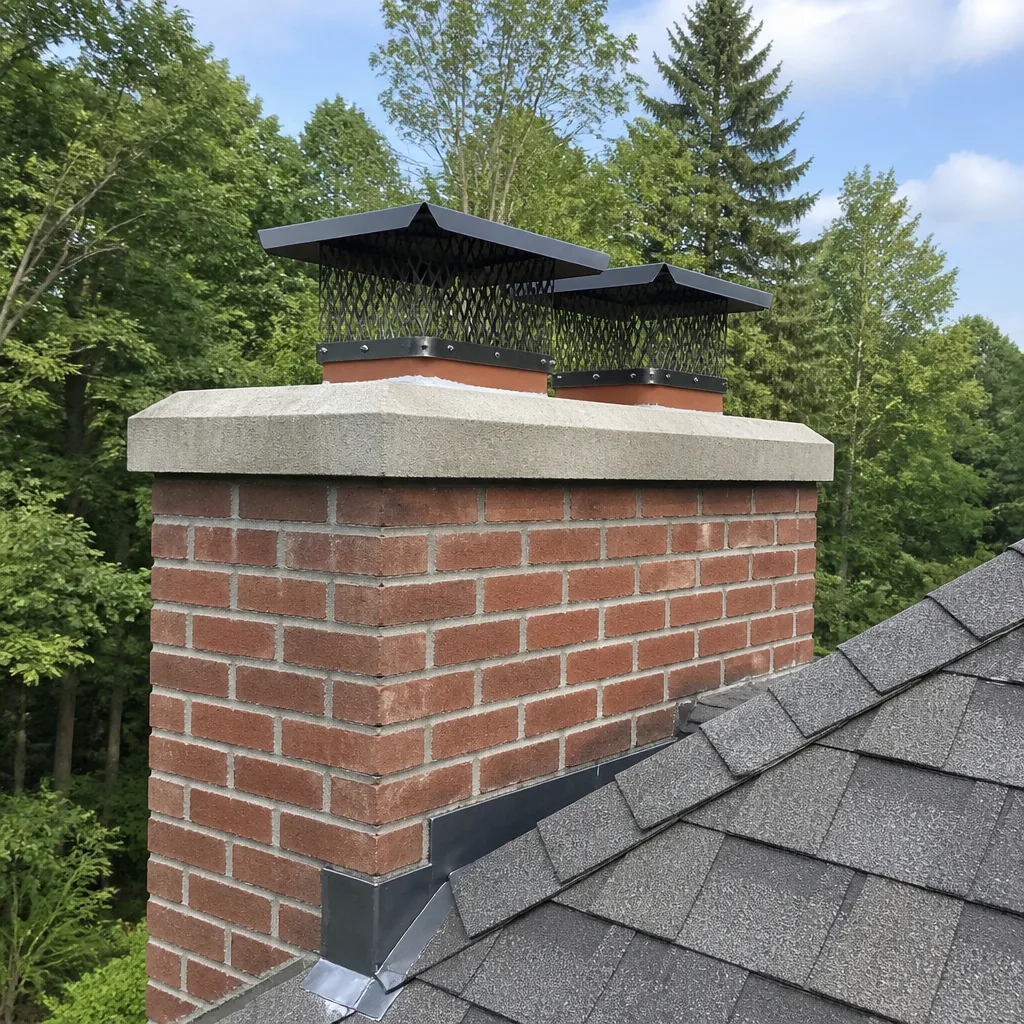
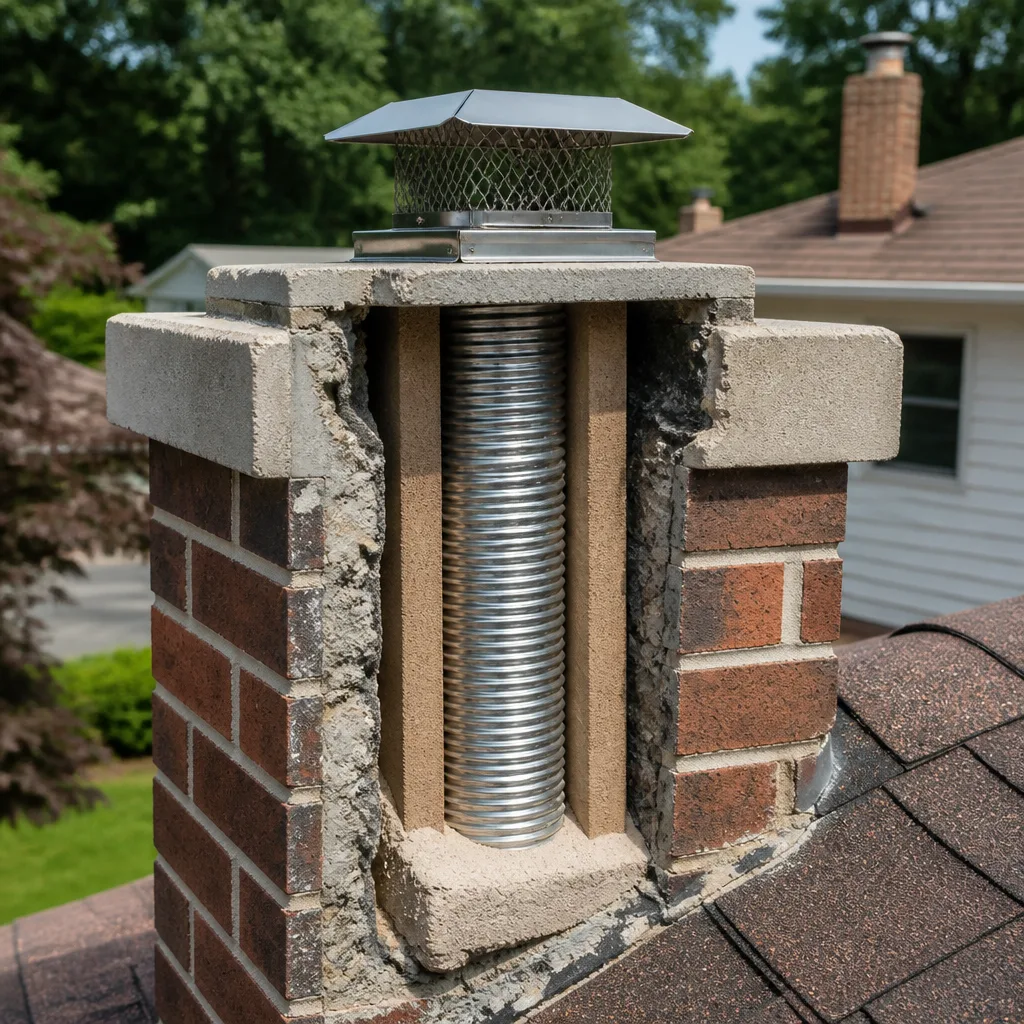
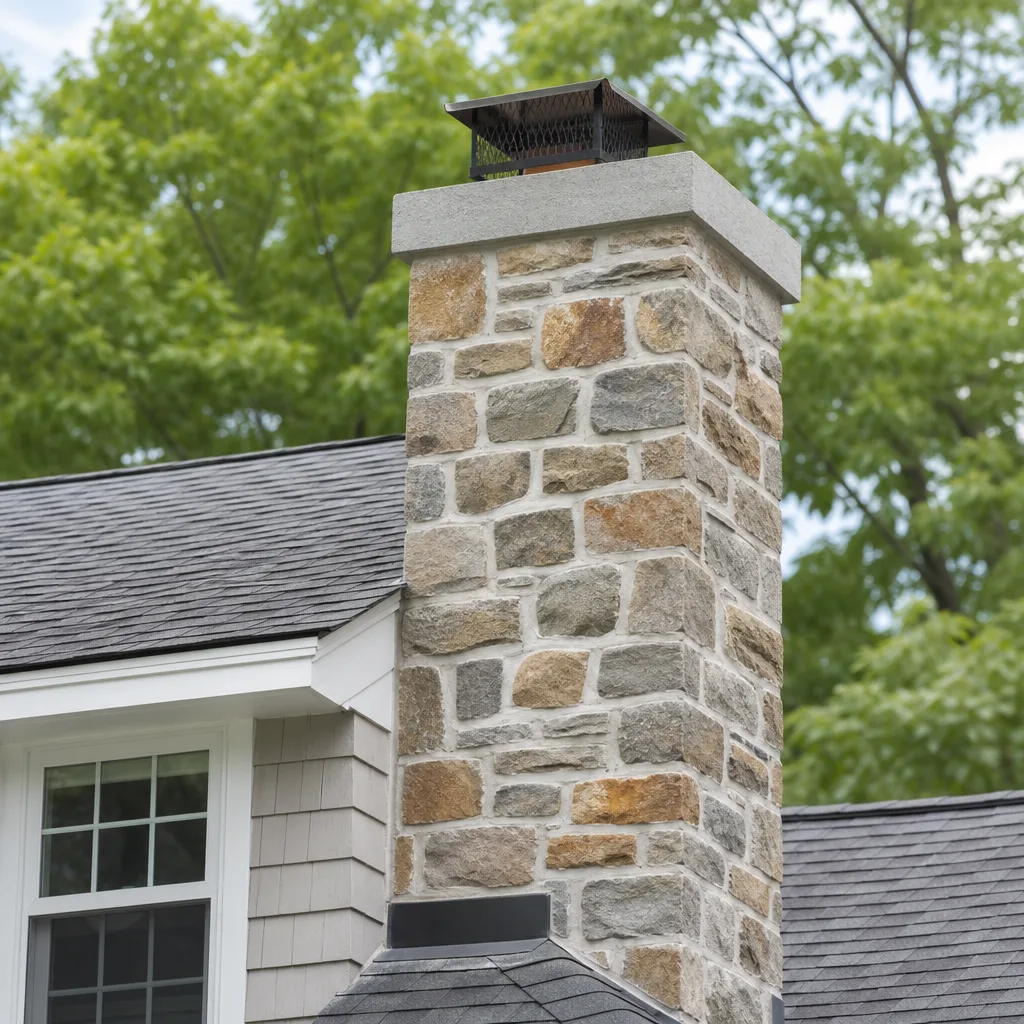
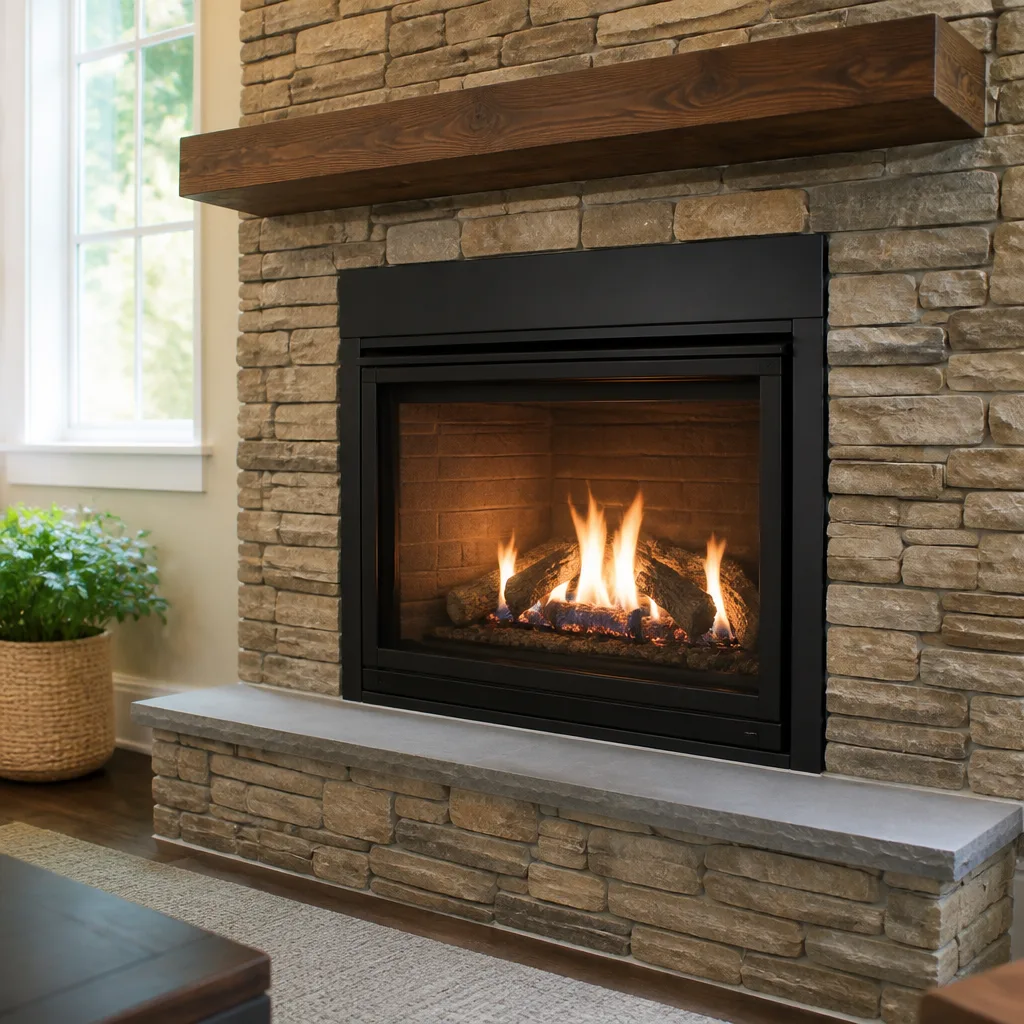
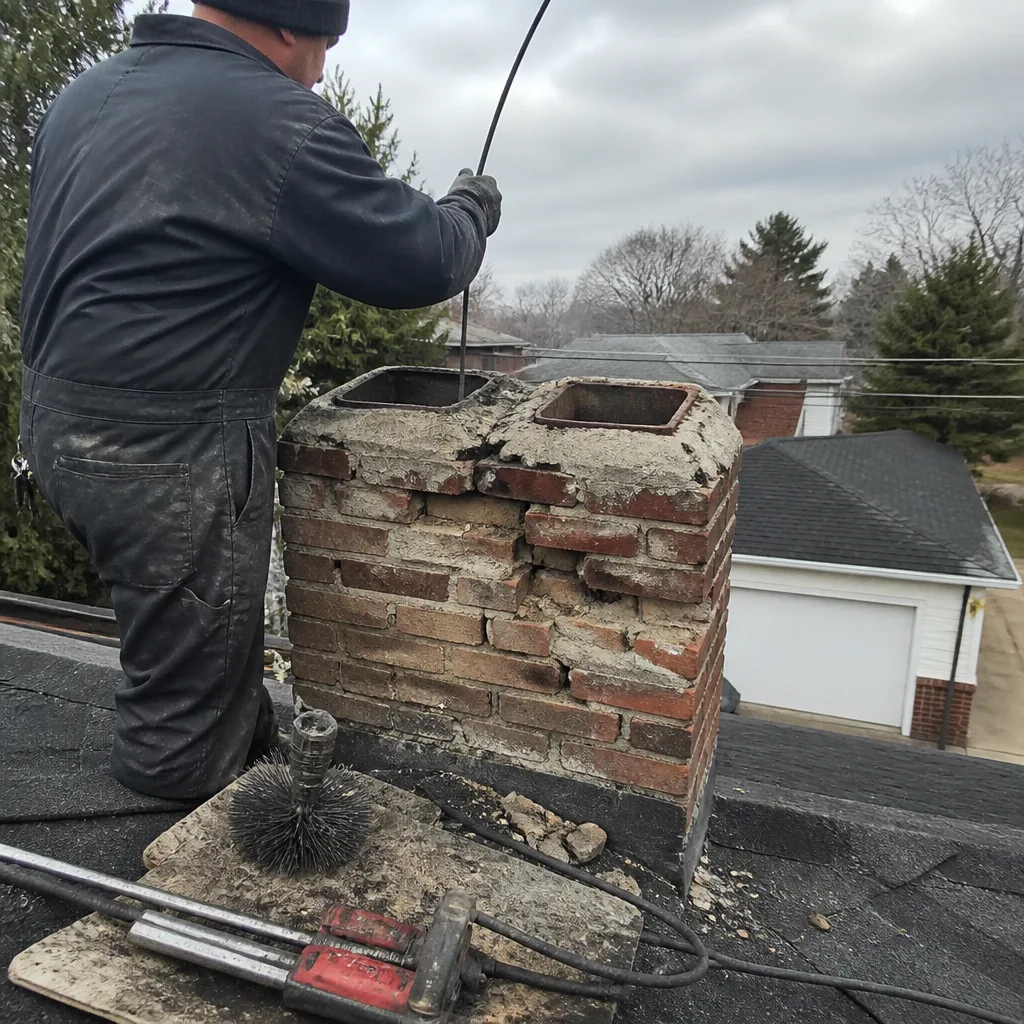 Before
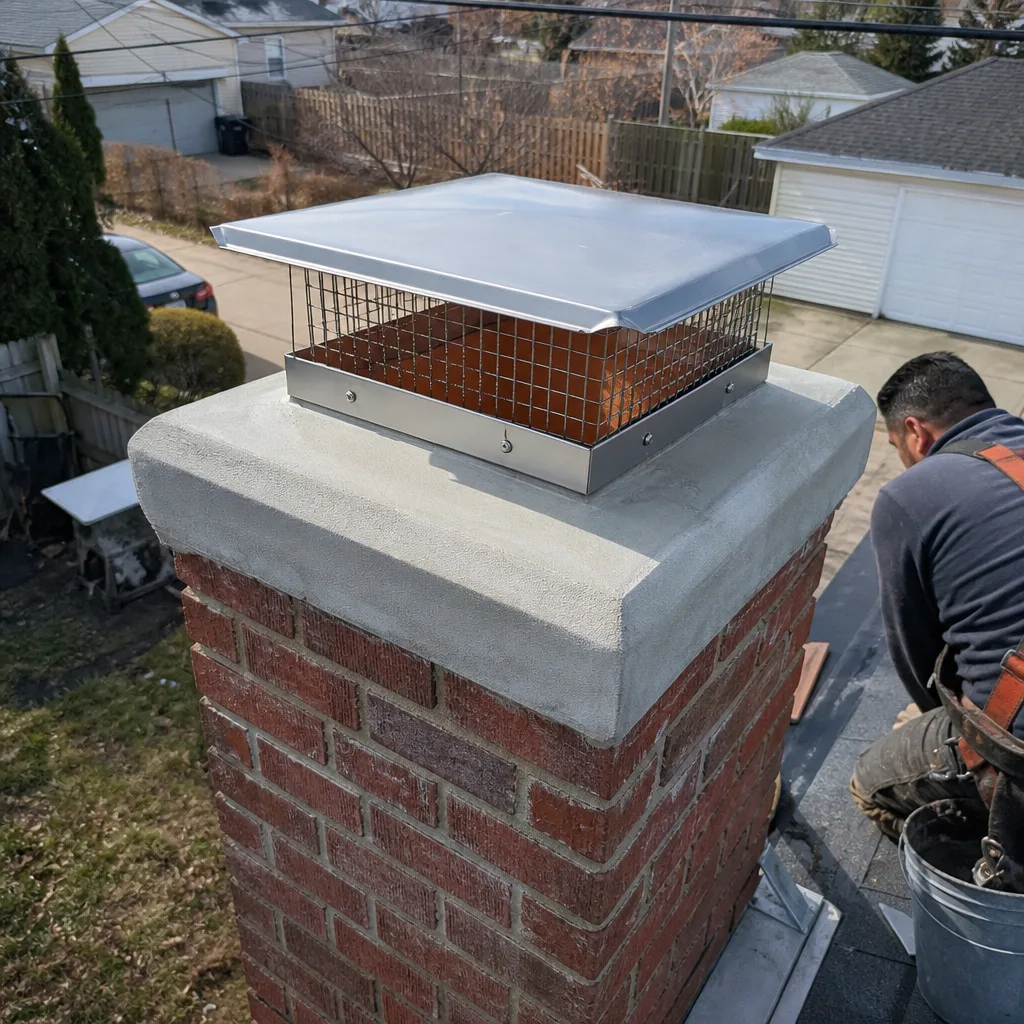 After
After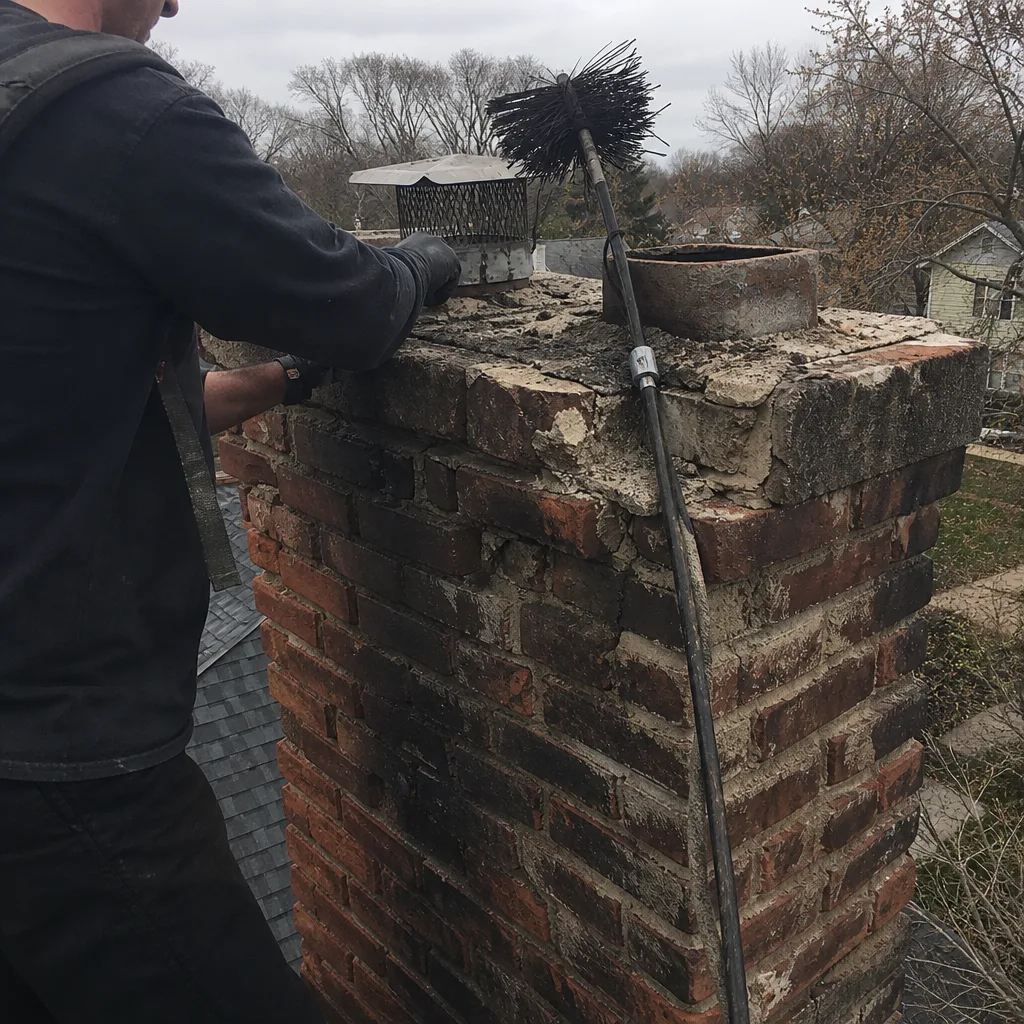 Before
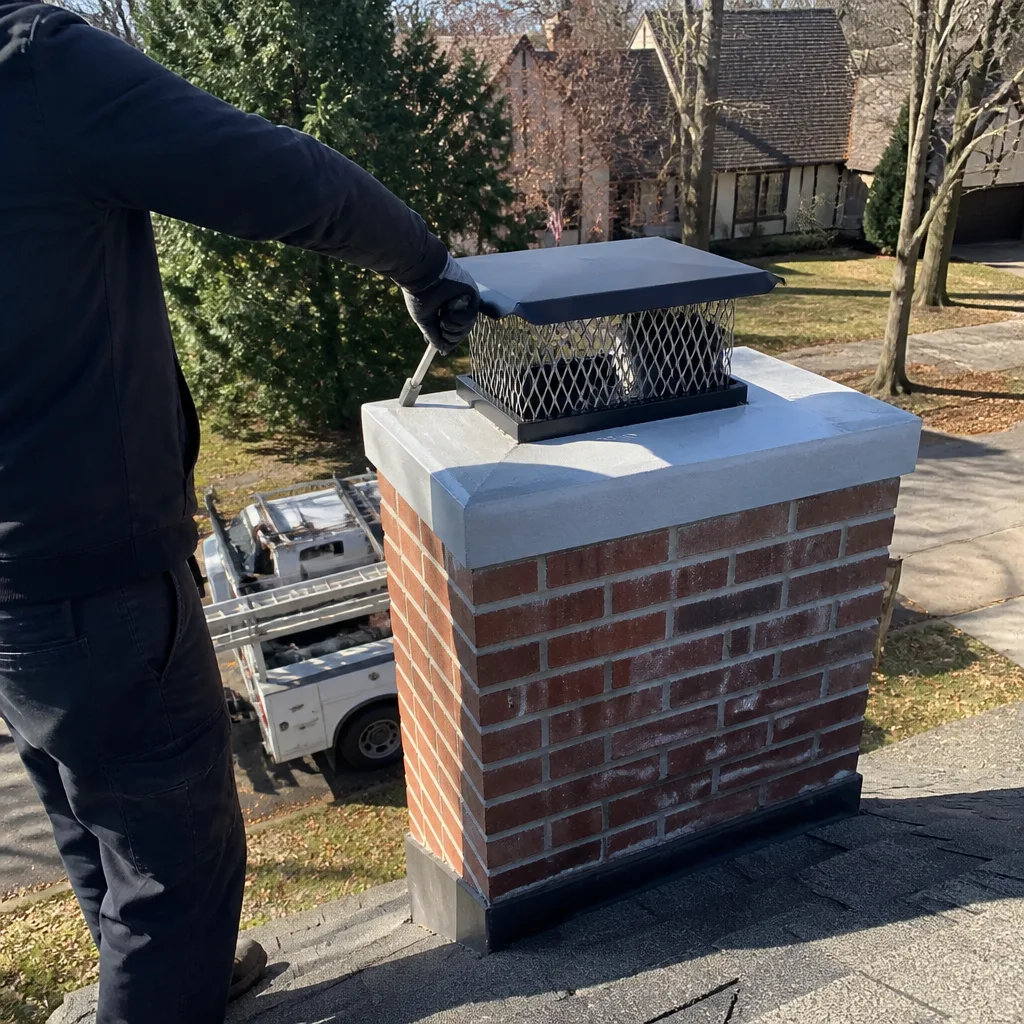 After
After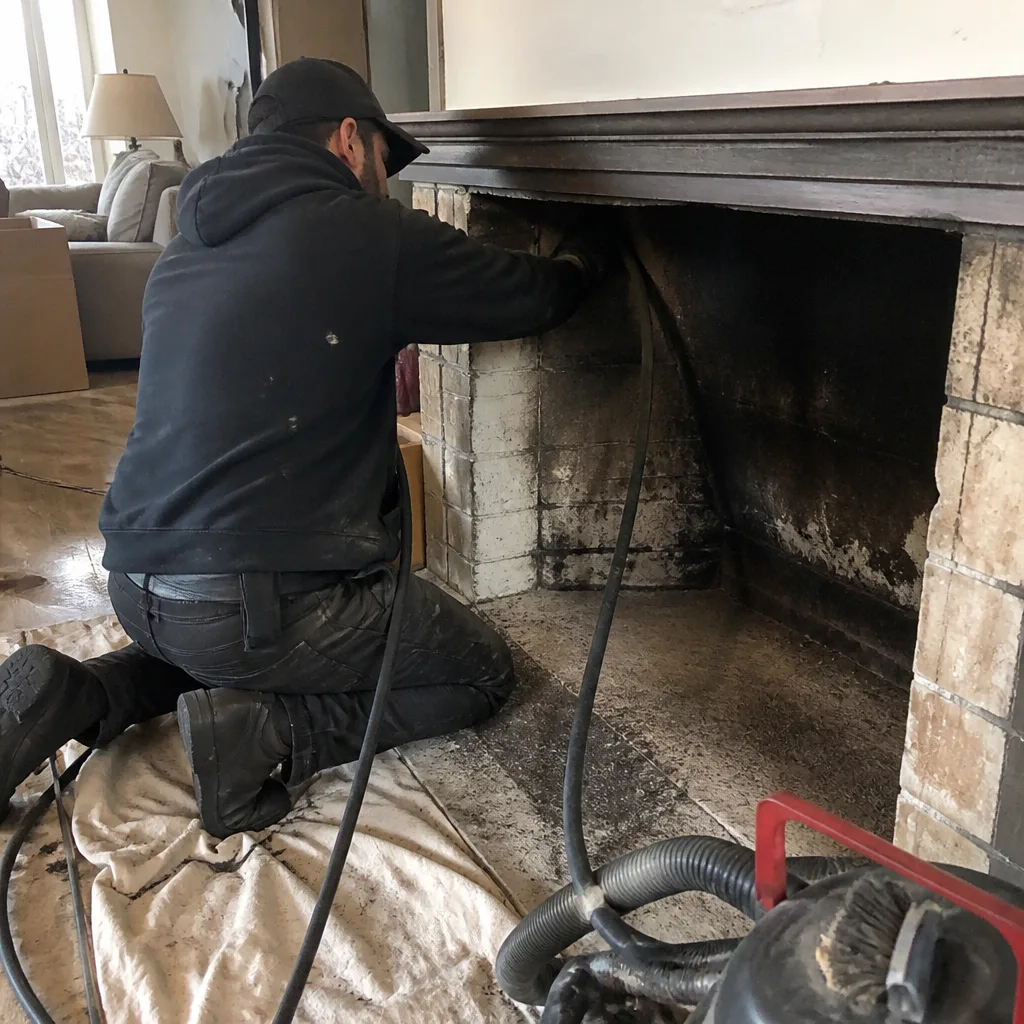 Before
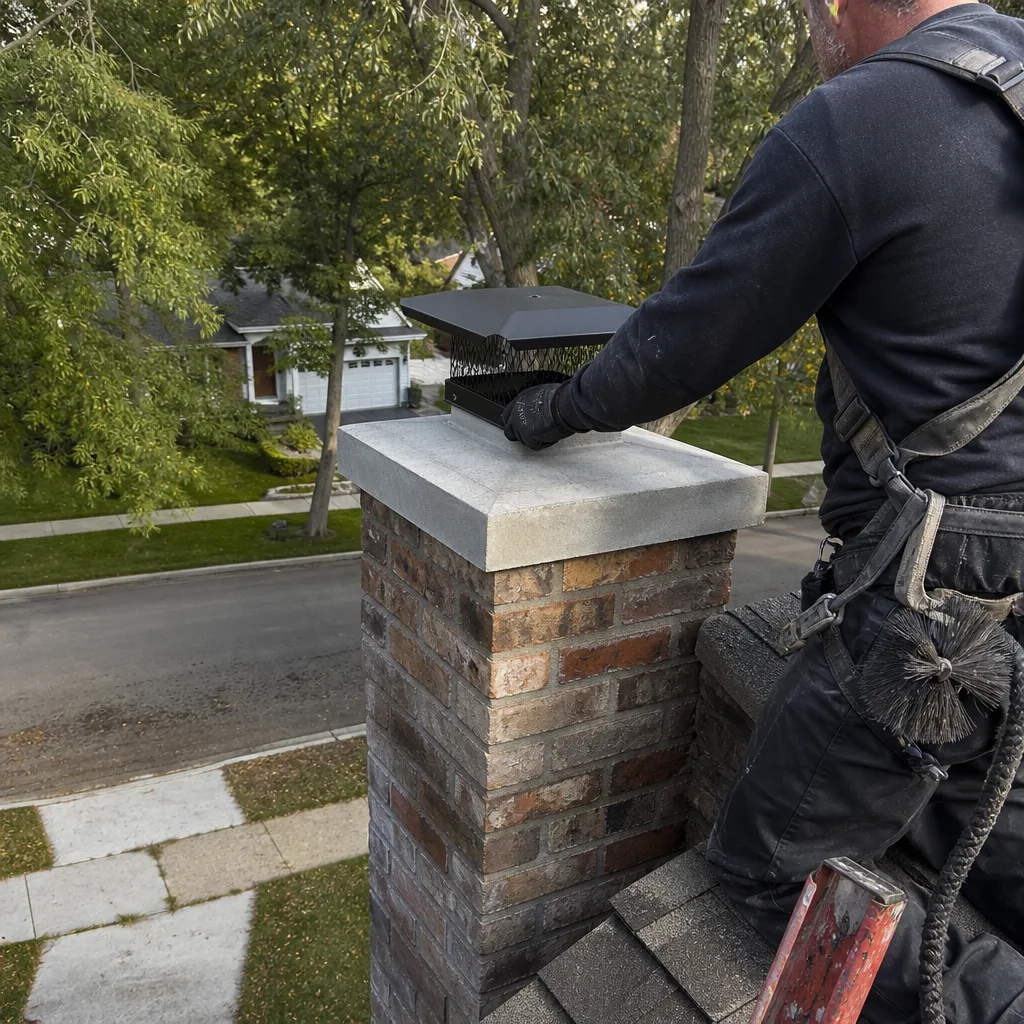 After
AfterDIY vs Professional Chimney Cleaning: The Elmhurst Homeowner’s Decision Guide
Here’s something most Elmhurst homeowners don’t realize: the $45 chimney brush you can order online removes creosote from the firebox and lower flue just as effectively as the one our technicians carry. The brush isn’t the difference. The difference is the 25 feet of flue you cannot see from below, where Stage 2 and Stage 3 creosote harden into fuel for chimney fires, and where liner cracks, mortar gaps, and obstructions hide until a camera documents them. In this guide and our more guides & resources, we’ll walk through exactly what DIY chimney cleaning accomplishes, what it cannot, and how to decide which path makes sense for your Elmhurst home.
Quick Answer
DIY chimney cleaning in Elmhurst effectively removes loose, Stage 1 creosote from accessible firebox and lower flue sections for roughly $75-$150 in supplies and 3-4 hours of labor. However, it cannot produce the camera-documented condition report that insurance companies, real estate transactions, and NFPA 211 safety standards require, and it misses the hidden upper flue conditions that cause most chimney fires. For homes with active wood-burning appliances, gas inserts, or any history of chimney use, professional cleaning with Level 2 inspection is the only path that satisfies both safety and documentation requirements.
Table of Contents
- What DIY Chimney Cleaning Actually Accomplishes
- What DIY Cannot Do: The Documentation Gap
- Honest Cost Comparison: DIY vs Professional in Elmhurst
- The Insurance and Liability Line
- A Hybrid Approach for Cost-Conscious Homeowners
- Elmhurst-Specific Factors: Climate, Codes, and Common Issues
- Common Mistakes to Avoid
- When to Call a Professional
- Frequently Asked Questions
 Before
 After
AfterWhat DIY Chimney Cleaning Actually Accomplishes
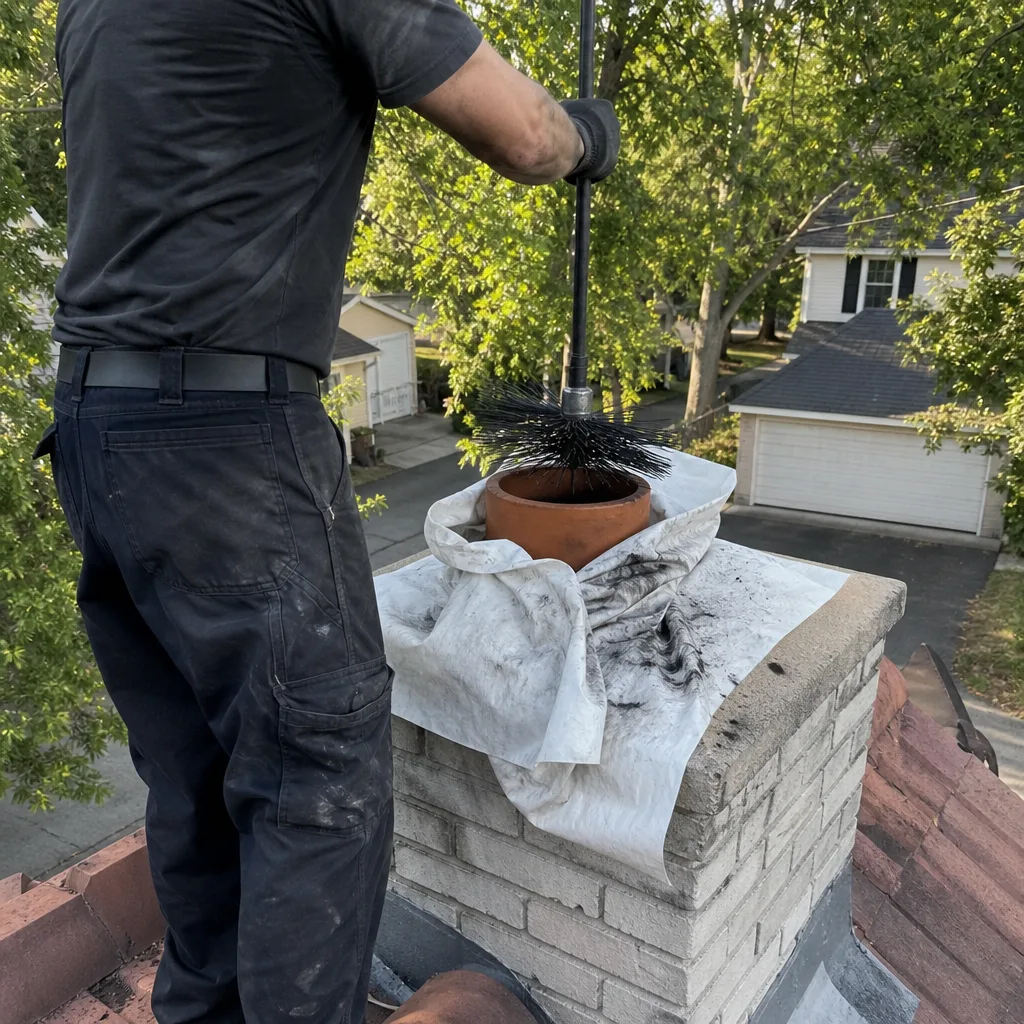
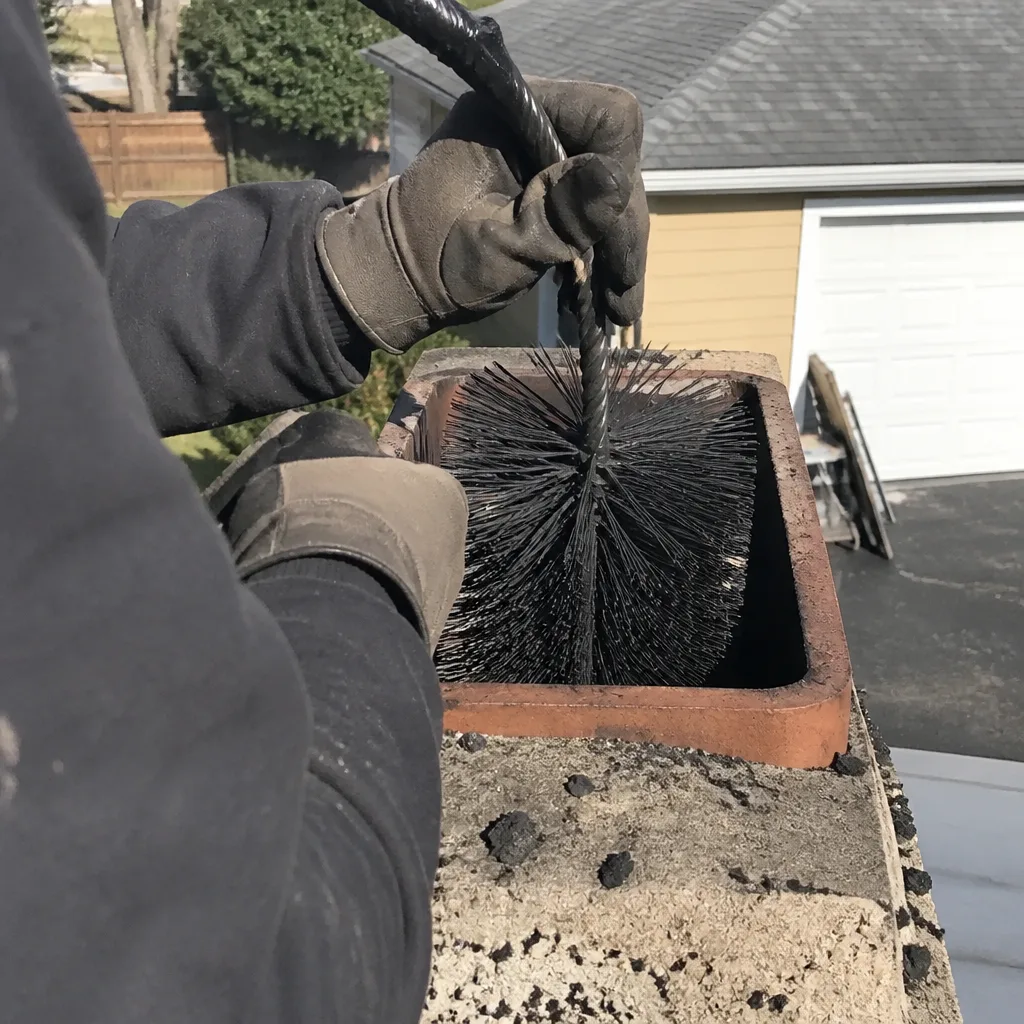
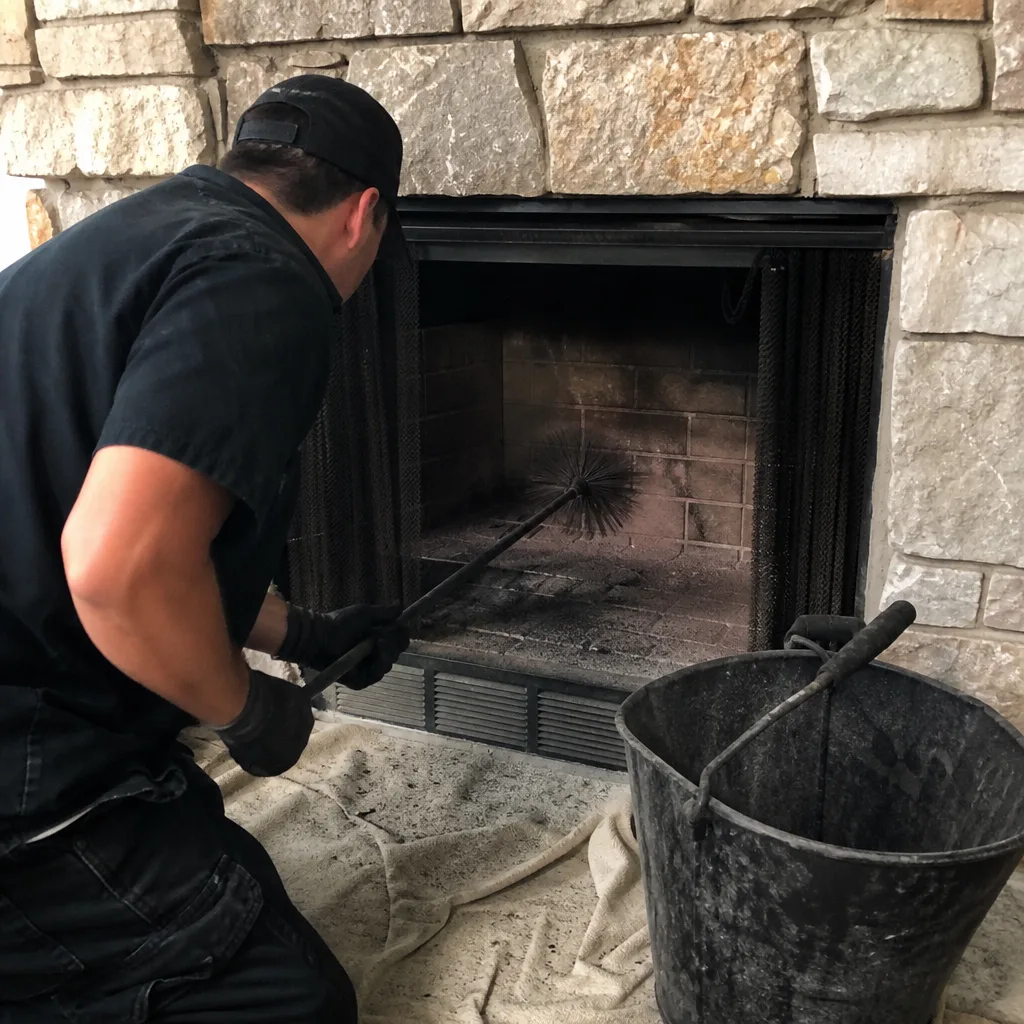
Let’s start with what homeowners get right. A DIY chimney cleaning kit, properly used, removes loose, powdery Stage 1 creosote from the firebox, smoke shelf, and lower flue sections you can reach with a standard brush and rod extension. For Elmhurst homes that burn seasoned hardwood sparingly, maybe a dozen fires per season, this maintenance can genuinely suffice between professional inspections.
The process is straightforward. You’ll need:
- A wire or poly chimney brush sized to your flue diameter (typically 6″ or 8″ for residential fireplaces)
- Flexible chimney rods, enough to reach the full flue length from firebox to crown
- A drop cloth, respirator rated for fine particulates, and safety goggles
- A shop vacuum with HEPA filtration for debris removal
- Stiff-bristle hand brushes for the firebox walls and damper assembly
With these tools, a homeowner can complete a basic sweep in 3-4 hours. The brush scrapes loose deposits from accessible surfaces. The vacuum captures fallen debris. The firebox looks cleaner, smells better, and drafts more readily for the next fire.
We’ve seen this work well in specific cases. A homeowner in the Crescent Park neighborhood who burns only Duraflame logs a few times each winter, for instance, generates minimal creosote. Their DIY maintenance, paired with a professional inspection every third year, keeps the system functional without excess spending. Similarly, gas log installations with minimal soot accumulation sometimes need little more than firebox debris removal and a visual cap check.
But here’s where honesty matters. DIY cleaning reaches only the flue sections the brush physically contacts. In a typical Elmhurst two-story colonial with a 25-foot flue, the brush contacts perhaps 60-70% of the interior surface. The upper third, where temperatures drop and condensation accelerates creosote formation, often remains untouched. More critically, the brush tells you nothing about what it touched. A professional Chimney Cleaning & Sweep in Elmhurst includes a camera scan precisely because the brush cannot distinguish between clean liner, cracked tile, or spalling mortar.
What DIY Cannot Do: The Documentation Gap
The core question isn’t whether you can clean a chimney yourself. It’s whether you can produce the documented condition record that makes a cleaning legally and insurably meaningful. The answer to that question determines everything else.
Consider what happens after a chimney fire in Elmhurst. Your homeowner’s insurance adjuster will request documentation of pre-loss condition and maintenance history. A DIY cleaning, performed without photo or video evidence, provides no verifiable record. The adjuster cannot confirm what was cleaned, what condition the liner was in, or whether the fire resulted from neglected maintenance versus a defect. This documentation gap can delay claims, reduce payouts, or result in outright denial.
The same gap appears in real estate transactions. Elmhurst’s housing market, with its mix of 1920s brick bungalows and post-war ranches, sees frequent pre-sale inspections. Buyers and their insurers increasingly require NFPA 211 Level 2 inspection documentation, which includes internal camera examination of the flue liner. A seller who DIY-cleaned annually but lacks this record may face repair credits or lost buyers.
Here’s what professional camera inspection reveals that DIY cannot:
- Liner condition: Cracked clay tiles, shifted sections, or gaps at mortar joints that allow heat transfer to combustible framing
- Creosote stage and location: Stage 2 (gummy, difficult to remove) or Stage 3 (glazed, nearly impossible to remove with standard brushing) deposits in upper flue sections
- Obstructions: Bird nests, collapsed liner sections, or debris from deteriorated masonry
- Smoke chamber integrity: Parging deterioration in the critical transition area above the damper
- Water intrusion evidence: Staining, efflorescence, or freeze-thaw damage patterns
At Level Two Chimney Elmhurst home, we’ve documented these conditions in homes where the firebox looked pristine. A 2019 inspection on a Berkeley Avenue property found Stage 3 glazed creosote beginning at the 18-foot mark, invisible from below, where flue gases cooled below 250°F and condensation accelerated deposit formation. The homeowner had DIY-cleaned for six years. The camera revealed what the brush missed.
Clause 4 of the Haven Standard requires this photo record on every job. We’ve maintained that practice since 2009, not as an upsell, but as the minimum viable documentation. Without it, a cleaning is maintenance theater, not verified maintenance.
Honest Cost Comparison: DIY vs Professional in Elmhurst
Let’s put real numbers on both paths, including the hidden costs DIY guides rarely mention.
DIY chimney cleaning costs in Elmhurst:
- Chimney brush and rod set: $45-$85
- HEPA respirator and goggles: $35-$55
- Drop cloths and protective sheeting: $20-$40
- Shop vacuum rental or purchase: $50-$150
- Stiff hand brushes and scrapers: $15-$30
- Creosote disposal (DuPage County waste requirements): $15-$25 per cleaning
- Your time: 3-4 hours per cleaning
First-year DIY cost: $180-$385. Ongoing annual cost (replacement brush, disposal, time): $75-$150.
Professional chimney cleaning with Level 2 inspection in Elmhurst:
- Standard sweep with camera inspection: $250-$400
- Heavy creosote removal (Stage 2-3): add $100-$250
- Written condition report and photo documentation: included
- 365-Day Done Right Promise: included
The gap narrows when you factor documentation value. A single insurance claim dispute, avoided through professional documentation, covers years of service cost. A pre-sale inspection that prevents a $2,000 repair credit pays for a decade of professional maintenance.
More concretely, consider the risk-adjusted cost. Elmhurst homeowners who DIY-clean without camera inspection bear the full liability for undetected liner conditions. If a chimney fire occurs and insurance denies coverage for lack of documentation, the homeowner faces $5,000-$50,000 in structural repair costs. Professional service transfers this documentation burden and includes the inspection that catches conditions before they become fires.
We quote every job in writing before work starts, under Haven Standard Clause 1. No Elmhurst homeowner pays without knowing exactly what service costs and what documentation they’ll receive. That transparency lets you compare true costs, not sticker prices.
The Insurance and Liability Line
Here’s where DIY and professional paths definitively diverge. Insurance companies and Illinois building codes increasingly treat chimney maintenance as a documented system, not a discretionary household task.
After a chimney fire, most homeowner’s policies require evidence of “regular professional maintenance” for full coverage. The definition varies by carrier, but generally means annual or biennial inspection by a certified chimney professional with written documentation. DIY cleaning, even if performed annually, typically does not satisfy this requirement. The policy language specifies professional service precisely because insurers need verifiable, standardized condition records to assess risk and liability.
New appliance installations trigger similar requirements. Installing a gas insert, wood stove, or pellet appliance in Elmhurst requires permit inspection and often proof of flue suitability. A professional inspection with camera documentation satisfies this requirement. DIY cleaning does not.
The liability extends to property sales, too. Illinois disclosure law requires sellers to report known defects in heating systems. A homeowner who DIY-cleaned without camera inspection may face post-sale liability if undetected liner damage emerges. Professional documentation, dated and photo-verified, provides defensible evidence of due diligence.
We’ve provided this documentation for Elmhurst homeowners facing insurance claims, estate settlements, and divorce property divisions. In each case, the camera record from prior service became the authoritative document. DIY maintenance, however diligent, cannot produce this record.
A Hybrid Approach for Cost-Conscious Homeowners
Not every task requires professional service. A thoughtful homeowner can handle certain maintenance between professional inspections, reducing annual costs without sacrificing safety or documentation. The key is knowing which tasks suit DIY and which always require professional equipment and certification.
Tasks suitable for DIY between professional visits:
- Firebox debris removal: Ash and unburned material accumulation, removed with a metal ash shovel and stored in a metal container for 72 hours before disposal
- Exterior cap and crown visual inspection: From ground level or a secure ladder, checking for visible cracks, missing mortar, or cap displacement after severe weather
- Smoke chamber access panel cleaning: If your fireplace includes a clean-out door, removing accessible debris
- Seasoned firewood management: Maintaining 20% moisture content through proper stacking and covering, the single most effective creosote prevention
- Carbon monoxide and smoke detector testing: Monthly function tests and annual battery replacement
Tasks that always require professional service:
- Camera inspection of flue liner: The only method for documenting internal condition; required by NFPA 211 for property transactions and after chimney fires
- Stage 2 or 3 creosote removal: Requires rotary cleaning equipment, chemical treatments, or controlled mechanical removal that risks liner damage if performed incorrectly
- Post-fire assessment: Thermal damage to liner and surrounding masonry requires specialized inspection; insurance claims depend on professional documentation
- Pre-sale inspection: Real estate transactions require NFPA 211 Level 2 inspection with written report
- Liner repair or replacement: Stainless steel liner installation from DuraFlex or similar manufacturers requires proper sizing, connection, and clearance verification
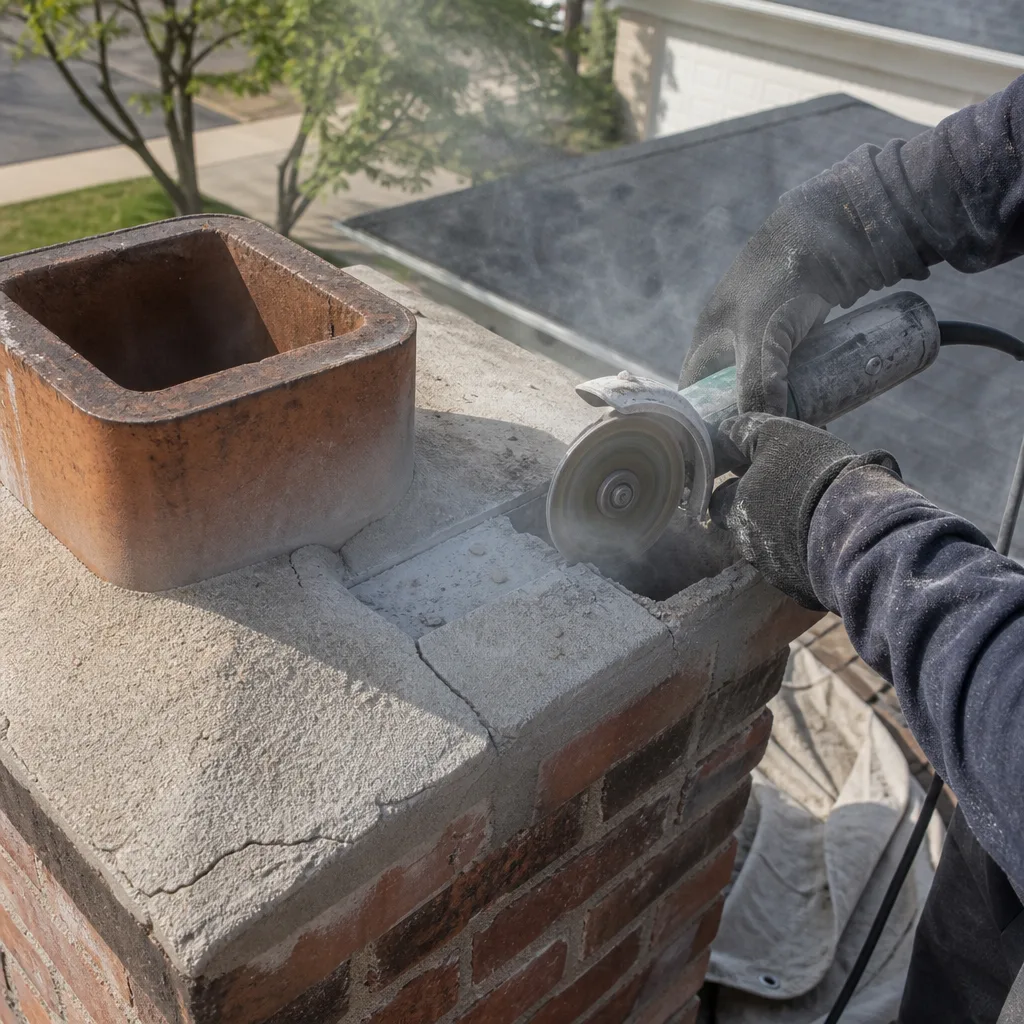
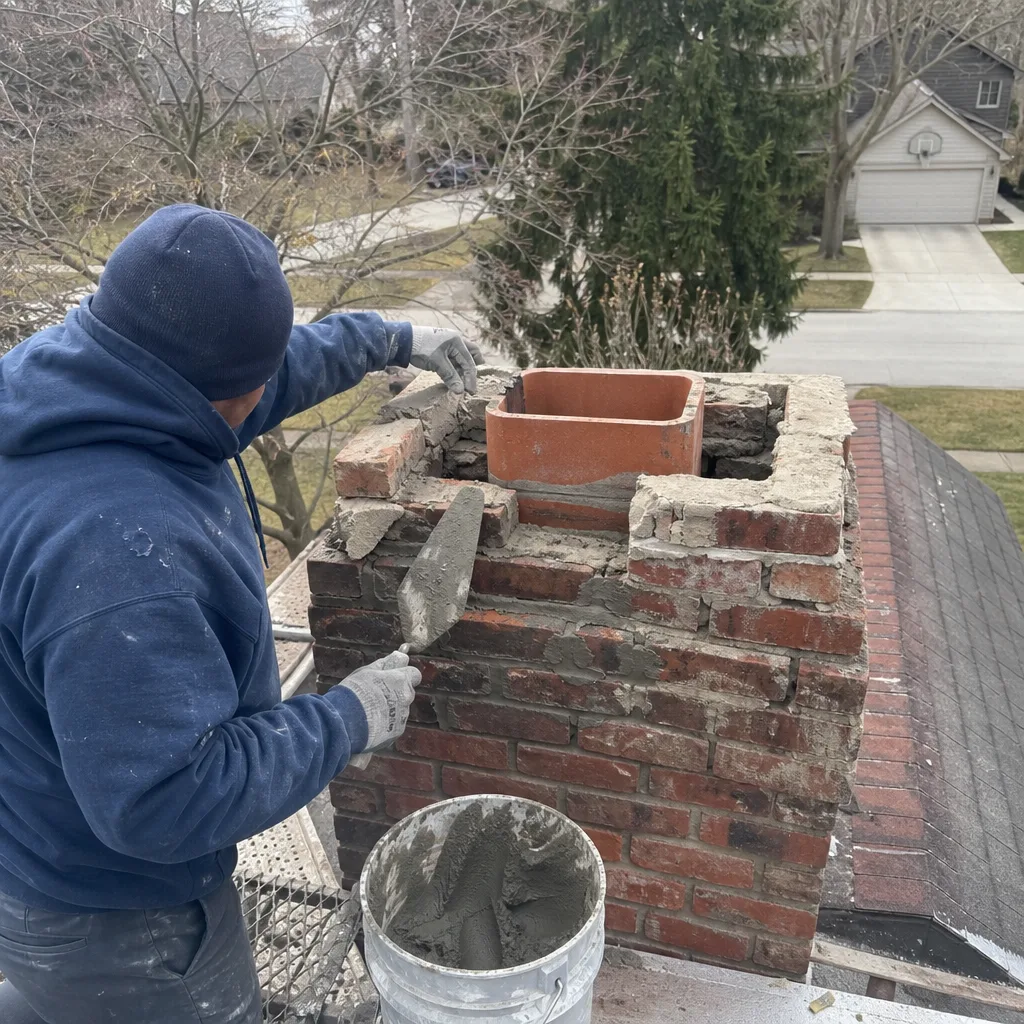
- Crown, cap, or flashing repair: Proper water sealing prevents the freeze-thaw damage common in Elmhurst’s climate; improper repair accelerates deterioration
For the typical Elmhurst homeowner burning wood regularly, we recommend professional service every 1-2 years with DIY firebox maintenance between visits, as outlined in our Seasonal Chimney Cleaning Care for Elmhurst: Year-Round Homeowner’s Guide. For gas installations, extend to every 2-3 years unless performance issues arise. This hybrid approach captures most cost savings while preserving the documentation that matters for insurance, sale, and safety.
Elmhurst-Specific Factors: Climate, Codes, and Common Issues
Elmhurst’s location and housing stock create specific conditions that affect chimney maintenance decisions.
The climate is the obvious factor. Our freeze-thaw cycles, with winter temperatures swinging from single digits to 40°F and back within days, accelerate masonry deterioration. Water enters crown cracks or deteriorated mortar joints, expands when frozen, and widens openings. A homeowner performing exterior visual checks after each thaw cycle catches this early. One who doesn’t may face crown rebuilds or tuckpointing that camera inspection would have flagged months earlier.
The housing stock matters too. Elmhurst’s early-20th-century homes, particularly in the historic districts near Wilder Park and along Cottage Hill Avenue, often have unlined brick chimneys or original clay tile liners now 80-100 years old. These systems require more frequent inspection than modern stainless steel installations. We’ve found original liners in these properties cracked or shifted from decades of thermal cycling, conditions invisible from the firebox but immediately apparent on camera.
Local codes add requirements. Elmhurst follows the 2021 International Residential Code with amendments, including specific clearance requirements for wood-burning appliances and mandated carbon monoxide detection. Professional inspection verifies compliance; DIY cleaning does not.
Common issues we document in Elmhurst include:
- Spalling brick at the chimney shoulder: Where the chimney transitions through the roofline, freeze-thaw damage often begins
- Deteriorated crown wash: The concrete or mortar cap that seals the chimney top, typically lasting 15-20 years in our climate
- Smoke chamber parging loss: The corbelled brick area above the damper, where refractory mortar breaks down from thermal stress
- Improperly sized liners for converted appliances: Common when oil-to-gas conversions were performed without flue resizing
These conditions develop gradually. Camera inspection catches them at repairable stages. DIY cleaning, focused on creosote removal, misses them entirely until symptoms appear, smoke backup, water intrusion, or structural damage, at which point costs multiply.
Common Mistakes to Avoid
- Using a brush that’s too small for the flue. An undersized brush fails to contact liner walls, leaving deposits intact while giving the homeowner false confidence. Measure flue diameter before purchasing; a 6″ brush in an 8″ flue is worse than no cleaning at all.
- Skipping the smoke shelf. The flat area behind the damper collects the most creosote-laden debris. It’s awkward to reach but critical to clean. We’ve found smoke shelves in Elmhurst homes packed with years of accumulated material that the homeowner assumed the brush removed.
- Improper creosote disposal. DuPage County prohibits creosote debris in regular household trash due to combustion risk and chemical content. Improper disposal creates fire hazard and potential fines.
- Cleaning without inspecting the cap. A missing or damaged cap allows water, animals, and debris into the flue. Cleaning a flue that’s open to the elements is temporary maintenance on a deteriorating system.
- Assuming gas appliances need no service. Gas inserts and fireplaces produce corrosive condensation and can obstruct with deteriorated ceramic material. Annual inspection remains necessary even without creosote accumulation.
- Ignoring the 3-foot/2-foot/10-foot rule. Chimney height requirements affect draft performance. DIY cleaning doesn’t verify compliance; professional inspection does, particularly important for Elmhurst’s mature tree canopy.
When to Call a Professional
Certain situations always require professional service, regardless of your DIY comfort level. Call immediately if you experience smoke backup into the room, visible cracks in the firebox or exterior masonry, a chimney fire (characterized by loud cracking or roaring from the flue), or water intrusion staining interior walls near the chimney breast. These symptoms indicate conditions beyond cleaning scope.
Schedule professional inspection before any property sale, new appliance installation, or insurance claim related to chimney or fireplace function. The documentation requirement is non-negotiable in these contexts.
For routine maintenance, professional service makes sense when your burning exceeds occasional decorative use, when your home is more than 30 years old, or when you cannot recall the last camera inspection. Chimney Repair in Elmhurst often becomes necessary precisely because inspection was deferred too long.
Level Two Chimney Elmhurst offers free estimates in Elmhurst. Call (708) 498-3199 to schedule. We’ll provide a written price before any work starts, perform camera inspection as standard practice, and deliver documented photo records under Haven Standard Clause 4. Our 365-Day Done Right Promise means if it’s not done right, we make it right.
Frequently Asked Questions
Professional chimney cleaning with Level 2 camera inspection in Elmhurst typically runs $250-$400 for standard service, with heavy creosote removal adding $100-$250. This includes written condition documentation and photo records. Call (708) 498-3199 for a free written estimate with exact pricing for your system.
Generally no. Most homeowner’s policies require documented professional inspection for full coverage after chimney fires or for new appliance installations. DIY cleaning, even if performed regularly, does not produce the verifiable condition records insurers require. Check your specific policy language, but expect to need professional service every 1-2 years for compliance.
NFPA 211 recommends annual inspection for all chimney systems, with cleaning frequency determined by use and fuel type. In Elmhurst’s climate, wood-burning systems used regularly need annual cleaning; occasional decorative use may extend to every 2-3 years with professional inspection. Gas systems require annual inspection despite minimal creosote, due to corrosion and obstruction risks from deteriorated components.
Skipped maintenance allows creosote accumulation, which reduces flue diameter and increases fire risk. Stage 1 creosote progresses to Stage 2 and 3, becoming progressively harder and more hazardous. Undetected liner cracks allow heat transfer to combustible framing, creating structural fire risk. Water intrusion accelerates masonry deterioration, leading to costly rebuilds. Insurance claims may be denied for lack of documented maintenance. The cumulative cost of deferred maintenance typically exceeds regular service by multiples.
A liner recommendation should always be supported by camera evidence you can see for yourself. At Level Two Chimney Elmhurst, we show every customer their camera footage and explain what we’re seeing before recommending any repair. Clay tile liners crack from thermal cycling; stainless steel liners from DuraFlex or similar manufacturers address this permanently. If a company recommends liner replacement without showing you camera evidence, get a second opinion. We offer free second opinions on any written estimate.
A sweep removes combustible deposits from the flue and firebox. An inspection evaluates system condition, including liner integrity, clearances, and construction suitability. NFPA 211 defines three inspection levels: Level 1 (visual, accessible areas), Level 2 (camera inspection of internal surfaces, required for property transactions and appliance changes), and Level 3 (destructive investigation when hidden hazards are suspected). Professional Fireplace Services in Elmhurst should include at least Level 2 inspection as standard practice.
The Bottom Line
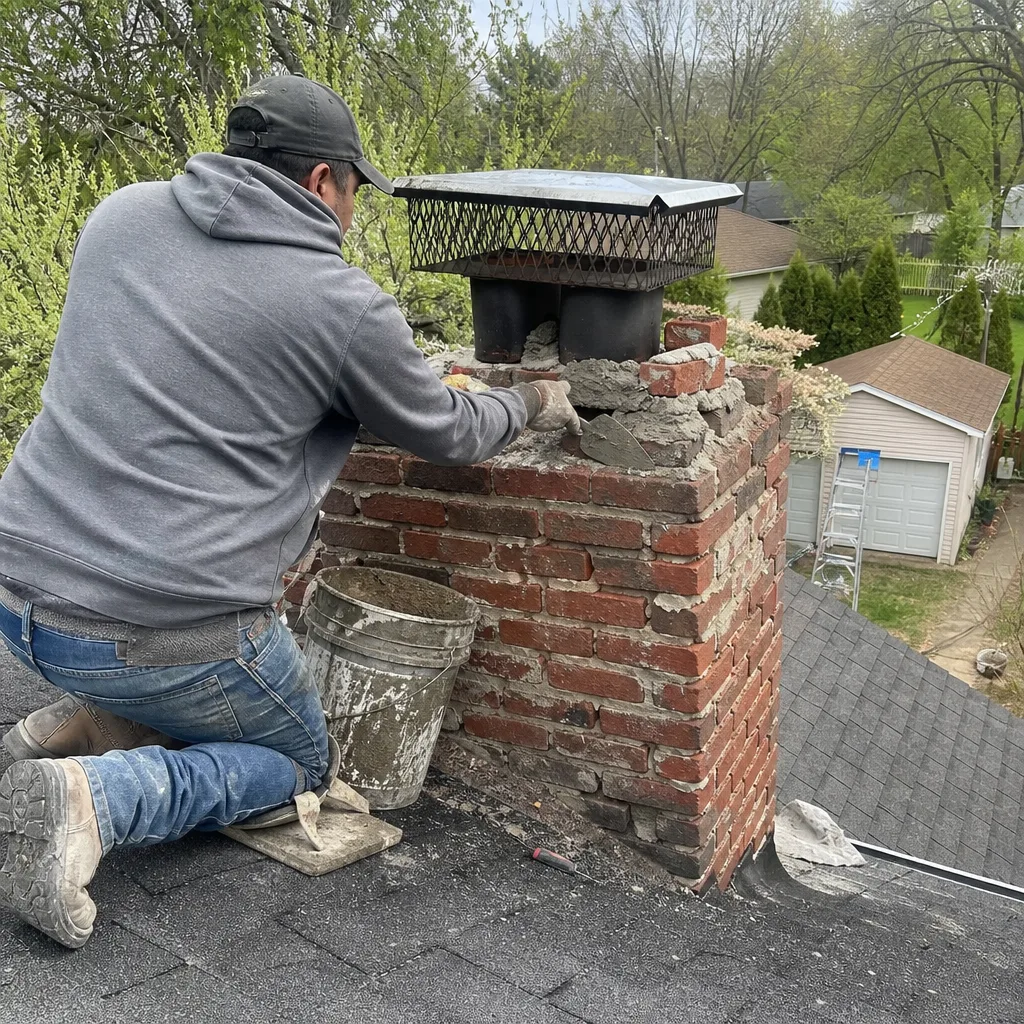
DIY chimney cleaning in Elmhurst works for limited scenarios: occasional decorative use, simple firebox maintenance between professional visits, and homeowners comfortable with the documentation gap. For a full walkthrough of finding qualified help, see How to Hire a Chimney Cleaning Contractor in Elmhurst: A Step-by-Step Guide. For active heating use, older homes, insurance compliance, or any property transaction, professional service with camera inspection is the only path that satisfies safety, legal, and financial requirements. The $200-$400 annual cost of professional service, with its included documentation and warranty protection, represents sound risk management against the five-figure costs of chimney fires, denied claims, and deferred repair. Choose based on what you need the maintenance to prove, not just what you need it to clean.
Written by Corrine Halstead, Owner at Level Two Chimney Elmhurst, serving Elmhurst since 2009.