
Last updated September 22, 2026
Level 1 sweep and inspection to the NFPA 211 annual standard - flue, crown, cap, and flashing checked and photographed
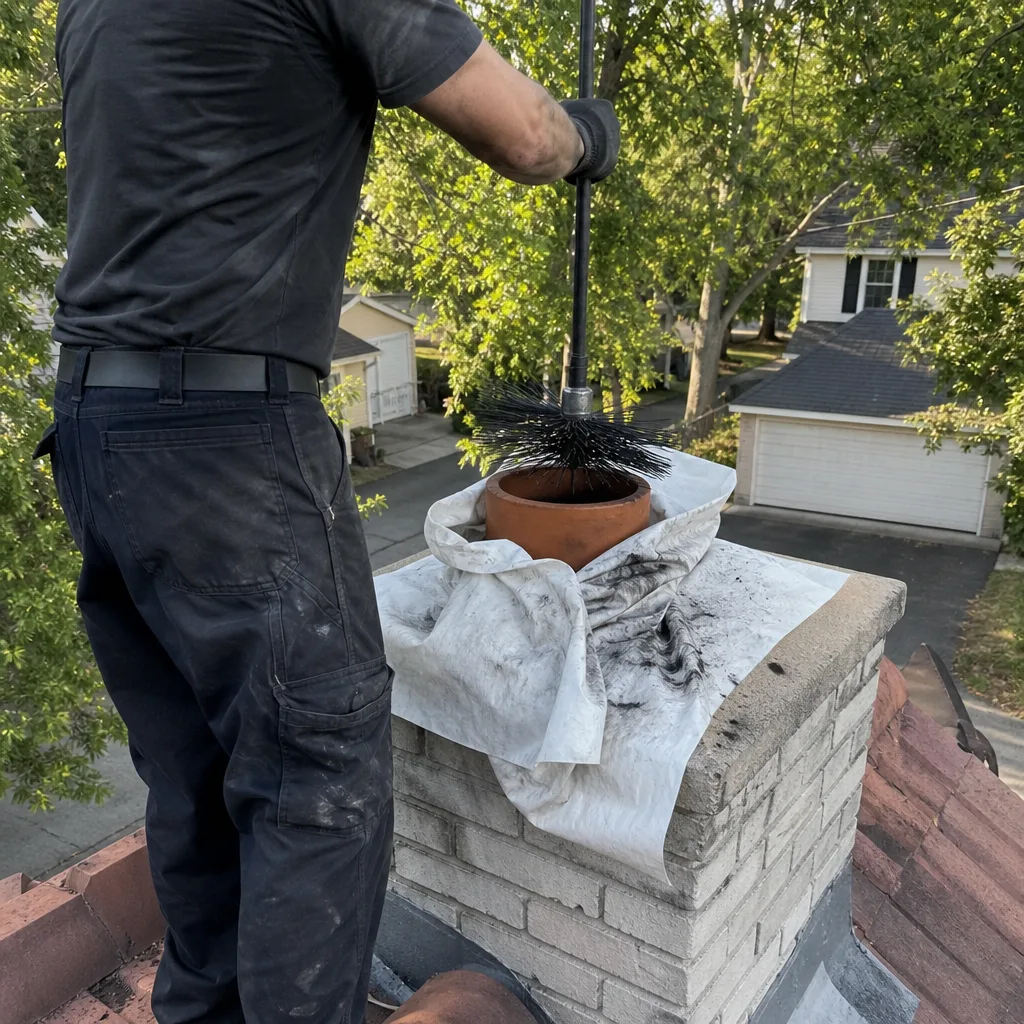
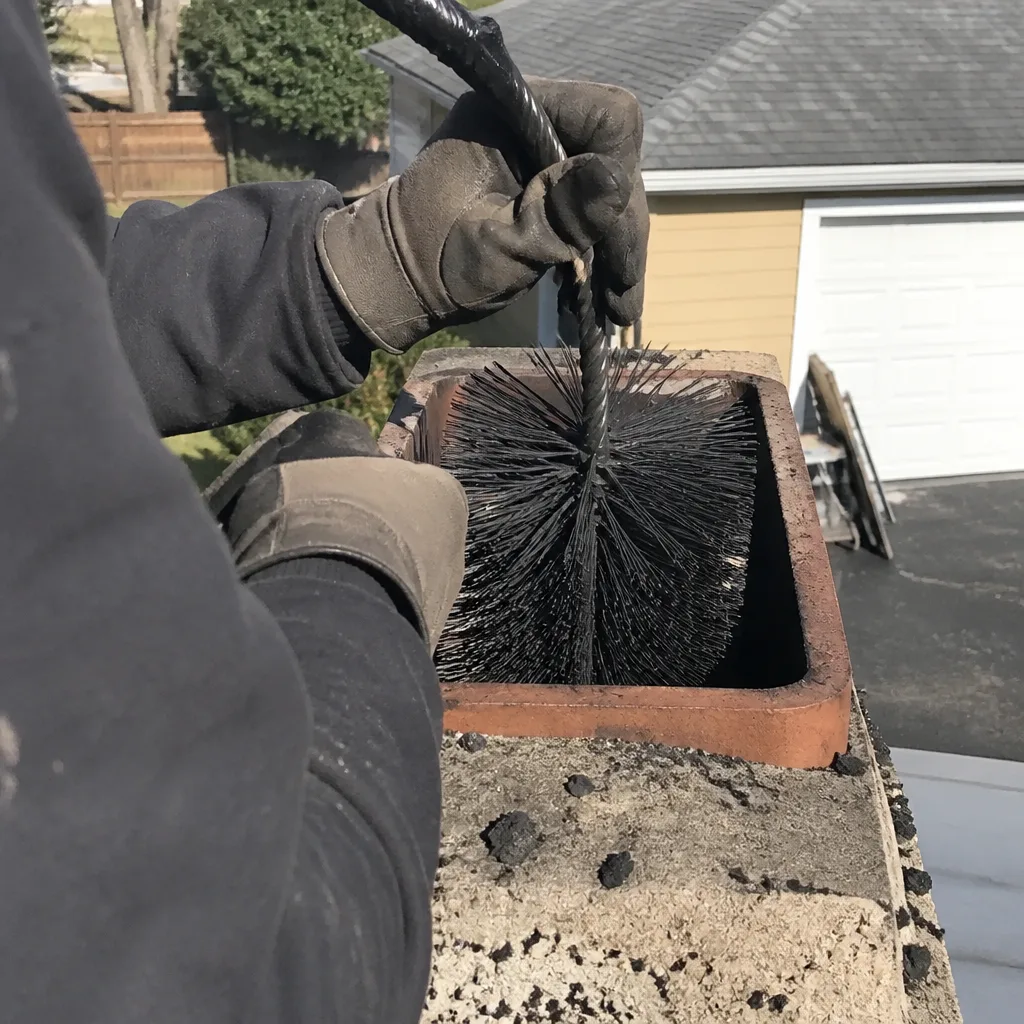
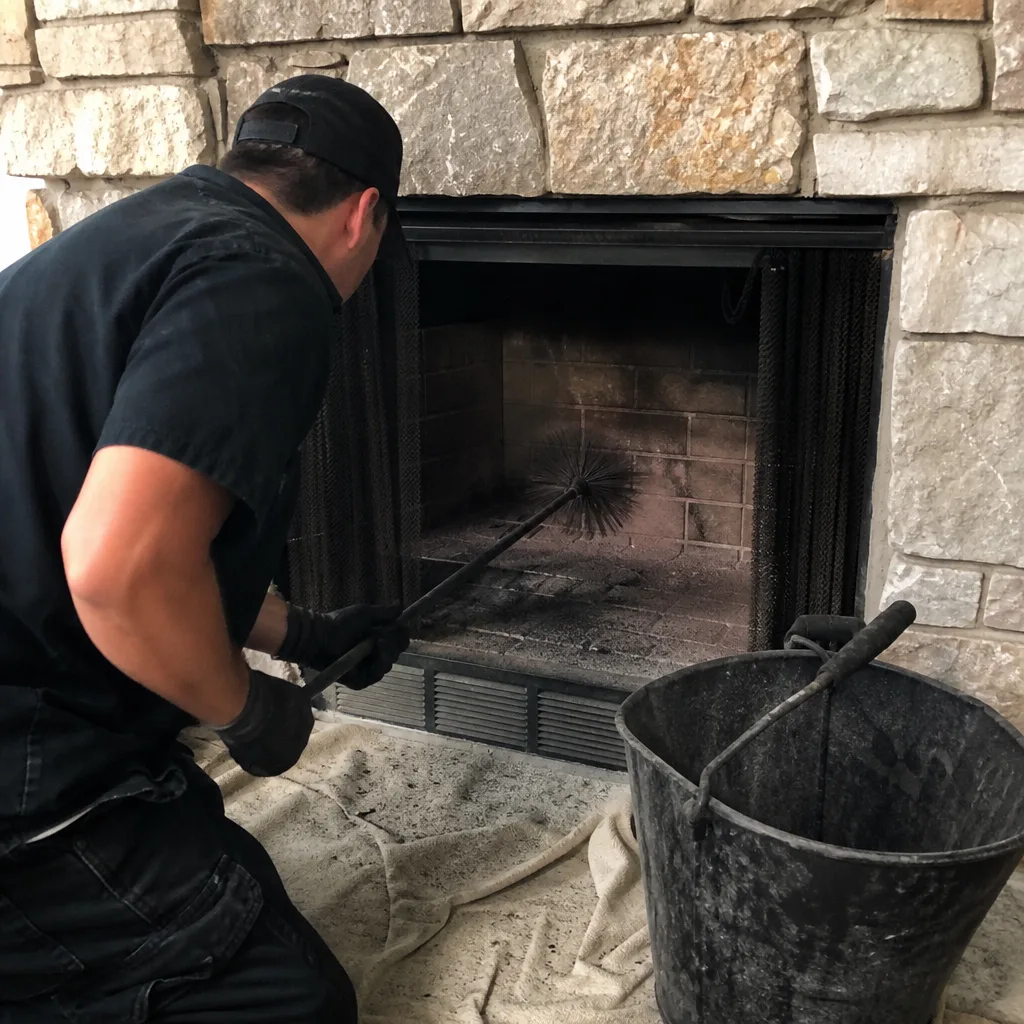
Chimney sweep logs do not sweep chimneys. They loosen some creosote - which then falls where a brush and vacuum still have to collect it.
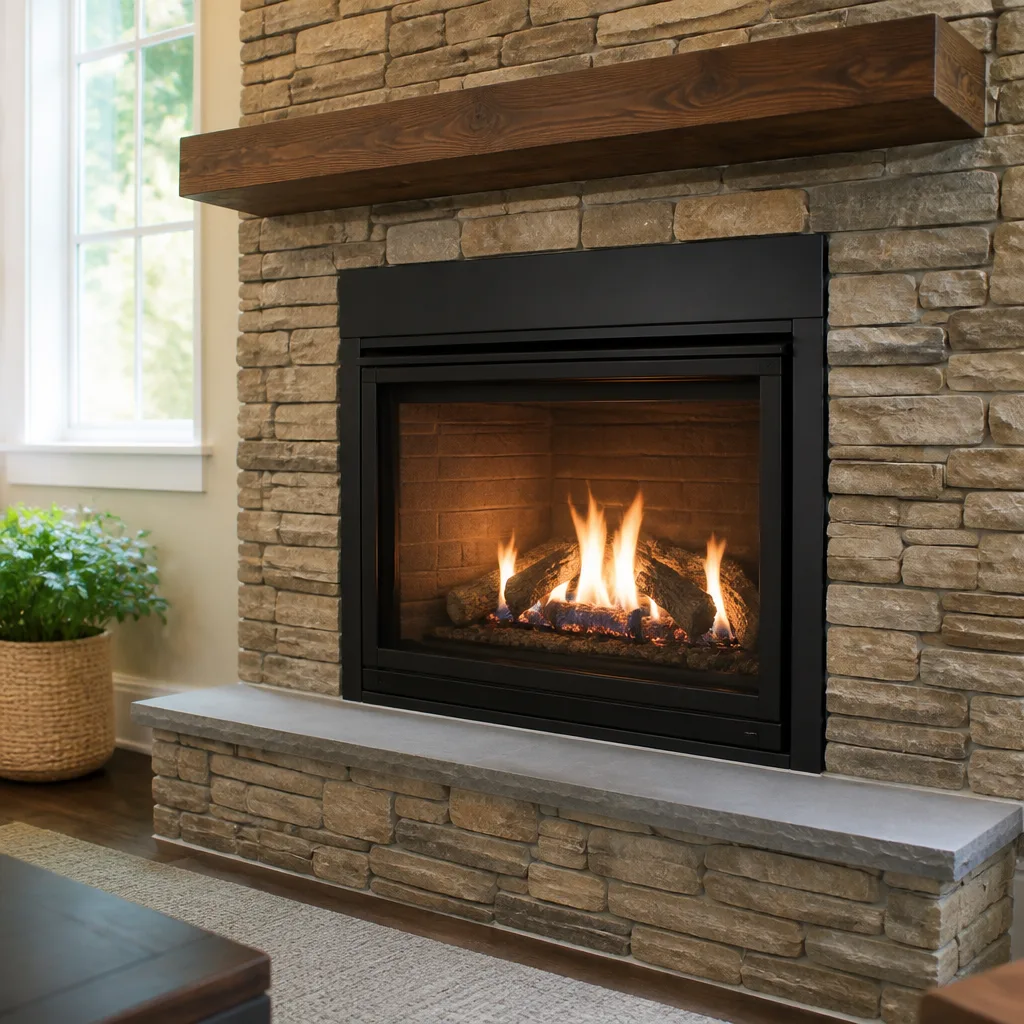
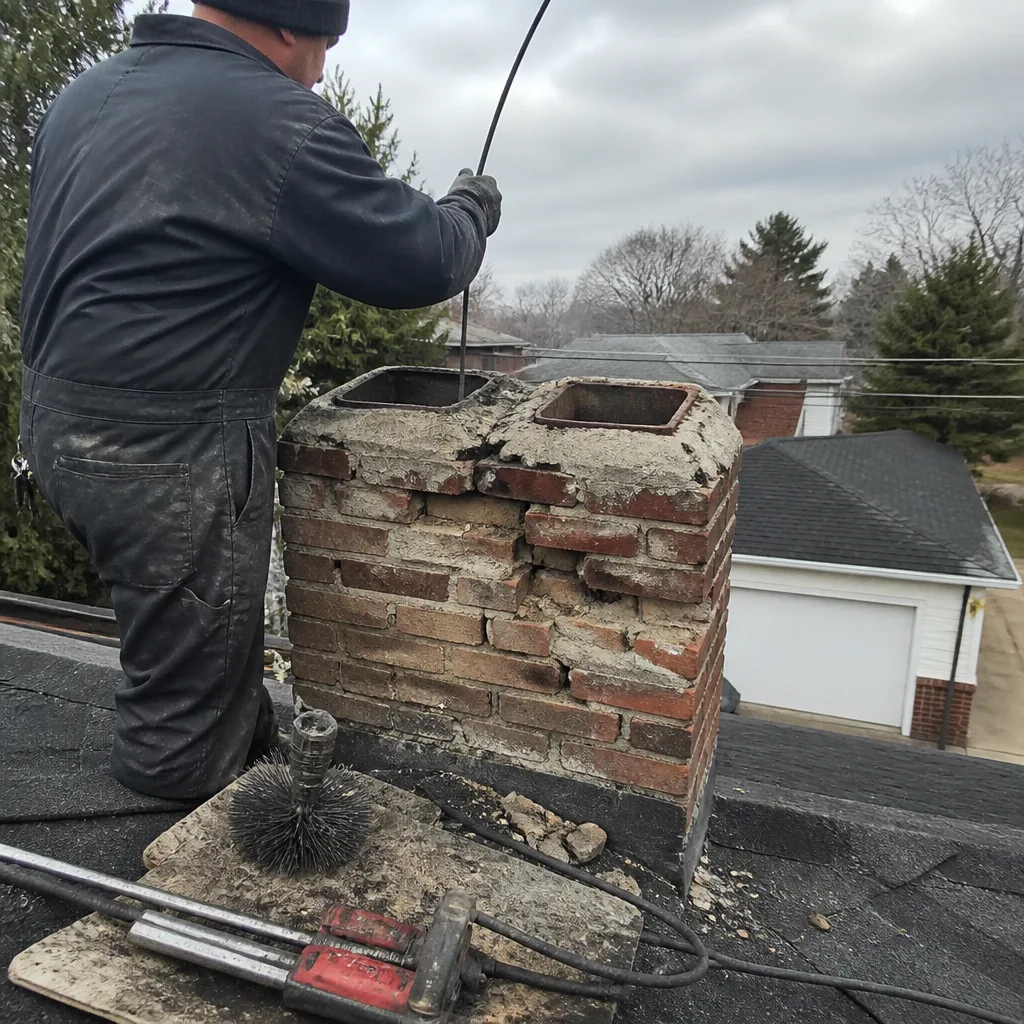 Before
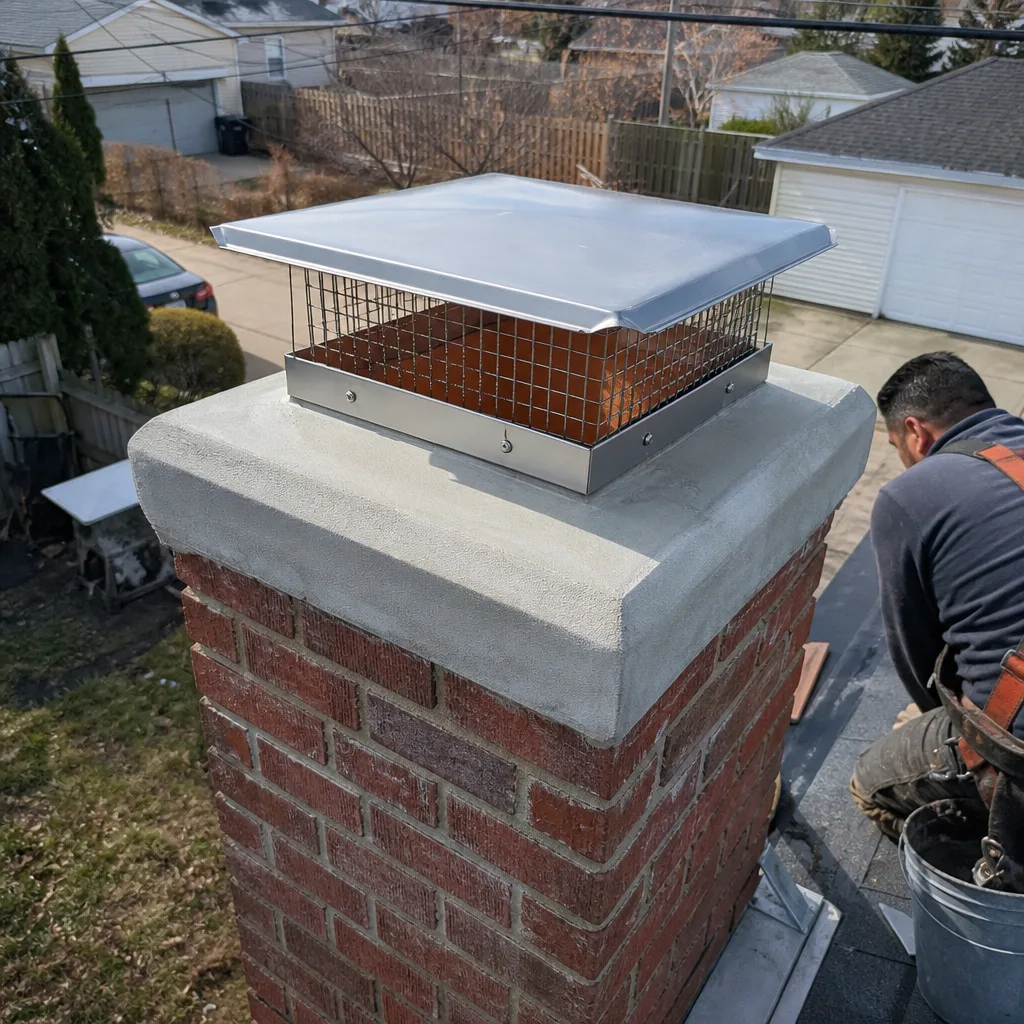 After
After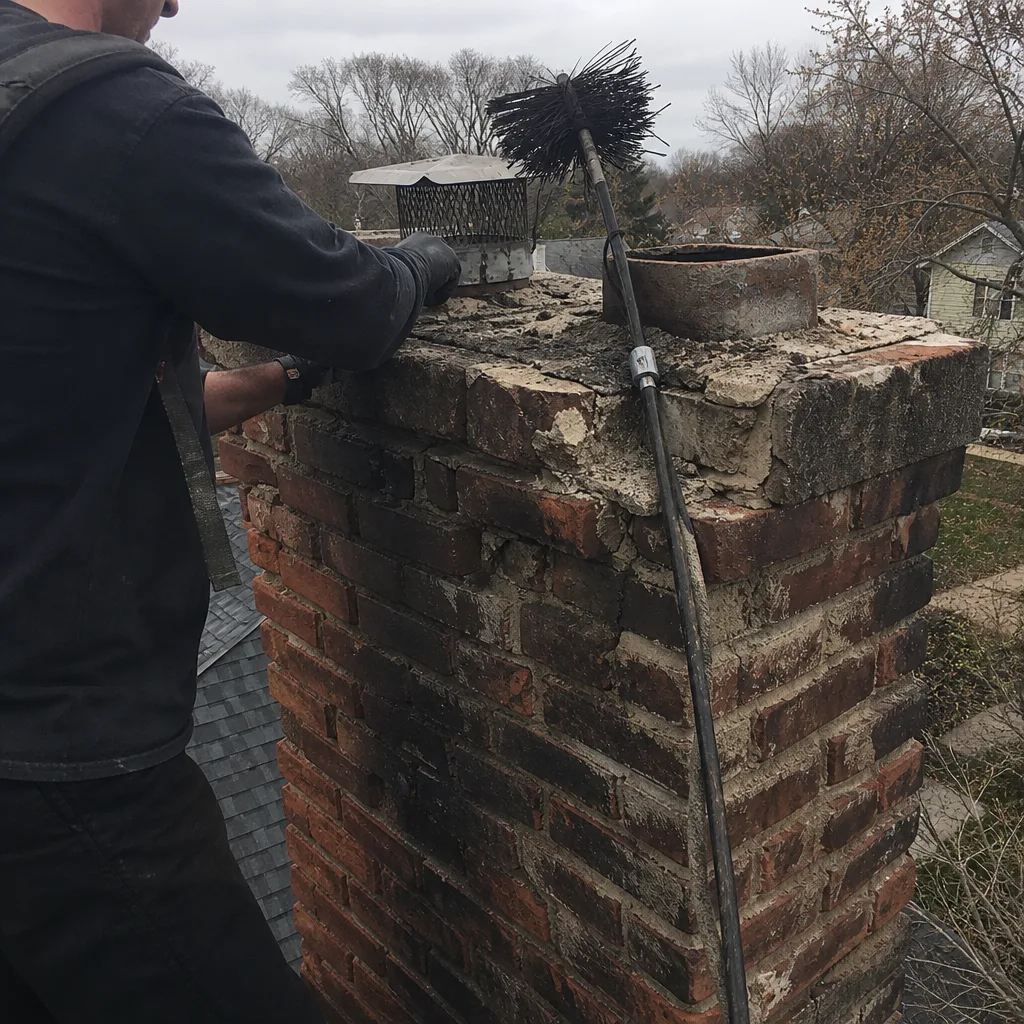 Before
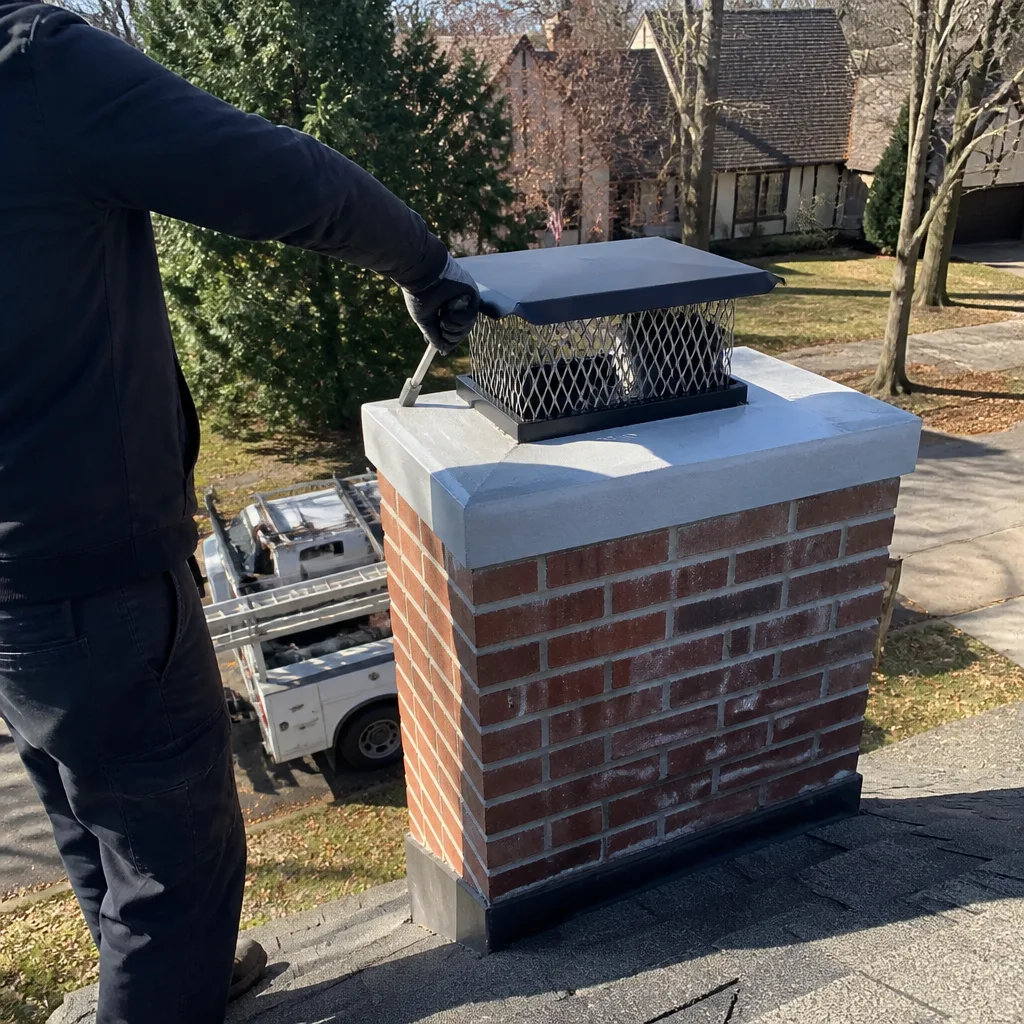 After
After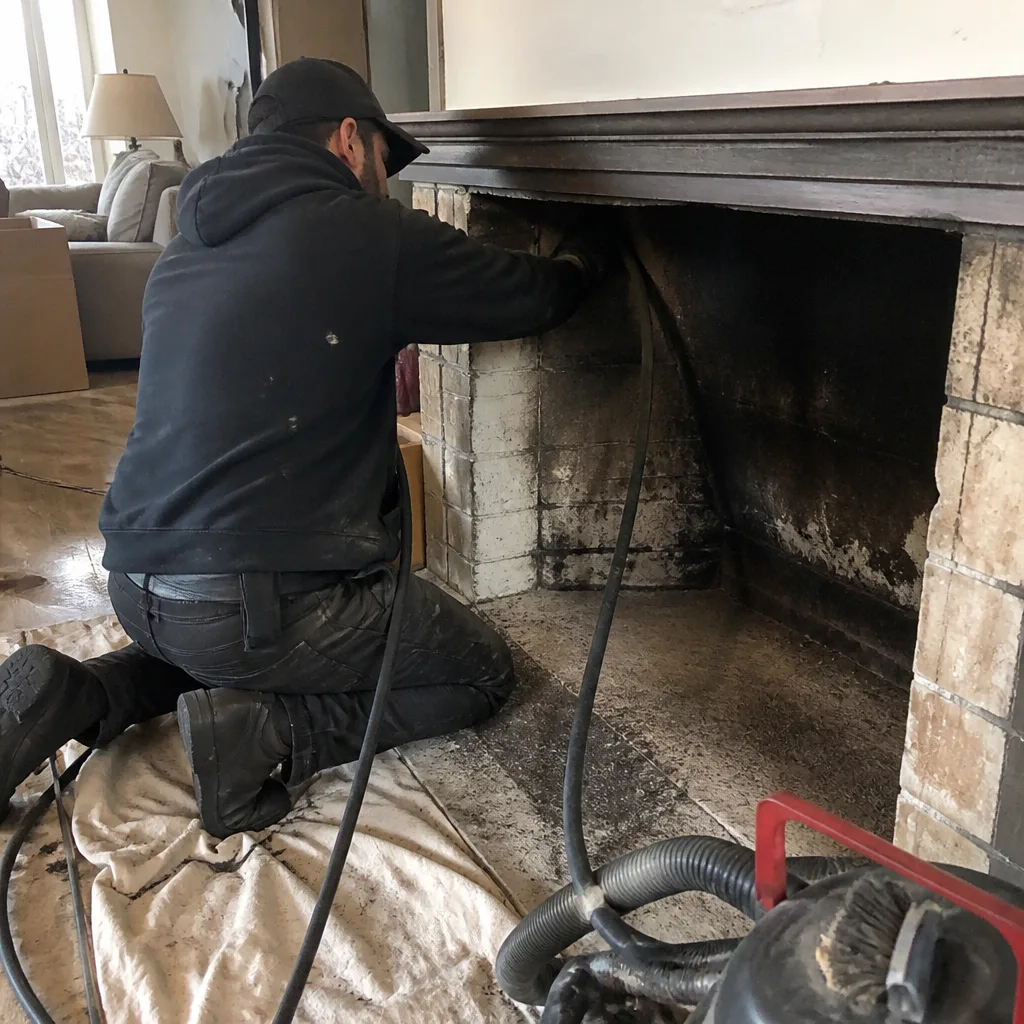 Before
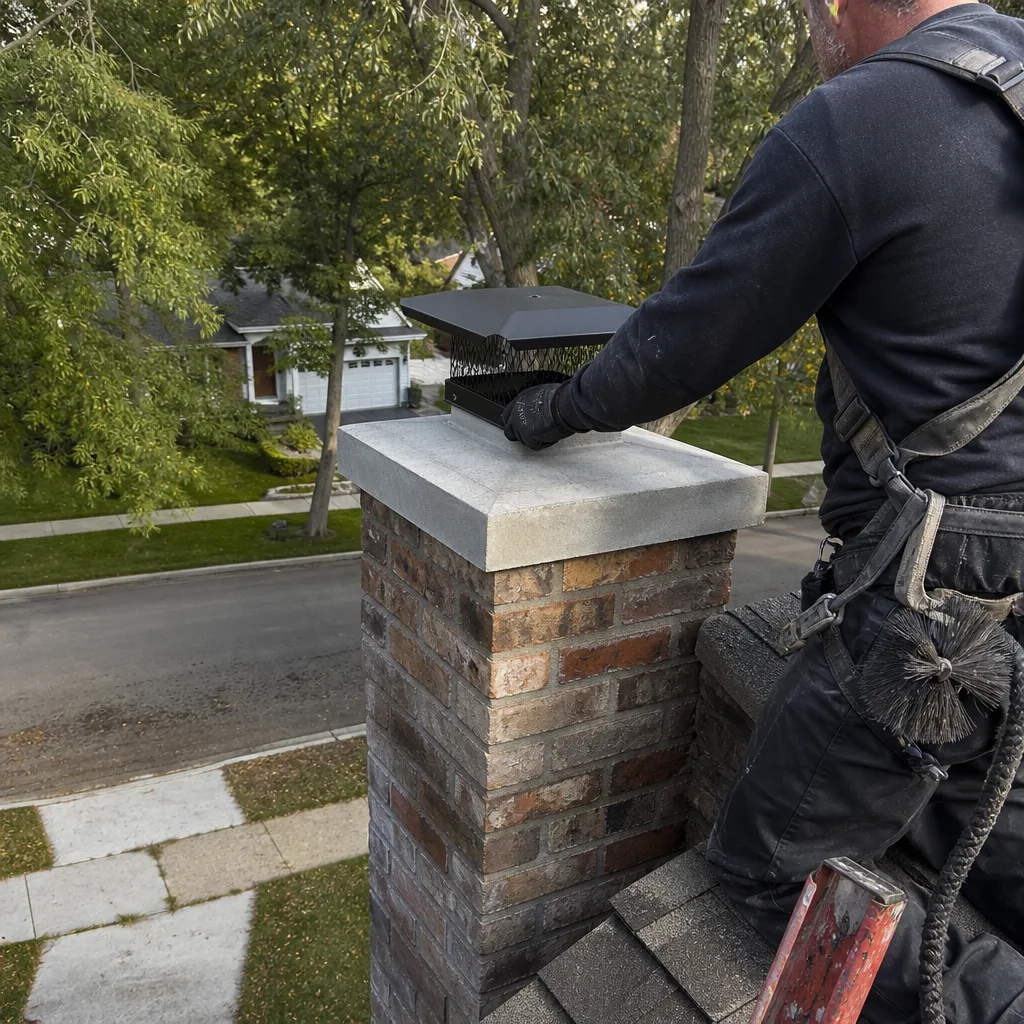 After
AfterChimney Cleaning & Sweep Maintenance Checklist for Elmhurst Homeowners
The most dangerous checklist mistake isn’t skipping a box - it’s marking a box “checked” based on a flashlight look at the damper when the actual problem is 40 feet up in a cracked tile section invisible from below. In Elmhurst, where freeze-thaw cycles run from October through April and many homes in the Hillside and South End neighborhoods were built with clay flue liners during the 1960s housing boom, we’ve seen homeowners confidently declare their chimney “fine” while a camera would reveal spalling liner tiles and third-degree creosote glazing. This guide draws a hard line between what you can assess from the firebox opening and what requires professional camera documentation, with seasonal timing that matches how Elmhurst weather actually attacks chimney systems. For a deeper dive, see our Complete Guide to Chimney Cleaning in Elmhurst.
Quick Answer
A complete chimney maintenance checklist for Elmhurst homeowners splits into two categories: visual self-assessments you can perform from the firebox and ground level (damper operation, firebox mortar condition, exterior crown and flashing visible from the yard), and internal flue conditions that require an NFPA 211 Level 2 camera inspection to document. Schedule the self-checks seasonally - exterior crown and cap in late August before freeze-thaw damage begins, firebox and damper in early September before first fire - and book the camera inspection annually, ideally in spring after the burn season ends when creosote buildup is fully formed and accessible.
Table of Contents
- What Homeowners Can Self-Assess: The Visual Checklist
- What Requires Professional Camera Documentation
- Seasonal Timing for Each Checklist Item
- Appliance-Specific Checklist Additions
- What to Document and Keep
- Using Your Checklist as a Vendor Accountability Tool
- Elmhurst-Specific Conditions That Affect Your Chimney
- What Chimney Maintenance Costs in Elmhurst
 Before
 After
AfterWhat Homeowners Can Self-Assess: The Visual Checklist
These six checks require no tools beyond a flashlight and a pair of binoculars. Perform them in the order listed - each builds awareness for the next.
1. Damper Operation and Seal
Open the damper fully. It should move smoothly without grinding or catching. Close it and hold a flashlight beam against the closed plate from below; you should see no light leaking through. A warped or rusted damper bleeds heated air up the flue year-round and admits chimney odors during humid Elmhurst summers. If the damper won’t seat fully, note the condition - replacement is straightforward, but only after the flue itself is confirmed sound.
2. Firebox Mortar and Brick Condition
Examine the back wall and side walls of the firebox for mortar joints that have turned to powder or bricks that show cracking or spalling (surface flaking). In Elmhurst homes with original fireboxes from the 1950s-1970s, we’ve found refractory mortar degraded to sand in as little as 25 years of intermittent use. Tap questionable mortar gently with a screwdriver handle; solid mortar returns a sharp sound, degraded mortar dulls and crumbles. Document any crumbling with dated photos - this baseline tracks deterioration rate.
3. Hearth Extension and Clearance
The hearth extension (the non-combustible surface in front of the firebox opening) must extend at least 16 inches in front and 8 inches to each side for fireplaces opening less than 6 square feet, or 20 inches front and 12 inches side for larger openings. Measure it. Many Elmhurst homeowners have reduced this clearance with new flooring installations that edge closer to the opening than code allows.
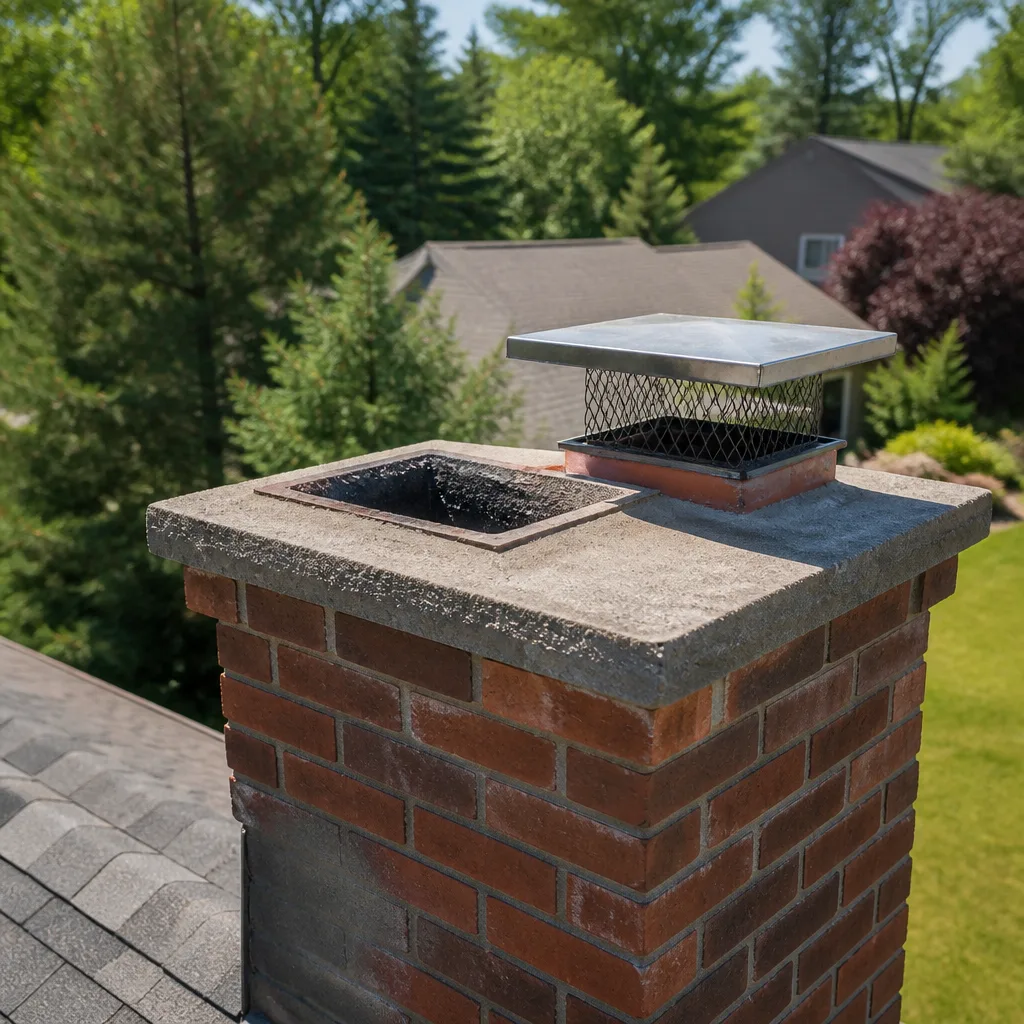
4. Exterior Crown Visible from Ground
From your yard or the sidewalk, examine the chimney crown - the concrete or mortar cap that sheds water off the top of the chimney. Look for cracks wider than a nickel, pooling stains, or missing chunks. In Elmhurst’s climate, water enters crown cracks in October, freezes by November, and expands the crack through April. A crown crack visible from ground level in August is a leak inside your flue by March. Binoculars help; do not climb the roof for this check.
5. Flashing at Roof Line
Where the chimney passes through the roof plane, metal flashing should show no gaps, lifted edges, or rust streaks on the shingles below. From the ground, look for water staining on the chimney breast inside the attic if accessible, or ceiling discoloration in rooms below the chimney stack. Elmhurst’s wind-driven rains from the west test this joint severely; flashing failures are the single most common leak source we document.
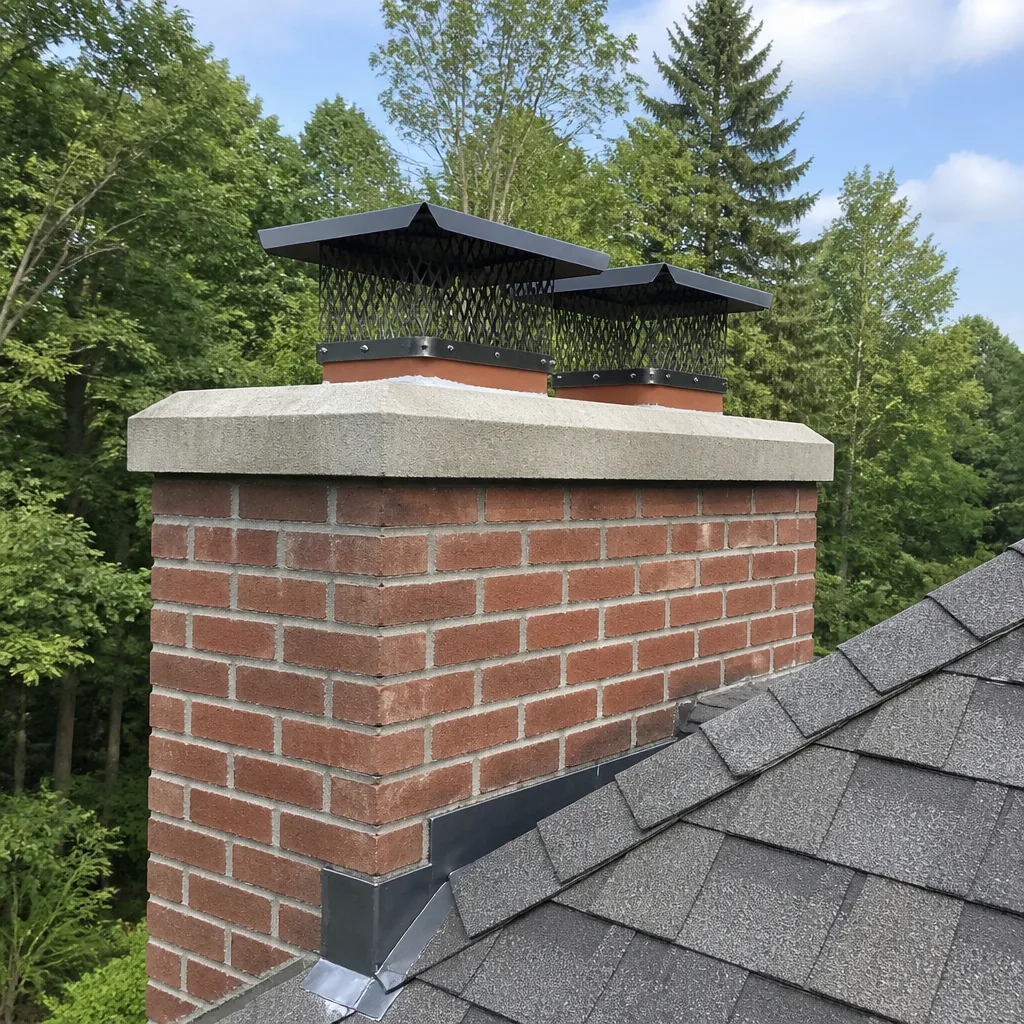
6. Chimney Cap and Spark Arrestor
The cap should sit level, screen mesh should be intact without rust holes larger than a quarter inch, and the lid should overhang the flue tile by at least 3 inches. Missing caps in Elmhurst invite squirrel and raccoon nesting - we’ve removed complete leaf nests from flues in homes near Wilder Park and Berens Park where the cap blew off in a spring storm and was never replaced.
Record your findings with dated photos. These six items form your baseline. What they cannot show you - and this is critical - is the condition inside the flue itself. Learn the Chimney Cleaning Warning Signs every Elmhurst homeowner should watch for.
What Requires Professional Camera Documentation
These five conditions are invisible from below. They require a camera lowered the full length of the flue, performed to NFPA 211 Level 2 standards, with recorded footage or still images provided to you. At Level Two Chimney Elmhurst home, this camera scan and documented photo record are included on every visit - Clause 4 of the Haven Standard requires it, and we’ve operated this way since 2009.
1. Flue Liner Integrity
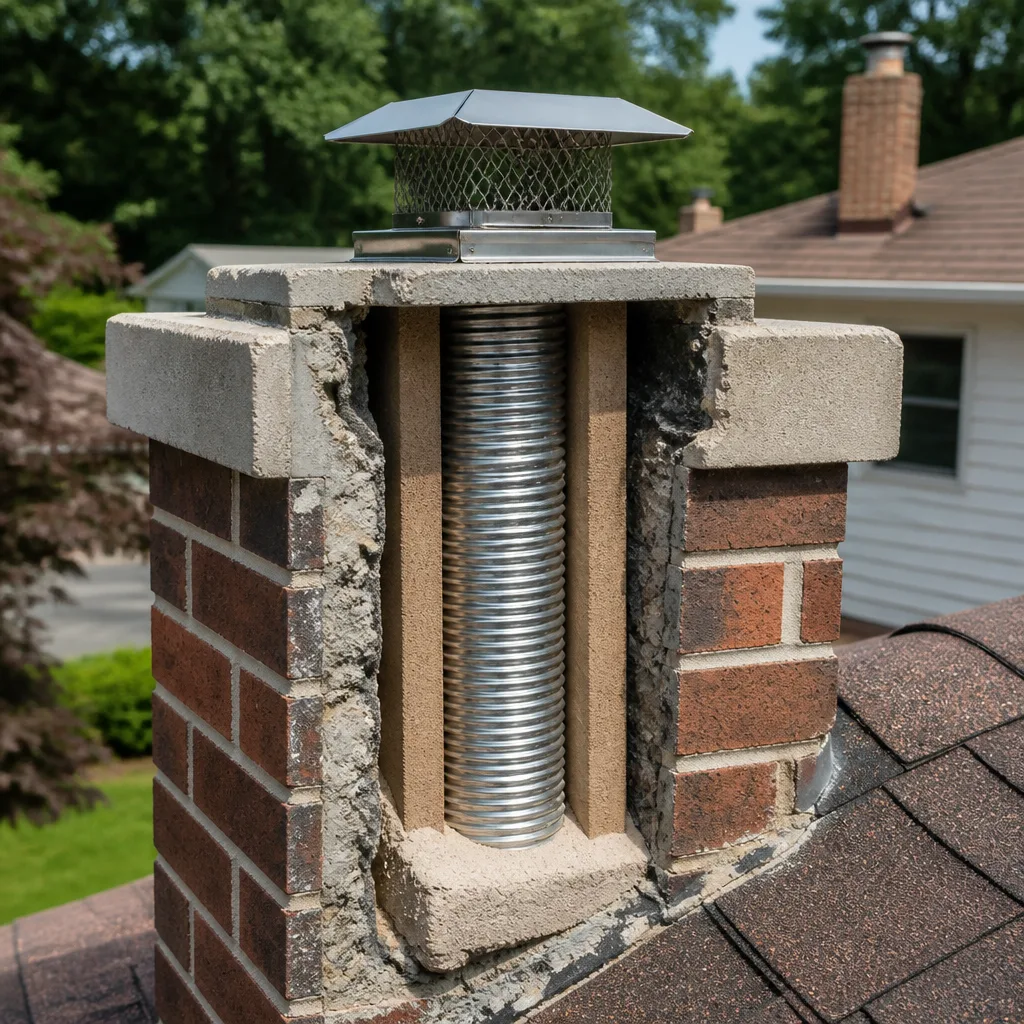
Clay tile liners crack from thermal shock, settle with foundation movement, or deteriorate from long-term acid condensation. A cracked liner allows combustion gases to reach combustible framing - the condition that produces chimney fires and carbon monoxide intrusion. The camera reveals hairline cracks, shifted tiles, and missing mortar between liner joints that no flashlight from below can catch. In Elmhurst’s older housing stock, particularly in the Cottage Hill and Yorkfield areas, original clay liners installed in the 1950s-1970s are reaching end of service life simultaneously.
2. Creosote Classification and Accumulation
Creosote forms in three classes: Stage 1 (sooty, brushes off easily), Stage 2 (shiny, hard flakes requiring mechanical removal), and Stage 3 (glazed, tar-like, requiring chemical treatment or rotary removal). Only a camera inspection determines which stage coats your flue and how thick the accumulation runs. Stage 3 creosote ignites at approximately 451°F - a temperature normal fires exceed routinely. We classify what we find and document it with measurement photos; this determines whether standard Chimney Cleaning & Sweep services suffice or whether chemical treatment is needed first.
3. Smoke Chamber Construction and Parging
The smoke chamber - the area above the damper that funnels smoke into the flue - should be parge-coated smooth to reduce turbulence and creosote adhesion. Many Elmhurst homes have corbeled brick smoke chambers with exposed mortar joints that create eddies where creosote deposits heavily. A camera angled upward from the firebox reveals this condition. Without documentation, a homeowner has no way to know whether their sweep addressed this area or skipped it.
4. Obstructions and Nesting Material
Bird nests, squirrel debris, collapsed liner fragments, or construction debris from prior roofing work can partially or fully block the flue. A blocked flue forces combustion gases into living spaces. Camera documentation identifies the obstruction type and location precisely, informing whether mechanical removal, animal eviction protocols, or liner repair precede sweeping.
5. Masonry Degradation Inside the Flue
Spalling brick, deteriorated mortar, and water intrusion damage inside the chimney structure itself are only visible via camera. Exterior brick may look sound while interior walls have degraded to the point of structural concern. This condition is common in Elmhurst chimneys with ongoing minor leaks that homeowners attribute to “old house smell” rather than active water intrusion.
These five camera-documented items are not “nice to have.” They are the conditions that produce insurance claims, home sale disputes, and safety incidents. A checklist that omits them is a checklist that provides false confidence.
Seasonal Timing for Each Checklist Item
Elmhurst’s climate demands specific timing. The freeze-thaw cycle defines your maintenance calendar.
Late August: Exterior Crown, Cap, and Flashing
Inspect and photograph the crown, cap, and flashing before temperatures drop. Any crack or gap you find now will admit water that freezes, expands, and widens the damage through winter. Crown repair with proper crown sealant or full rebuild needs dry conditions and temperatures above 50°F for proper curing. Schedule repair in September, not after the first freeze when temporary patching is your only option.
Early September: Firebox, Damper, and Hearth
Complete your interior visual checks after summer humidity has tested the damper seal but before first fire. This timing lets you schedule firebox mortar repair or damper replacement before burn season. In Elmhurst, first fires often occur in mid-October during the first sustained cold snap; waiting until then to discover a failed damper means choosing between delayed use and a rushed repair.
Late March to Early April: Post-Season Camera Inspection and Sweeping
This is the ideal window for your NFPA 211 Level 2 inspection. Creosote accumulation is complete after a full burn season. The flue is warm-dry, not hot, making camera work optimal. Scheduling in spring avoids the September-November rush when every sweep in DuPage County is overbooked. For year-round maintenance advice, explore more guides & resources on our blog. More importantly, spring inspection catches liner damage from winter thermal cycling before it worsens through another season of freeze-thaw.
After Severe Weather Events
Elmhurst’s summer storms and winter wind events warrant additional checks. After any event where you hear debris strike the chimney or notice new water staining, perform the visual exterior check and call for camera inspection if anything has shifted or cracked.
Before Home Sale or Purchase
Chimney condition is a standard inspection point in Elmhurst real estate transactions. A pre-listing camera inspection with documented photo record prevents last-minute negotiation surprises. A buyer’s inspection that reveals undisclosed liner damage can delay closing or trigger repair credits exceeding the inspection cost by tenfold.
Appliance-Specific Checklist Additions
Wood-burning fireplaces, gas inserts, and pellet stoves share a flue but fail differently. Your checklist must adapt.
Wood-Burning Fireplaces
- Check firewood moisture with a meter - below 20% is essential. Elmhurst’s humid summers mean properly split wood stored outside still requires 12+ months to season.
- Inspect the ash dump door for proper closure and seal; an open ash dump creates a direct path for cold air infiltration and chimney odors.
- Verify grate condition and firebrick alignment - displaced firebrick exposes the firebox shell to direct flame.
- Document creosote accumulation rate: if your annual camera inspection shows Stage 2 or 3 creosote despite moderate use, your wood species, burning practices, or flue draft require adjustment.
Gas Fireplace Inserts and Log Sets
- Inspect the glass panel seal and gaskets annually; degraded seals allow room air to be drawn into the combustion chamber, reducing efficiency and potentially affecting draft.
- Check burner ports for debris or corrosion that produces uneven flame pattern.
- Verify that the pilot assembly and thermocouple are free of dust accumulation - a common cause of pilot failure in Elmhurst homes with basement-installed units where lint and dust collect.
- Confirm that the vent termination on the exterior wall or roof remains clear of vegetation, snow, or insect nests. Gas vents are lower temperature than wood flues and more susceptible to blockage.
Gas systems produce different combustion byproducts than wood - primarily moisture vapor and minimal particulate. However, they still require annual inspection of the venting path, particularly in high-efficiency condensing units where acidic condensate degrades liners differently than wood creosote. The camera inspection for a gas system looks for condensate staining, liner corrosion, and proper vent connector slope - not creosote accumulation.
Pellet Stoves
- Empty and inspect the burn pot for clinker buildup and air hole blockage weekly during use.
- Clean the exhaust vent path and termination cap monthly - pellet exhaust contains fine ash that accumulates rapidly in horizontal vent runs common in Elmhurst retrofits.
- Schedule professional auger and combustion blower cleaning annually; these mechanical components fail from ash intrusion more often than the flue itself.
What to Document and Keep
Your checklist is only as good as the records it produces. These documents matter when insurance adjusters, home inspectors, or buyers ask questions you cannot anticipate.
The Essential File
- Dated photos from your self-assessments. Store them with the date and what they depict: “2024-08-22_crown_north_face.jpg.” Cloud storage with automatic dating is sufficient.
- Professional inspection report with camera footage or still images. This is your NFPA 211 Level 2 documentation. It should include: customer name and address, inspection date, technician name, equipment used, findings by flue section, recommendations with priority ranking, and photo references keyed to findings. At Level Two Chimney Elmhurst, every report meets this standard under Haven Standard Clause 4.
- Written scope and written price for any work performed. Before any work begins, not after. This is Haven Standard Clause 1: Have it in writing. Keep the original signed scope and the final invoice cross-referenced to it.
- Warranty documentation. The 365-Day Done Right Promise applies to all our work; retain your copy with the job number.
- Material specifications. If liner repair or replacement is performed, record the liner type (stainless steel alloy, diameter, and listing), insulation method, and connector materials. We source liners through Olympia Chimney and Famco via Haven’s buying network, with specifications documented on every job.
When Records Protect You
In 2023, an Elmhurst homeowner in the Tuxedo Park neighborhood faced an insurance dispute after a chimney fire. Their prior sweep had provided only a handwritten receipt reading “chimney cleaned - $225.” No photos, no liner assessment, no creosote classification. The insurer disputed whether proper maintenance had occurred. A complete NFPA 211 Level 2 report with dated camera images would have resolved the question immediately.
When you sell your Elmhurst home, buyer’s inspectors routinely flag chimneys. A five-year file of documented inspections, with progressive baseline images showing stable or improving conditions, converts a potential negotiation point into a non-issue.
Using Your Checklist as a Vendor Accountability Tool
The final value of a maintenance checklist is holding your sweep accountable for complete work. Here’s how to use it.
Before Service: Send Your Checklist
Email or hand your completed self-assessment checklist to the technician on arrival. State explicitly: “These are the conditions I observed. Please confirm or correct each during your inspection, and show me camera images of anything that differs.” A technician who resists this baseline comparison is signaling incomplete inspection practice.
During Service: Request Real-Time Camera Viewing
We invite every Elmhurst customer to view the camera feed during inspection. If your sweep declines, ask why. The only valid reason is safety-related access limitation, not “our policy is to review in the truck.” You are paying for documentation; you have the right to witness its collection.
After Service: Match Report to Checklist
Compare your pre-service checklist against the professional report item by item:
- Did they address every condition you noted?
- Did they document conditions you could not assess - liner, smoke chamber, full flue length?
- Do their photos show the areas they claim to have inspected, with clear identifiers (date stamp, location marker)?
- Does their written scope match what they verbally described before work began?
- Is the final invoice itemized against the written scope with no additions unexplained?
Discrepancies are not accusations - they are questions. A professional answers them with additional images or explanation. Evasion is information.
Our Chimney Cleaning & Sweep in Elmhurst service includes this checklist cross-check as standard practice. We prefer customers who know what they’re looking at; they make better decisions and maintain their systems more consistently.
Elmhurst-Specific Conditions That Affect Your Chimney
Generic chimney advice fails in Elmhurst because it ignores local conditions that accelerate specific failure modes.
Freeze-Thaw and Clay Liner Deterioration
Elmhurst averages 120+ freeze-thaw cycles annually. Water enters liner cracks during thaw, freezes overnight, and expands the crack. Clay tile liners, standard in homes built before 1985, are brittle and unforgiving of this cycling. We’ve replaced more liners in Elmhurst’s 1960s-era ranches than in any comparable Chicago suburb because the combination of original clay, minimal insulation, and aggressive cycling produces cumulative damage that cameras reveal as stair-step cracking and tile displacement.
Proximity to Railroad Corridors and Soot Loading
Homes near the Union Pacific West Line and Metra corridors experience slightly elevated particulate loading that contributes to faster creosote accumulation in wood-burning systems. This is not dramatic, but it means that a homeowner burning two cords annually in Elmhurst may match the creosote accumulation of a homeowner burning three cords in a less trafficked area. Annual inspection matters more here than the national “every 50 fires” rule of thumb suggests.
Soil Settlement Patterns
Elmhurst’s clay-heavy soils expand and contract with moisture, producing differential settlement that stresses chimney foundations independently of the main structure. We’ve documented tilted chimneys in the Sandburg Village and Stratford Hills areas where the chimney has settled 2+ inches relative to the house, cracking the crown and separating the flashing. Exterior visual checks catch this early; interior-only inspection misses it entirely.
Local Code and Permit Context
Elmhurst follows the 2021 International Residential Code with local amendments. Chimney liner replacement, crown rebuilds exceeding 50% of surface area, and structural repairs require permits through the City of Elmhurst Building Division. A professional sweep should identify when permits are needed and include permit costs in the written scope. We handle permit applications as part of our Chimney Repair in Elmhurst service; the alternative is discovering unpermitted work during a future sale inspection.
What Chimney Maintenance Costs in Elmhurst
Specific pricing eliminates the hesitation that prevents homeowners from scheduling. These ranges reflect Elmhurst market conditions as of 2024, using materials sourced through Haven’s buying network from HeatShield, Gelco, Olympia Chimney, and Famco.
| Service | Typical Range in Elmhurst | What’s Included |
|---|---|---|
| NFPA 211 Level 2 Inspection with Camera Scan | $249-$349 | Full flue camera inspection, smoke chamber assessment, firebox and damper check, exterior crown/flash/cap evaluation, documented photo record, written findings report |
| Standard Chimney Sweep (Stage 1-2 Creosote) | $189-$279 | Mechanical sweeping of flue, smoke chamber, and firebox, debris removal, post-sweep camera verification, written completion report |
| Heavy Creosote Removal (Stage 3) | $389-$549 | Chemical treatment cycle, rotary mechanical removal, multiple sweep passes, post-treatment camera verification |
| Crown Seal/Repair (minor cracking) | $349-$549 | Surface prep, flexible crown sealant application, water test verification |
| Crown Rebuild (major damage) | $1,200-$2,400 | Demolition of damaged crown, form and pour proper concrete crown with minimum 2-inch overhang and drip edge |
| Stainless Steel Liner Installation | $2,800-$5,500 | Custom-fitted 316Ti stainless liner, insulation wrap, top plate and cap, connector adaptation, permit, camera verification |
Every price is delivered in writing before work begins - Haven Standard Clause 1, no exceptions. We also offer a Free Second Opinion on any competitor’s written estimate; bring us their scope and we’ll review it against what we find independently.
For Fireplace Services in Elmhurst including gas insert maintenance, pellet stove cleaning, and firebox rebuilds, pricing varies by appliance type and access conditions. Call for a written estimate specific to your installation.
Common Mistakes to Avoid
- Confusing a “chimney check” with an NFPA 211 Level 2 inspection. Many Elmhurst sweeps offer a quick visual look for a low price that doesn’t include camera documentation. You receive a clean bill of health for a flue you’ve never seen. Always confirm camera inspection is included and footage is provided to you.
- Skipping the post-winter inspection because “it was fine last fall.” Thermal cycling through a burn season changes liner conditions. The inspection that matters is the one that catches damage after it occurs, not the one that predicted everything would be fine.
- Assuming gas systems need no flue inspection. Gas combustion produces water vapor and acidic condensate that corrodes liners differently than wood creosote. An unlined or deteriorated gas flue leaks carbon monoxide through the same pathways as a wood flue leaks smoke.
- Accepting verbal estimates and post-work invoices. Without a written scope agreed before work starts, you have no basis to confirm what was actually performed. Haven Standard Clause 1 exists because we’ve repaired too many chimneys where the prior “sweep” couldn’t produce any documentation of what they’d done.
- Delaying crown repair until spring. In Elmhurst, crown cracks admitted in October become crown rebuilds by March. The $400 sealant application you skipped becomes the $2,000 rebuild you can’t avoid.
- Ignoring the smoke chamber. It’s invisible from below and inaccessible to standard sweeping without specialized tools. Many sweeps skip it entirely. Your checklist should specifically ask whether the smoke chamber was inspected and whether parging repair is recommended.
- Discarding inspection reports after “nothing was wrong.” The report that finds no defects is the baseline that proves pre-existing condition when a future inspection does find damage. Insurance adjusters and home sale inspectors value this documentation more than homeowners expect.
When to Call a Professional
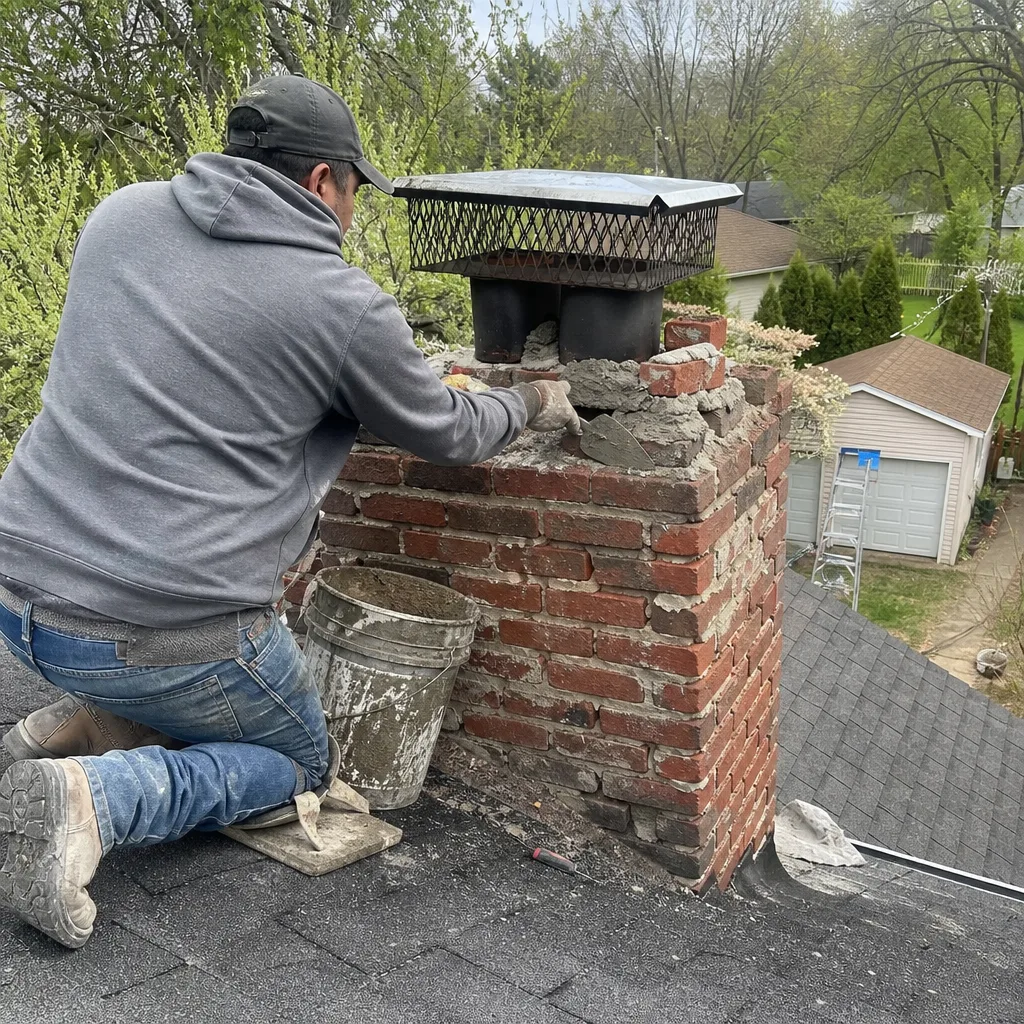
Call for an NFPA 211 Level 2 camera inspection when: your self-assessment reveals any crack, spalling, or mortar loss; you smell chimney odors during humid weather; you’ve had a chimney fire or rapid creosote event; you’re buying or selling the home; or it’s been more than 12 months since your last professional inspection. In Elmhurst, where original clay liners are aging out simultaneously across neighborhoods built in the same era, we recommend annual inspection even for lightly used systems - the liner doesn’t know how often you burn.
Level Two Chimney Elmhurst offers free estimates in Elmhurst - call (708) 498-3199. A live person answers 24 hours a day, and we’ll assign a named technician who arrives in uniform with license information visible. You’ll receive a text when they’re en route, a written price before any work begins, and a documented photo record when the job is complete.
Frequently Asked Questions
A standard chimney sweep in Elmhurst typically runs $189-$279 for Stage 1-2 creosote, while heavy Stage 3 removal ranges $389-$549 due to chemical pretreatment and rotary mechanical work. An NFPA 211 Level 2 camera inspection, which we recommend annually, adds $249-$349 and includes the documented photo record required by Haven Standard Clause 4. Call (708) 498-3199 for an exact quote - estimates are free, and we provide a written price before any work starts.
The National Fire Protection Association recommends annual inspection for all chimney systems, with sweeping frequency determined by creosote accumulation found during that inspection. In Elmhurst’s climate, with freeze-thaw cycling and many homes running original clay liners past 50 years, we advise annual camera inspection even for gas systems. Wood-burning fireplaces used as primary heat sources may need sweeping mid-season if Stage 2 creosote accumulates. Call (708) 498-3199 to schedule your baseline inspection.
You need liner replacement when camera inspection reveals cracked, shifted, or missing tiles that allow combustion gases to contact combustible framing, or when the liner is unlined terra cotta in a system that now vents a higher-efficiency appliance. Not every crack demands immediate replacement - hairline cracks without displacement may be monitorable with annual re-inspection. We show you the camera images, explain the failure mode, and specify which conditions can be monitored versus which require action. Nothing is recommended without camera evidence you can see for yourself. Call (708) 498-3199 for a free second opinion on any liner replacement estimate.
Skipped maintenance produces three predictable outcomes: creosote accumulation to ignition-ready levels, liner degradation that allows carbon monoxide intrusion or chimney fire spread to framing, and water intrusion that destroys the chimney from inside. In Elmhurst, we’ve documented chimneys where five years of skipped inspection produced $8,000+ in rebuild costs that annual $300 inspections would have prevented. The 365-Day Done Right Promise covers our work, but it cannot recover a chimney destroyed by years of neglect.
Consumer inspection cameras with 15-25 foot reach can visualize the upper firebox and lower flue, but they lack the lighting, articulation, and measurement capability of professional chimney inspection systems. More critically, interpreting what the camera shows requires training in NFPA 211 standards and recognition of failure modes that look benign to untrained observers. Use your self-assessment checklist for what you can see; trust professional camera documentation for what you cannot. We invite customers to view our camera feed during inspection - the education is part of the service.
A chimney sweep removes combustible deposits from the flue and firebox. A chimney inspection evaluates the system’s condition, including liner integrity, structural soundness, and clearance compliance. In Elmhurst, many homeowners request “just a sweep” when what they actually need is inspection-informed maintenance - sweeping a cracked liner removes creosote but leaves the underlying failure unaddressed. Our Chimney Cleaning & Sweep in Elmhurst service includes camera inspection as standard because sweeping without knowing what the camera shows is incomplete care.
The Bottom Line
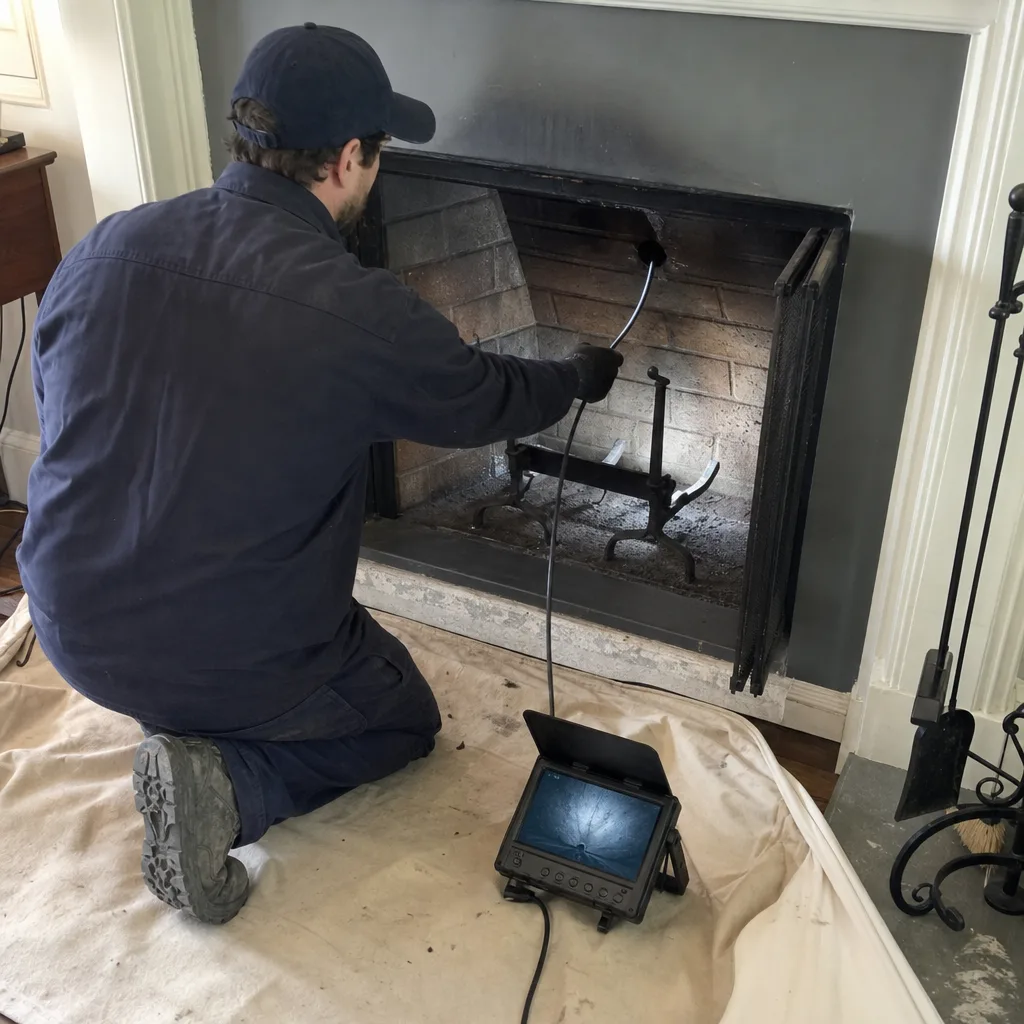
A useful chimney maintenance checklist distinguishes rigorously between what homeowners can assess and what requires professional camera documentation. In Elmhurst, where aging clay liners, aggressive freeze-thaw cycling, and simultaneous neighborhood housing stock create concentrated failure risk, this distinction matters more than in markets with newer construction or milder climates. Perform your six visual checks seasonally, schedule your NFPA 211 Level 2 camera inspection annually in spring, maintain complete documentation, and use your checklist to verify that any sweep you hire performs complete, documented work. The chimney that fails catastrophically rarely gave no warning - it gave warnings that a flashlight look from below could not see.
Written by Corrine Halstead, Owner at Level Two Chimney Elmhurst, serving Elmhurst since 2009.